

“Best dog for families with young children” is shorthand. There’s no breed that’s universally best — there’s a breed that’s likely to do well given your specific constraints: a house with a toddler who grabs, a schedule that’s already stretched thin, and a supervision reality that’s honestly imperfect on the hard days. So that’s the lens we used.
Not “which breed is sweetest” but “which breed tends to tolerate the chaos of small kids, forgive a clumsy tail-pull, stay predictable when startled, and not demand more training expertise than a busy parent actually has.” Those are different questions than “which dog is most popular” or “which dog is cutest.” One thing up front: no dog and no small child should ever be left together unsupervised, regardless of breed. Temperament reduces risk. It doesn’t remove it.
The breeds below are ones we’d genuinely suggest to a friend with a preschooler — with the downsides named clearly, because a reader who only sees the upside will pick wrong.
What ‘families with young children’ actually means for breed selection
Young kids change what matters in a dog. A toddler moves unpredictably, makes sharp noises, falls into the dog, and hasn’t yet learned to read a dog’s warning signals. So the traits that matter most aren’t the ones people usually shop for.
What actually matters: a high startle threshold (the dog doesn’t snap when surprised), bite inhibition and a soft mouth, physical durability that isn’t so large it knocks a toddler flat, and enough biddability that the dog listens even when a child is screaming. Bonus points for a breed that isn’t strongly resource-guarding by tendency, since food and toys are constant flashpoints in a house with kids.
Just as important is what you can realistically deliver. Small kids mean less time, less sleep, and less patience for a dog that needs two hours of structured work or bolts the moment a door opens. A breed that’s wonderful in theory but needs more than you can give will become a stressed, under-exercised dog — and a stressed dog is a less safe dog around children. Honest self-assessment of your time is part of breed selection, not separate from it.
What we looked for
Five criteria, each with a trade-off attached.
1) Temperament stability — breeds with parent-club and AKC temperament descriptions emphasizing tolerance, low reactivity, and people-orientation. Trade-off: many of these breeds are also very social and don’t do well left alone for long workdays.
2) Trainability for non-expert owners — breeds that most first-time or time-strapped owners can manage without professional-level handling skills. Trade-off: easy-to-train often correlates with eager-to-work, which can mean under-stimulated and mischievous if you skip the daily walk.
3) Realistic exercise needs — we favored breeds whose needs a busy family can actually meet, roughly 30–90 minutes daily, rather than working breeds that need job-level engagement. Trade-off: we excluded some fantastic breeds that are simply too much dog for the typical young-kid household.
4) Size and durability balance — big enough to shrug off toddler handling, not so big that a friendly lean topples a three-year-old. This ruled out both very small toy breeds (fragile, and more likely to snap defensively when handled roughly) and giant breeds (accidental knock-downs, plus short lifespans that are hard on kids).
5) Grooming and shedding honesty — we flagged shedding and coat upkeep for allergy-aware and time-poor households, but we did not treat any breed as truly “hypoallergenic.” No breed is. People react to dander and saliva, not just hair.
Our recommendations
1. Labrador Retriever

Read our full Labrador Retriever profile →
Why it fits: There’s a reason Labs top the AKC popularity list year after year, and a lot of it holds up for families. The breed standard describes a kind, outgoing, eager-to-please temperament, and most Labs have a high tolerance for the noise and handling of small kids. They’re durable (typically 55–80 lbs), highly trainable for first-time owners, and their food-motivation makes them easy to teach with treats and short sessions you can squeeze in around a toddler’s schedule.
Watch out for: Labs are large, bouncy, and slow to mature — an under-exercised young Lab can flatten a toddler by accident just being happy. Plan on 60+ minutes of real exercise daily, especially in the first two years, or you’ll get chewing and counter-surfing. They shed heavily year-round; this is not a low-hair household. The breed has a higher incidence of hip and elbow dysplasia and is prone to obesity, so ask your veterinarian about weight management. Verify energy level with the individual dog — field-bred lines are often far more intense than show lines.
2. Golden Retriever

Read our full Golden Retriever profile →
Why it fits: Similar strengths to the Lab, with a temperament the breed’s parent club describes as friendly, reliable, and trustworthy. Goldens are patient, soft-mouthed, and strongly people-oriented, which tends to translate into tolerance of a child’s clumsiness. Their eagerness to please makes basic training approachable, and most are gentle rather than sharp when startled.
Watch out for: The coat is the big commitment — regular brushing (a few times a week) plus heavy seasonal shedding. Goldens are Velcro dogs who genuinely struggle with long periods alone; they’re a poor fit if the house empties for nine hours a day. Health-wise the breed has an elevated incidence of certain cancers and hip issues; discuss screening and monitoring with your vet. Like Labs, they need daily exercise and can be goofy and mouthy as adolescents, which needs managing around small kids.
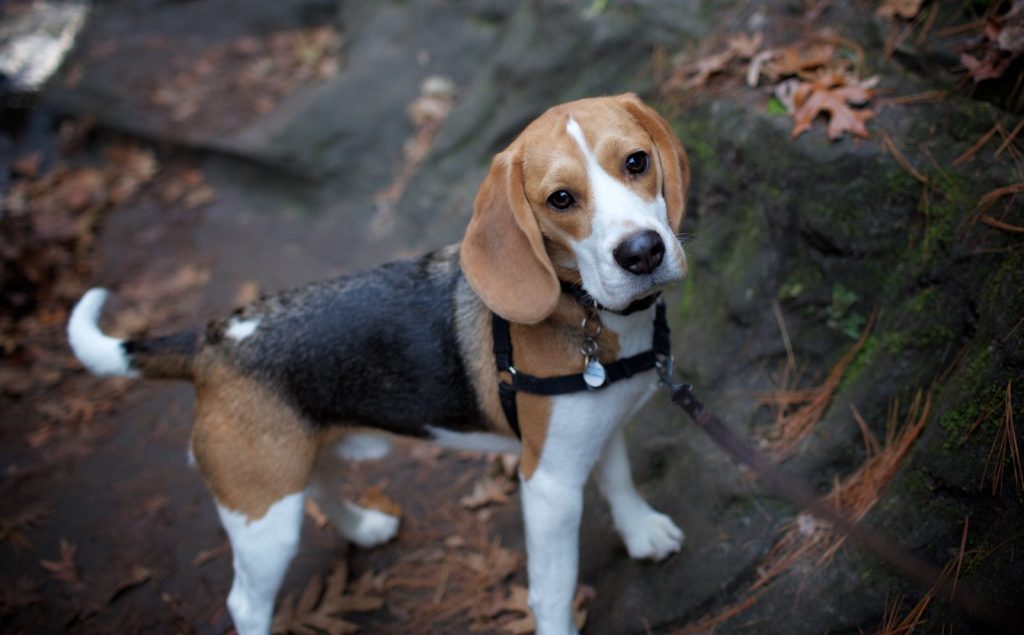
3. Beagle
Read our full Beagle profile →
Why it fits: A sturdy, medium-small hound (typically 20–30 lbs) that’s a good size match for kids — solid enough to handle rough affection but not big enough to bowl a child over. Beagles are pack animals by history and tend to be cheerful, sociable, and tolerant. They’re often a better fit than toy breeds for homes with toddlers because they’re built more robustly and less prone to defensive snapping when handled.
Watch out for: Beagles are scent hounds first and family dogs second. Once a nose locks onto a trail, recall goes out the window — a securely fenced yard and leashed walks are non-negotiable. They can be loud (baying and howling), which some neighbors and small houses won’t love. Food-driven to the point of counter-raiding and prone to obesity. Training takes patience because that independent hound brain isn’t as biddable as a retriever’s. The breed is prone to certain ear and eye conditions worth discussing with your vet.
4. Poodle (Standard or Miniature)

Read our full Poodle (Standard or Miniature) profile →
Why it fits: Poodles are one of the most trainable breeds out there, which is a real asset for parents who need a dog that listens reliably. Standards (typically 40–70 lbs) are durable and gentle; Miniatures (10–15 lbs) offer a smaller footprint while being sturdier and more stable than most toy breeds. They shed very little, which makes them worth a look for allergy-aware households — though “low-shedding” is not the same as “allergen-free,” and reactions vary by person.
Watch out for: The coat that sheds little needs a lot of maintenance: regular brushing plus professional grooming roughly every 4–8 weeks, which is a recurring cost and time commitment. Poodles are very intelligent, which cuts both ways — a bored Poodle invents its own entertainment. Some lines can be sensitive or reactive to chaos, so meet the individual dog and prioritize a calm, confident temperament. Standard Poodles have breed-associated health considerations, including hip dysplasia and bloat risk; ask your vet about signs to watch for.
5. Bernese Mountain Dog

Read our full Bernese Mountain Dog profile →
Why it fits: Berners have a well-earned reputation for being gentle, calm, and affectionate with children. They’re lower-energy than the retrievers — most are content with moderate daily exercise — which suits families who can’t commit to hard workouts. Their steady, easygoing temperament tends to hold up well around noisy, unpredictable kids.
Watch out for: Two hard truths. First, they’re big (70–115 lbs) and can accidentally knock over a small child, so early manners training matters. Second, and more painfully, the breed has a notably short average lifespan (often around 7–10 years) and an elevated incidence of certain cancers and joint problems — something worth thinking through honestly before your children bond with a dog they may lose young. Heavy shedder, and they don’t tolerate heat well. A serious commitment, not a casual one.
6. Boxer

Why it fits: Boxers are playful, patient, and famously fond of children — the breed was historically kept as a family guardian and companion. They’re medium-large (50–80 lbs), athletic, and durable, and most have a goofy, affectionate streak that meshes well with active kids. Short coat means minimal grooming.
Watch out for: Boxers are exuberant and slow to mature, so expect a bouncy, jumpy adolescent for a couple of years — supervision around toddlers is essential during this phase. They need real daily exercise (an hour or more) to stay balanced. As a brachycephalic (short-faced) breed they can struggle in heat and may have breathing considerations; the breed also has an elevated incidence of certain heart and cancer conditions, so regular veterinary monitoring is wise. They can be strong-willed, so consistent training from day one pays off.
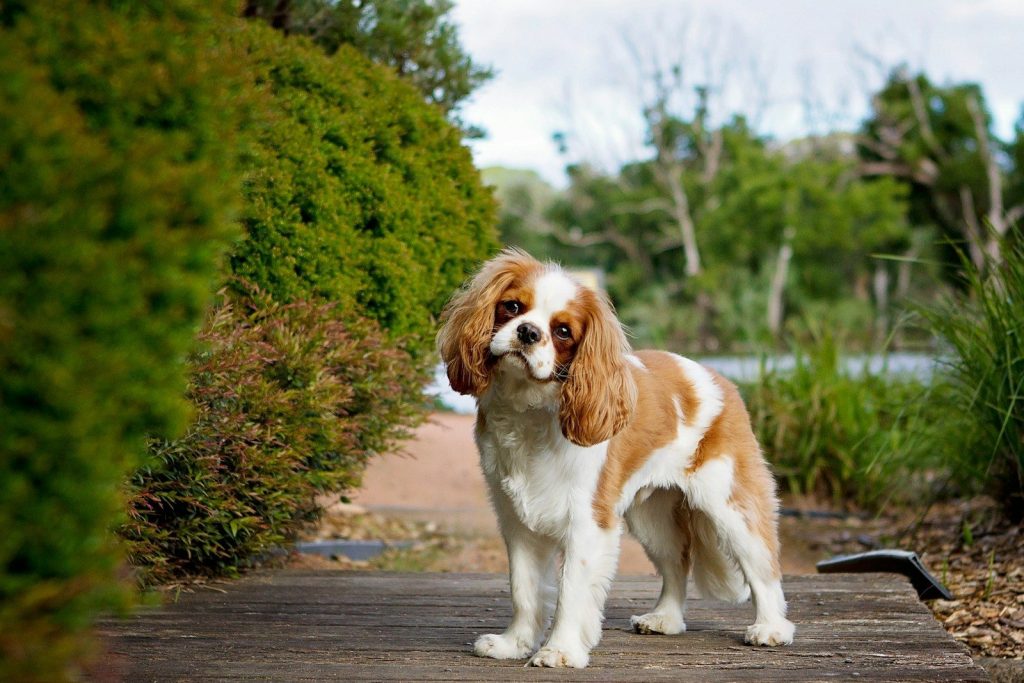
7. Cavalier King Charles Spaniel
Read our full Cavalier King Charles Spaniel profile →
Why it fits: If you want a smaller, gentle companion rather than an athletic dog, the Cavalier is one of the more child-friendly small breeds. They’re affectionate, adaptable, low-drive, and typically tolerant — happy to be part of the family without demanding intense exercise. A good match for calmer households or families with slightly older young children who’ve learned some gentleness.
Watch out for: The honest caveat here is health. The breed has a well-documented, high incidence of mitral valve heart disease and a neurological condition called syringomyelia — this is one of the most important things to research and discuss with a veterinarian before choosing this breed. They’re small enough that very young toddlers need close supervision to avoid accidental injury to the dog. They shed moderately and need regular brushing, and they bond so closely that they don’t do well left alone for long.
How we made these picks
We built this list around breed-club and registry consensus rather than popularity or personal favorites. Primary references were the American Kennel Club (akc.org) breed standards and temperament descriptions, individual breed parent clubs’ published breed information, and general health-tendency information consistent with what veterinary and registry sources report for each breed. We weighted five factors: temperament stability and startle tolerance, trainability for non-expert owners, realistically achievable exercise needs, size-and-durability balance for a household with toddlers, and honest grooming/shedding disclosure.
We deliberately excluded several breeds that show up on other ‘best for families’ lists. Toy breeds under about 10 lbs were mostly left off — they’re often fragile around rough toddler handling and more likely to snap defensively, which raises rather than lowers risk with small kids. We also set aside high-drive working and herding breeds (for example, many Border Collie and Belgian Malinois types) that are superb dogs but need job-level mental and physical work most young-kid households can’t provide; an under-stimulated high-drive dog is a stressed dog.
And we avoided ranking by breed ‘niceness’ alone, because a friendly breed that needs more than you can give is still the wrong pick. Every breed above lists real trade-offs. That’s the point.
These are dogs we’d recommend to a friend in this exact situation — after they’d read the watch-outs, not before. We name no breeders and make no breeder recommendations; for finding a responsible source, start with the breed’s parent club and the AKC’s information on responsible breeding.