
“Best cat for a first-time owner” is really a question about forgiveness. Which breeds tend to bounce back from your early mistakes — the missed nail trim, the litter box in the wrong spot, the day you forgot to refill the water fountain? Some cats shrug off a learning curve.
Others hold a grudge or spiral into stress behaviors when their routine wobbles. So let’s be clear about what this list is and isn’t. There’s no universally best cat.
A breed that suits a quiet retiree who’s home all day can be a poor match for a household that travels often. What we’ve done is pick breeds that, based on breed-club descriptions and the general consensus among cat registries, tend to be adaptable, easy to read, and physically low-maintenance enough that a new owner isn’t overwhelmed on week one. Every pick below comes with a “watch-outs” section that matters just as much as the reasons to say yes.
Read both. And remember: within any breed, individual cats vary enormously. The kitten’s parents and how it was raised in its first eight weeks will often tell you more than the breed label.
What ‘first-time cat owners’ actually means for breed selection
A first-time owner is usually missing three things: experience reading feline body language, an established daily routine built around a pet, and a sense of what “normal” looks like for a given cat. That last one matters more than people expect. If you’ve never lived with a cat, you don’t yet have a baseline — so a breed with dramatic needs (heavy daily grooming, intense separation stress, a strong prey drive that turns your ankles into targets) is harder to manage because you can’t tell a quirk from a problem.
That’s why we lean toward breeds with a reputation for being even-tempered, tolerant of handling, and physically straightforward to care for. It’s not that these cats are ‘easy’ in some absolute sense. It’s that they give you more margin while you learn. A cat that tolerates being picked up makes vet trips and nail trims less of a battle. A coat that doesn’t mat means one skipped brushing session isn’t a crisis.
We also weighted sociability. A cat that seeks you out and communicates clearly is easier for a beginner to bond with and read than one that’s aloof and subtle. The trade-off: sociable breeds usually need more of your time and don’t do well left alone for long stretches.
What we looked for
Five criteria, each with a cost.
Temperament and handleability. We favored breeds described by their parent clubs and major registries as easygoing and tolerant of being held. Trade-off: many of the friendliest breeds are also the neediest, and won’t be content as background décor.
Grooming load. We leaned toward short-to-medium coats that don’t mat and need only weekly brushing. Trade-off: this excludes some gorgeous longhaired breeds that a beginner can absolutely learn to manage — they just require a real grooming commitment.
Predictability of energy. Moderate, steady energy is easier to plan around than extreme athleticism or extreme laziness (very sedentary breeds can hide obesity and health issues). Trade-off: ‘moderate’ still means daily play; no cat is furniture.
Health transparency. We noted breeds where known genetic conditions are well-documented and screenable, so a first-time owner knows what questions to ask a vet. No breed is free of health considerations.
Adaptability. Cats that adjust to apartments, changes in schedule, and household comings-and-goings are more forgiving of a beginner still finding their footing. Trade-off: highly adaptable often correlates with highly social, which loops back to attention needs.
Our recommendations
1. Ragdoll
Read our full Ragdoll profile →
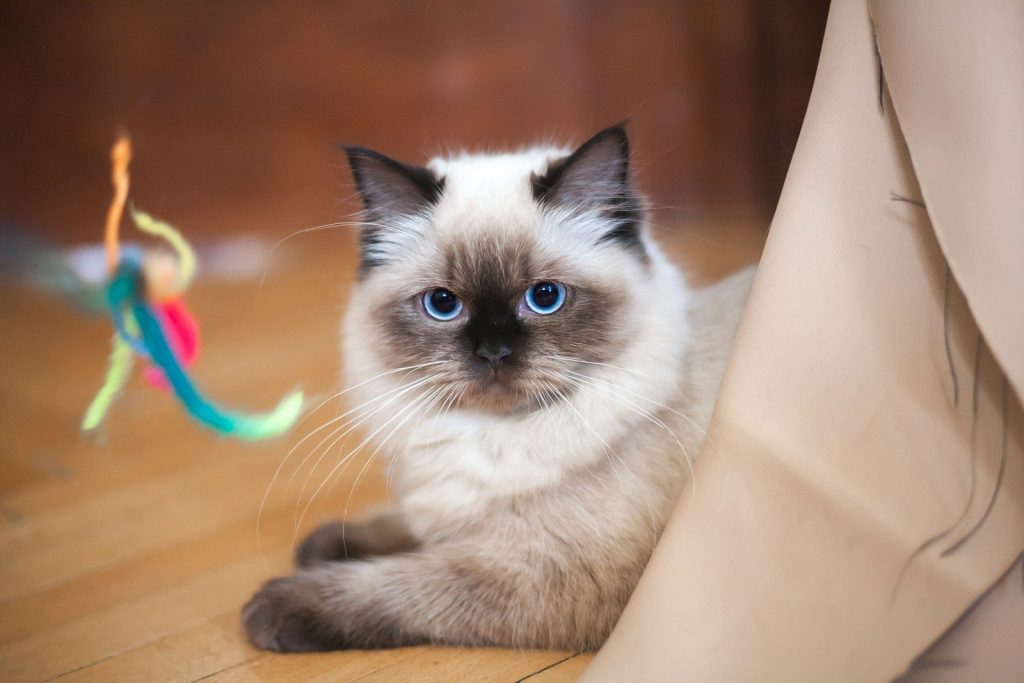
Why it fits: Ragdolls are known for going limp and relaxed when picked up — hence the name — which makes grooming, nail trims, and vet handling far less stressful for someone still learning. They’re typically docile, people-oriented, and tolerant of children and other pets. Most Ragdolls follow their people from room to room and greet them at the door, so a beginner gets clear, rewarding feedback that the relationship is working.
Watch out for: That semi-longhaired coat needs brushing a few times a week to prevent mats behind the legs and around the neck; skip it for a couple of weeks and you’ll be dealing with tangles. Ragdolls are large (males can reach 15–20 lbs) and slow to mature, taking up to four years to fill out. The breed is known to have a higher incidence of hypertrophic cardiomyopathy (HCM); ask your veterinarian about cardiac screening and discuss what parent testing to look for. They’re also very people-dependent and can struggle if left alone all day, every day.
2. British Shorthair
Read our full British Shorthair profile →
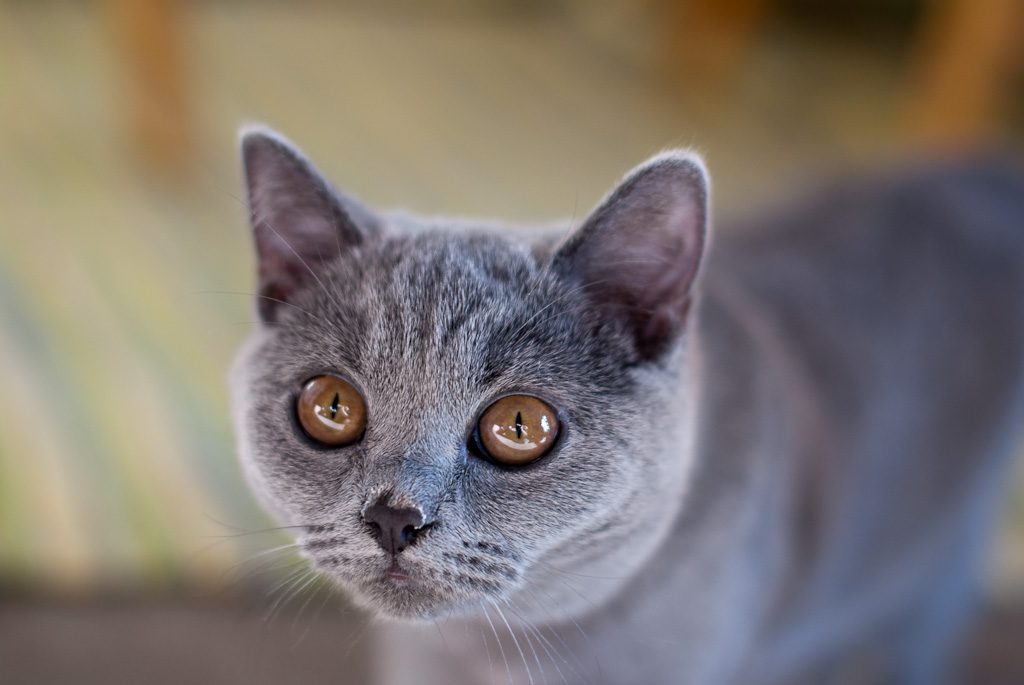
Why it fits: A calm, undemanding, dignified cat that tolerates a beginner’s imperfect routine well. British Shorthairs are affectionate on their own terms without being clingy, which suits owners who work full-time and can’t provide constant attention. The dense, plush coat is short and needs only weekly brushing. Their steady, low-drama temperament means fewer surprises for someone learning to read cat behavior.
Watch out for: They tend not to be lap cats — many British Shorthairs like affection but dislike being carried or held tightly, so don’t expect a cuddle-on-demand cat. They’re prone to weight gain because they’re not especially athletic, so portion control matters; discuss body condition with your vet. Like several breeds, they’re known to have a higher incidence of HCM. The double coat sheds more during seasonal changes than the tidy appearance suggests.
3. American Shorthair
Read our full American Shorthair profile →
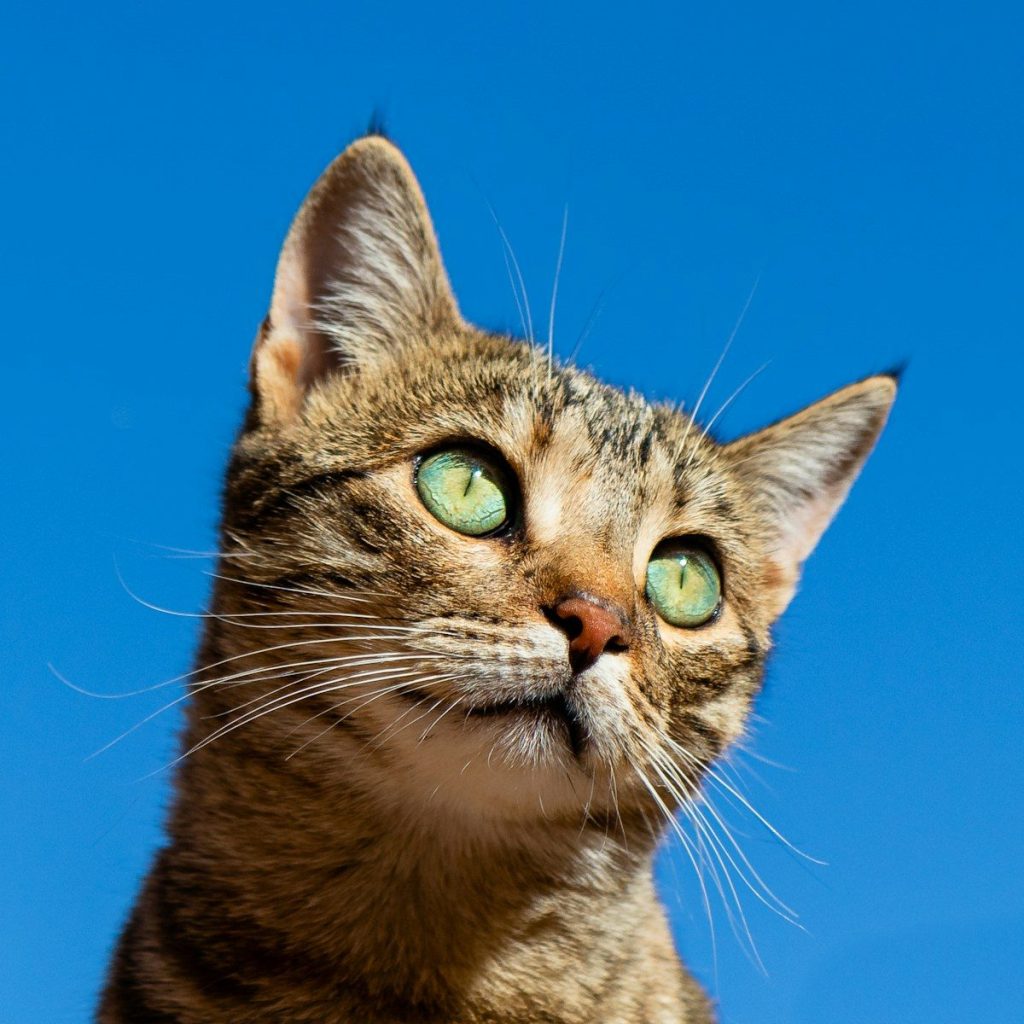
Why it fits: One of the most balanced starter cats: moderate energy, easygoing temperament, robust general health reputation, and a short coat that needs minimal grooming. American Shorthairs are sociable without being needy and typically adapt well to families, other pets, and changing schedules. They play when invited and settle when you’re busy, which is exactly the flexibility a first-timer wants.
Watch out for: Their easygoing appetite plus moderate activity means obesity is a real risk if free-fed — keep an eye on portions and ask your vet about ideal weight. ‘American Shorthair’ is often confused with random-bred domestic shorthairs; they are a distinct pedigree breed, so verify documentation if breed matters to you. They’re independent enough that owners wanting an intensely bonded, velcro cat may find them a touch too self-sufficient.
4. Birman
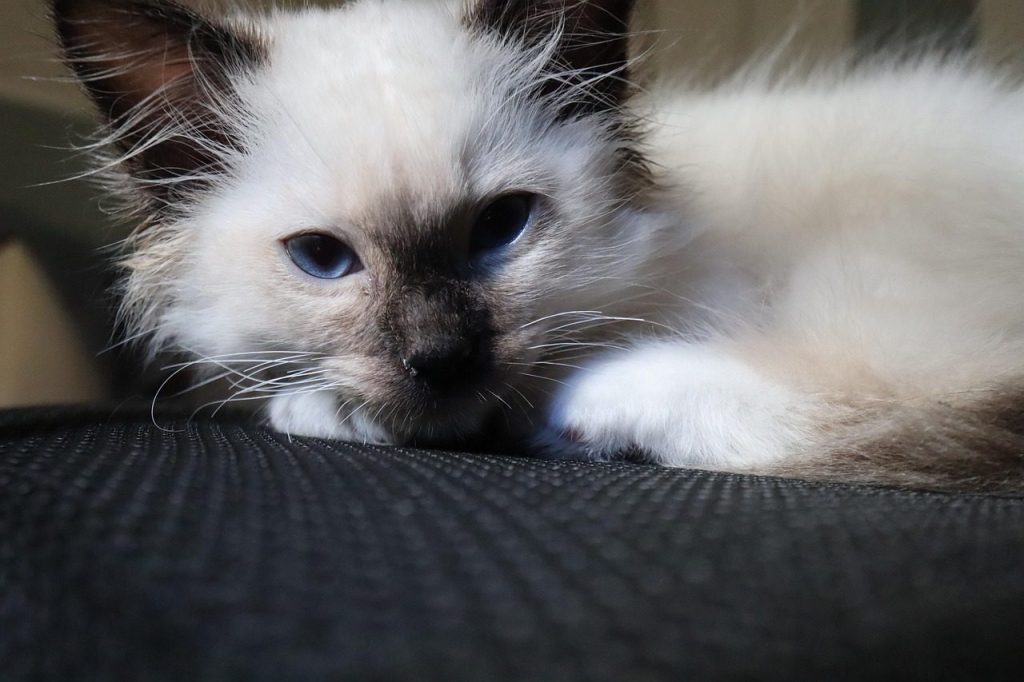
Why it fits: Gentle, quiet, and people-focused without the neediness of some Oriental breeds. Birmans strike a middle ground: they enjoy company and will follow you around, but they’re generally content and undemanding. Their silky coat is single-layered (no dense undercoat), so it mats less than you’d expect for a longhaired cat and needs only a couple of brushings a week. Their soft voice makes them a good pick for apartments and noise-sensitive households.
Watch out for: They still need regular brushing — ‘less than a Persian’ is not ‘none.’ Birmans are strongly companionable and don’t thrive when left alone for long, repeated stretches. As with several purebred cats, discuss known heritable conditions with your veterinarian and ask what health screening the kitten’s line has had. Their quiet, sensitive nature means they can be thrown off by chaotic, high-turnover households.
5. Maine Coon
Read our full Maine Coon profile →
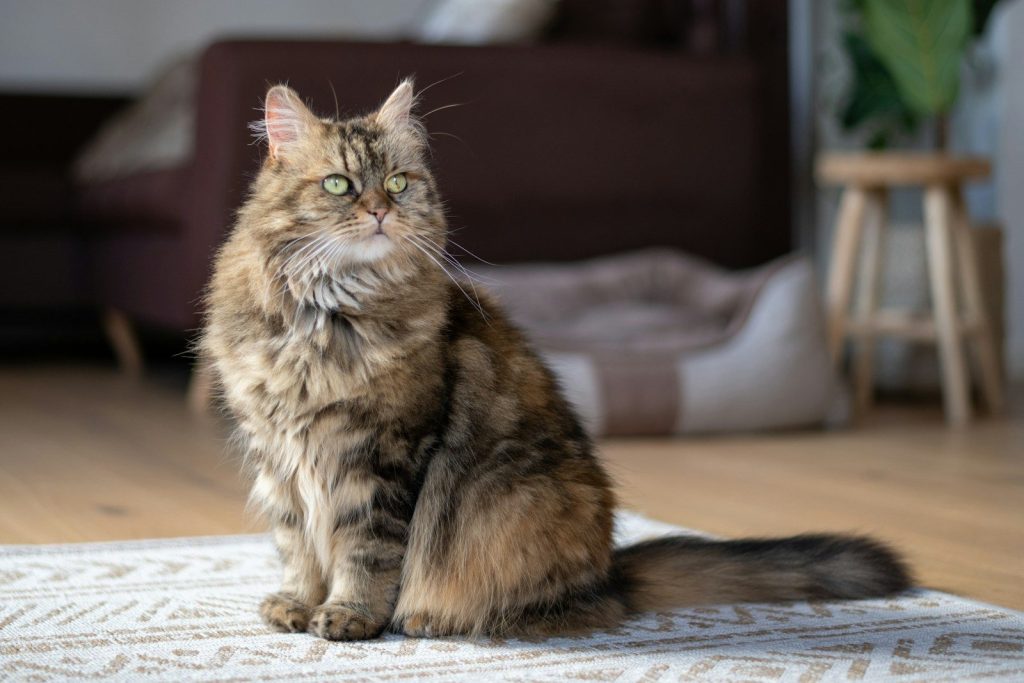
Why it fits: Big, friendly, and famously good-natured — often called ‘dog-like’ for their sociability and trainability. Maine Coons tend to be tolerant, patient with kids and other animals, and communicative in a way that helps beginners learn to read them. Despite the long coat, it’s less prone to matting than a Persian’s, and many owners manage it with two or three brushings a week.
Watch out for: Size is the honest catch — this is one of the largest domestic breeds, with males often 13–18 lbs, which means bigger everything: litter box, food budget, cat trees rated for their weight. The coat still requires consistent grooming, especially around the britches and belly. The breed is known to have a higher incidence of HCM and hip dysplasia; talk to your vet about screening and what to ask about the parents. They mature slowly and stay playful and kitten-like for years, which is charming but demands engagement.
6. Russian Blue
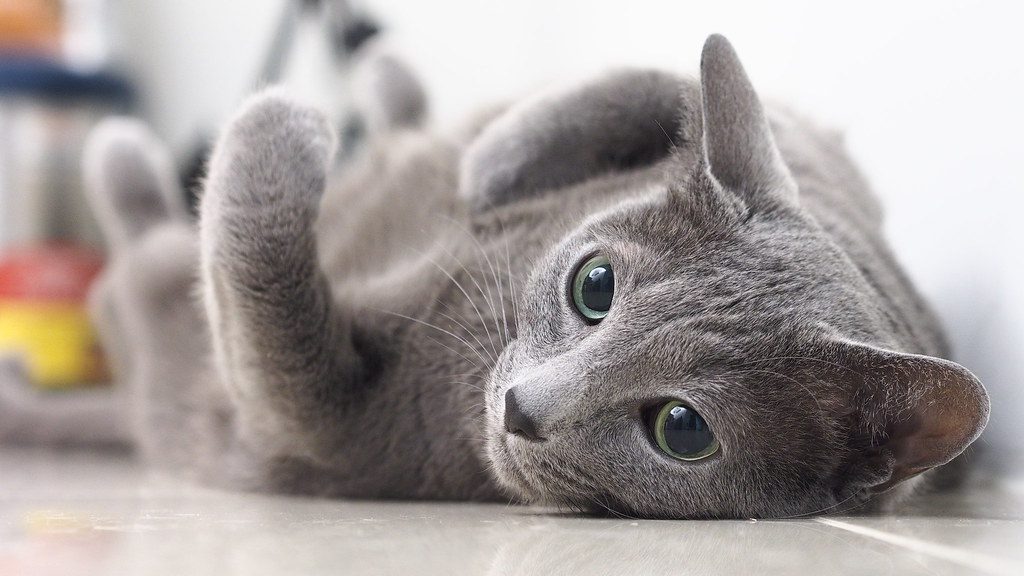
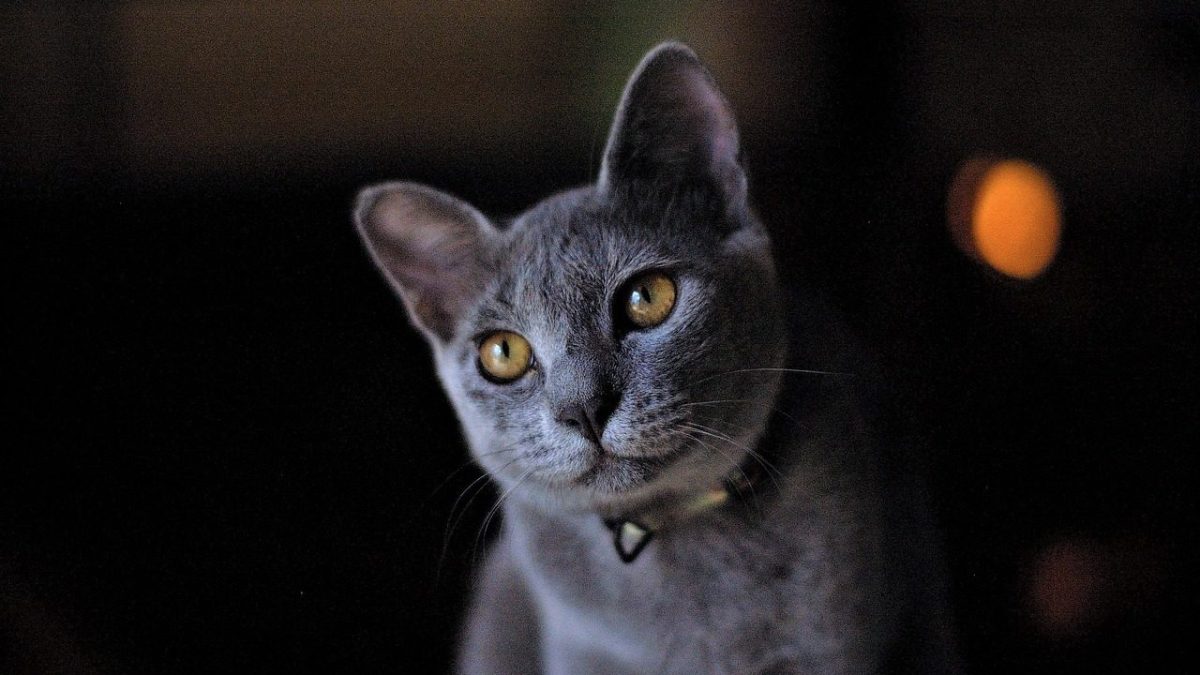
Why it fits: A quiet, gentle, low-maintenance cat that suits calmer, more predictable households. The short, dense coat needs little grooming, and Russian Blues tend to be reserved but deeply loyal once bonded. They’re clean, quiet, and often described as low-shedding — which some allergy-aware owners find easier to live with, though no cat is truly hypoallergenic. Their preference for routine actually helps a first-timer, because it rewards you for building consistent habits.
Watch out for: They’re shy with strangers and slow to warm up, so a household with constant visitors or young, boisterous kids may stress them. Don’t confuse ‘reserved’ with ‘independent’ — they bond intensely with their chosen people and dislike sudden change. If you want a gregarious cat who greets your friends, this isn’t it. Verify a Russian Blue’s temperament by meeting it; a poorly socialized one can be genuinely skittish.
7. Scottish Fold / Scottish Straight
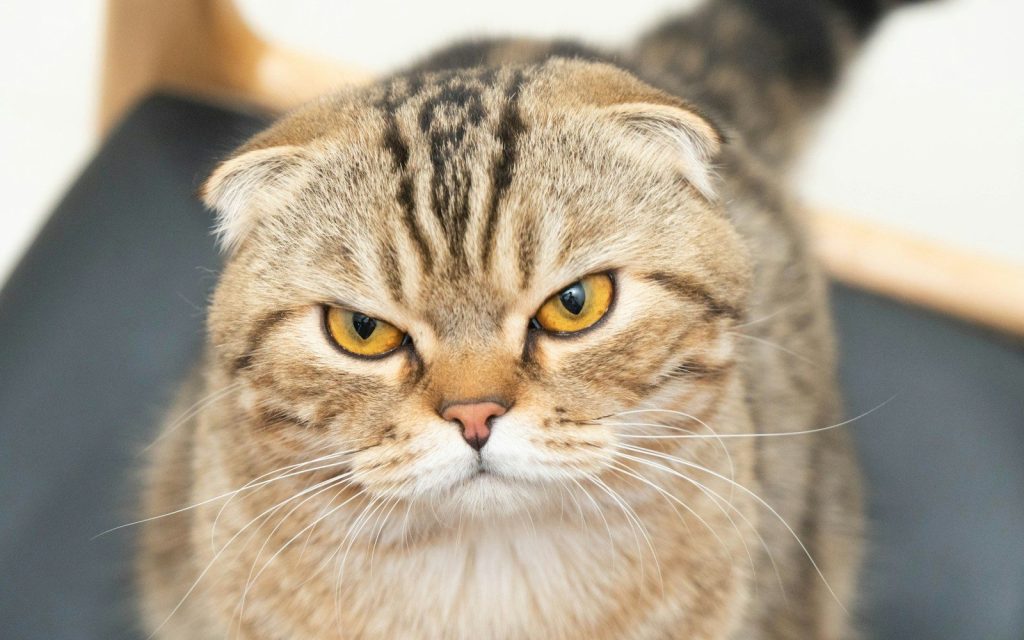
Why it fits: Sweet-tempered, quiet, and adaptable, these cats are known for being calm companions that tolerate handling well and adjust to apartment life. They’re affectionate without being loud, and their easy disposition makes them forgiving of a beginner’s learning curve.
Watch out for: This one comes with a serious, non-negotiable caveat. The folded ear that gives the Scottish Fold its look is caused by a cartilage-affecting gene (osteochondrodysplasia) that is linked to painful, degenerative joint disease — and welfare concerns have led several registries and veterinary bodies to raise objections to breeding folded-ear cats. If you’re drawn to this breed, we’d strongly encourage you to discuss the skeletal health risks with your veterinarian first, and to consider a straight-eared Scottish Straight, which carries the temperament without the ear-fold gene.
Do your own homework here; this is a case where the cute feature and the health cost are directly connected.
How we made these picks
We built this list from breed descriptions and temperament summaries published by major registries — the Cat Fanciers’ Association (cfa.org) and The International Cat Association (tica.org) — cross-referenced with the general breed-club consensus on temperament, grooming needs, and known health considerations. We prioritized four things a first-time owner benefits from: tolerance of handling, manageable grooming, predictable temperament, and adaptability to normal household life. We deliberately excluded some breeds that appear on other ‘best beginner cat’ lists.
Persians and other flat-faced (brachycephalic) breeds are frequently recommended for their calm nature, but their coats demand daily grooming and their facial structure is associated with breathing and tear-duct issues that add care complexity a beginner may not anticipate — so we left them off despite their gentle temperaments. We also passed on the most demanding Oriental breeds (like Siamese and Bengals) for a first-time-owner list: they’re wonderful cats, but their high energy, vocal intensity, or strong activity needs give a beginner less margin for error. None of this means those breeds are ‘bad’ — just that they ask more of an owner who’s still learning the basics.
We included the Scottish Fold with a prominent health warning rather than omitting it, because readers search for it and deserve the honest trade-off rather than silence. This article reflects breed tendencies, not guarantees, and is not veterinary advice — health screening and care decisions should always be made with your own veterinarian.