
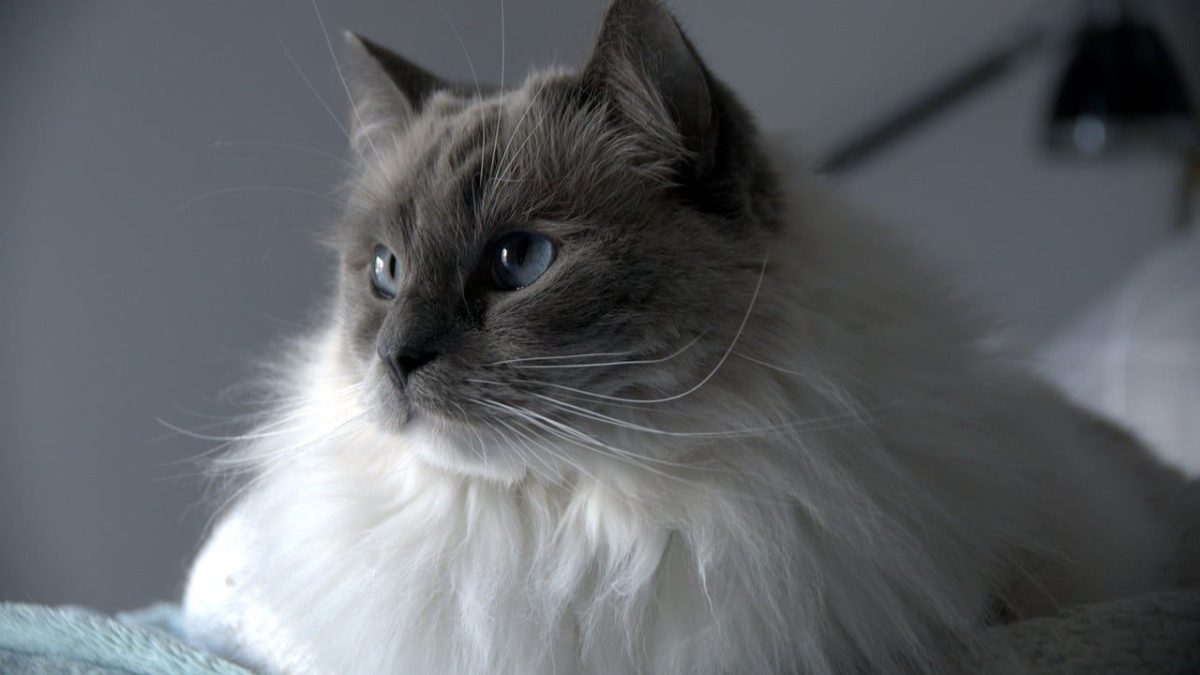
At a glance, these two look like cousins — both have blue eyes, soft semi-longhair coats, and color points on a lighter body. People shortlist them together for good reason. But once you live with one, the differences show up fast. A Ragdoll is a big, floppy lapcat that wants to be physically on you. A Birman is a lighter, chattier companion that follows you room to room but doesn’t melt into your arms the same way. Neither is ‘better.’ They just suit different households. Here’s what actually separates them.
Ragdoll
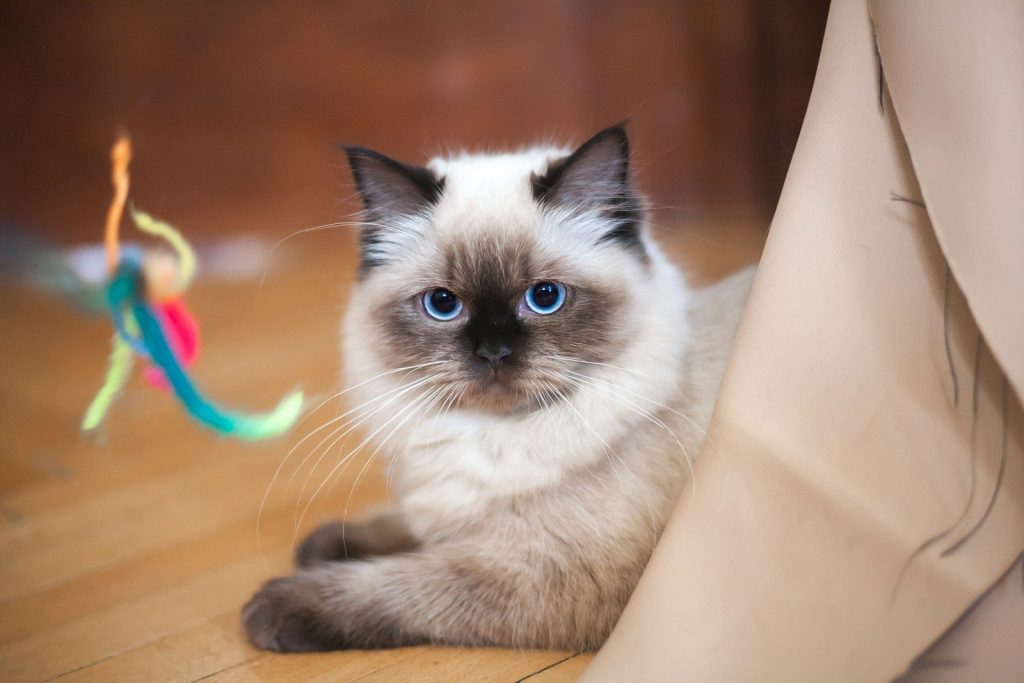
Read our full Ragdoll profile →
Pros: Large, docile, and famously relaxed. Most Ragdolls go limp when picked up (the trait behind the name) and genuinely enjoy being carried and held. They tend to greet you at the door, follow you around, and settle heavily into your lap. Their coat is silky and less prone to matting than you’d expect for the length. Typically quiet, with a soft voice.
Cons: They get big — males often reach 15–20 lbs — and they’re slow to mature, taking up to 4 years to fill out. That size means more litter, more food, more cat to manage. Their trusting, low-defense nature makes them poor candidates for outdoor or unsupervised access; they don’t street-smart their way out of trouble. The breed is known to have a higher incidence of hypertrophic cardiomyopathy (HCM), so ask your veterinarian about heart screening.
Best for: Someone who wants a heavy, affectionate lapcat that tolerates handling well — good for calm homes, gentle older kids, and people who want a cat that seeks physical closeness. Indoor-only households.
Birman
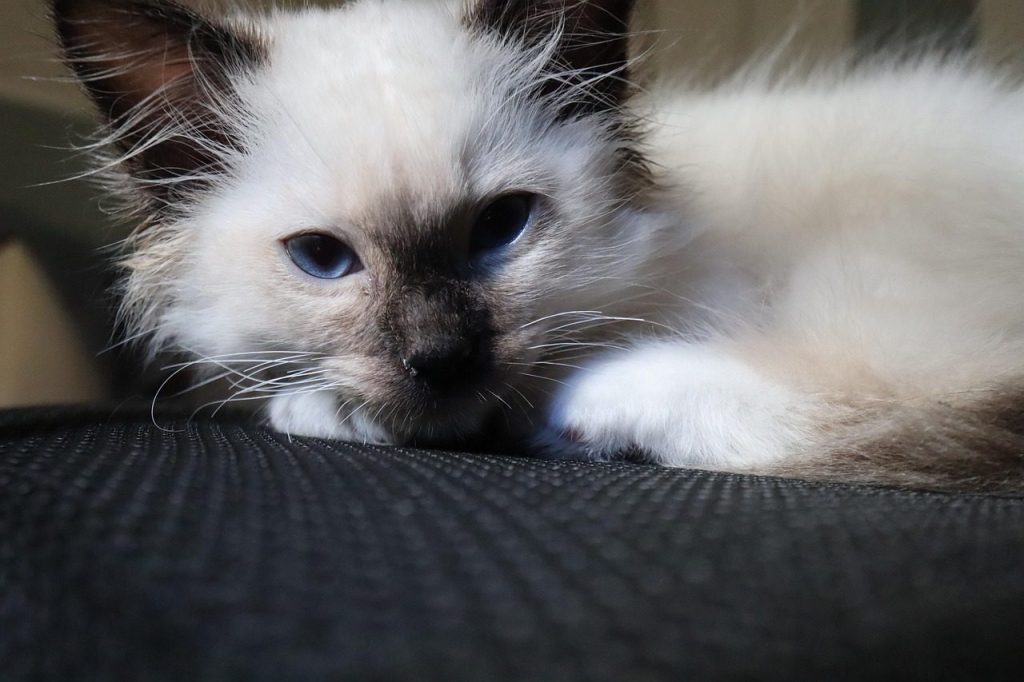
Read our full Birman profile →
Pros: Sweet-tempered and people-oriented without being clingy in the dead-weight Ragdoll way. Birmans are lighter and more agile, with a gentle, curious energy. They’re social with other pets and children, and their signature white ‘gloves’ on all four paws are a genuine breed marker. The single-layer coat rarely mats and needs less upkeep than most semi-longhairs. Chatty in a soft, conversational way.
Cons: They want company and can get lonely or anxious if left alone for long stretches — not ideal for someone gone 10 hours a day with no other pets. They’ll follow you everywhere and insert themselves into your activities, which some people love and some find underfoot. Like Ragdolls, the breed is known to have a higher incidence of HCM; discuss cardiac screening with your veterinarian.
Best for: Someone home often who wants an interactive, follow-you-around companion that’s affectionate but still likes to move, play, and stay involved rather than just be held.
Side-by-side comparison
| Attribute | Ragdoll | Birman |
|---|---|---|
| Adult size | Large; males 15–20 lbs, females 10–15 lbs | Medium; males 9–12 lbs, females 6–10 lbs |
| Energy level | Low to moderate; enjoys short play but mostly relaxed | Moderate; playful and active well into adulthood |
| Affection style | Physical — wants to be held, carried, and in your lap | Social — follows you around and stays nearby, less into being carried |
| Grooming | Silky coat, brush 2–3x weekly; low mat tendency | Single coat, brush 1–2x weekly; very low mat tendency |
| Vocalization | Quiet, soft voice | Chatty in a gentle, conversational way |
| Time alone tolerance | Moderate; content but appreciates company | Lower; prefers a companion, human or animal |
| Maturity | Slow — up to 4 years to reach full size | Faster — matures by about 2–3 years |
| Good with kids/pets | Excellent; very tolerant of handling | Excellent; sociable and adaptable |
| Health note | Higher incidence of HCM; ask your vet about screening | Higher incidence of HCM; ask your vet about screening |
Our verdict
Pick a Ragdoll if you want a big, mellow cat that treats your lap as home base. If your idea of a perfect evening is a heavy, purring cat draped across you while you watch TV — and you don’t mind a slow-growing, sizable animal that needs everything scaled up — the Ragdoll delivers exactly that. They’re a strong match for calm homes and people who want a cat that welcomes being picked up and handled.
Pick a Birman if you want the sweetness and blue eyes without the dead-weight lapcat routine. Birmans are lighter, more mobile, and more interactive. They’ll be in the room with you, on the desk, following you to the kitchen — a present, participatory companion rather than a passive one.
The trade-off is that they’d rather not be left alone all day, so they fit best with someone home often or a household that already has other pets. Both are gentle, both are affectionate, and both carry a known cardiac risk you should factor in — ask your veterinarian about HCM screening regardless of which you choose. The real deciding question is simpler than health or coat: do you want a cat to hold, or a cat to hang out with?
That answer points you cleanly to one or the other.