
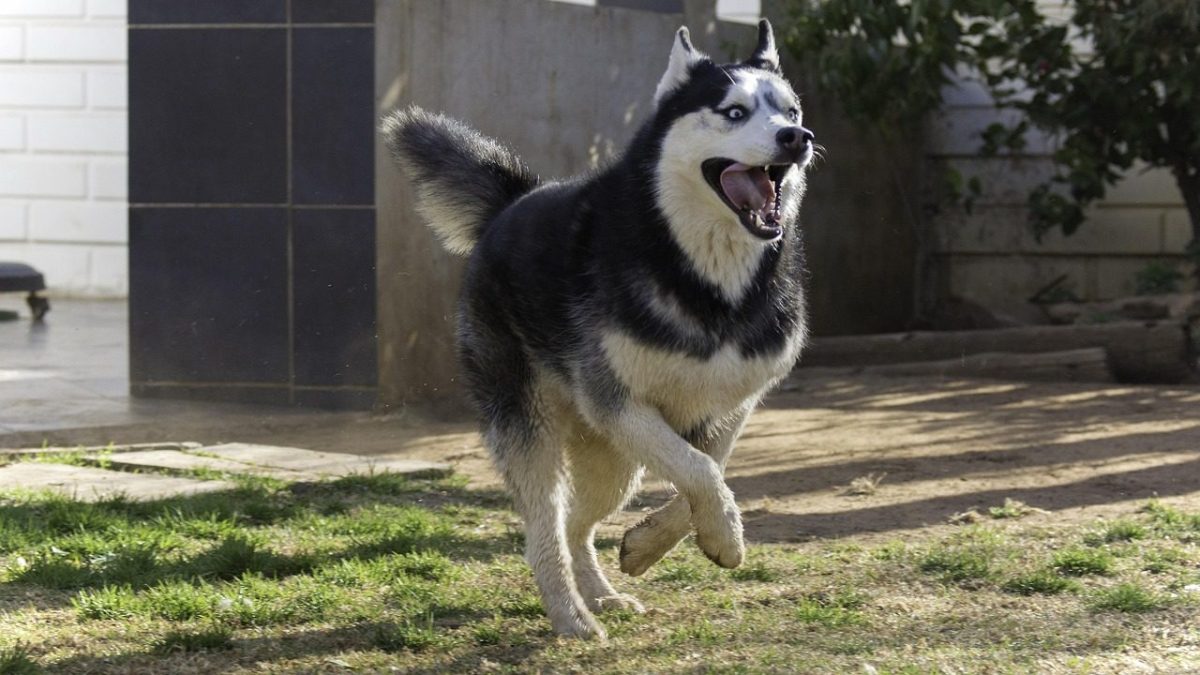
From across a dog park, these two look like cousins who share a coat and a stubborn streak — and they are. Both descend from Arctic sled dogs. Both shed enough fur to knit a second dog.
Both were bred to work hard in the cold and pull heavy loads over long distances. But the differences matter more than the resemblance suggests. A Husky was built for speed and endurance over distance; a Malamute was built for hauling heavy freight at a slower pace.
That single fact ripples through their size, energy, and how they behave in your living room. If you’re choosing between them, you’re really choosing between two different kinds of commitment.
Siberian Husky
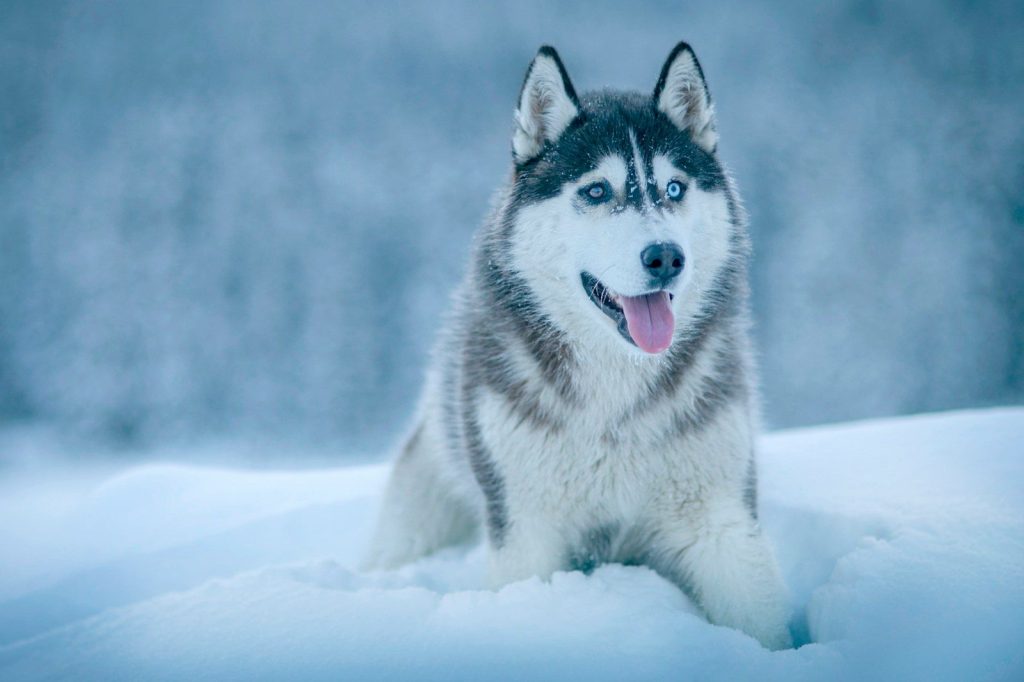
Read our full Siberian Husky profile →
Pros: Athletic, friendly, and genuinely social — most Huskies greet strangers and other dogs happily, so they’re a poor guard dog but a great companion for busy, active households. Typically weigh 35–60 lbs, so they’re the more apartment-plausible of the two (with heavy exercise). Clean, cat-like grooming habits and little doggy odor. Highly trainable minds, when you can hold their attention.
Cons: Bred to run, and they will — Huskies are notorious escape artists who dig under, jump over, and slip out of fences and harnesses. A bored Husky is a destructive Husky. They ‘talk,’ howl, and can be very loud. High prey drive means small pets and reliable off-leash recall are often a losing battle. Sheds constantly plus two dramatic seasonal ‘blowouts’ a year.
Best for: Active people who run, bike, ski-jor, or hike most days and want a sociable, energetic dog — as long as you have a secure yard and accept that off-leash freedom may never be safe.
Alaskan Malamute
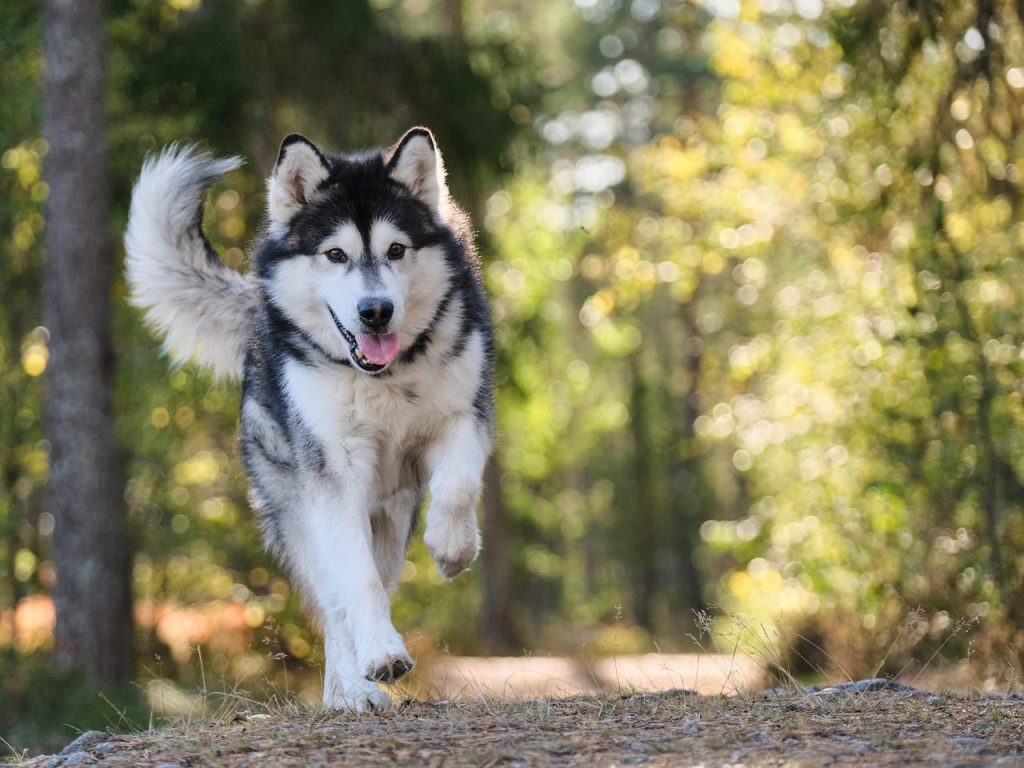
Read our full Alaskan Malamute profile →
Pros: Powerful, dignified, and deeply affectionate with their people. Typically 75–100 lbs, so they’re a substantial, impressive dog with a calm confidence Huskies often lack. Less frantic energy than a Husky — they want work and long walks, but they’re not built to run marathons daily. Loyal and devoted family dogs that bond hard.
Cons: Big, strong, and strong-willed — they can pull an adult off their feet and need consistent, patient training from day one. Same high prey drive and same escape/digging instincts, but in a much bigger package. Prone to same-sex dog aggression in some lines. That thick double coat means heavy year-round shedding and major seasonal blowouts. Not suited to hot climates.
Best for: Experienced, physically capable owners with space and a strong fence who want a loyal, working-partner dog and can commit to structured exercise, training, and serious grooming.
Side-by-side comparison
| Attribute | Siberian Husky | Alaskan Malamute |
|---|---|---|
| Size | Medium — roughly 35–60 lbs, 20–23.5 in tall | Large — roughly 75–100 lbs, 23–25 in tall, much heavier build |
| Energy level | Very high — needs 60–90+ minutes of hard exercise daily, ideally running or pulling | High but steadier — 60+ minutes of walking, hiking, or hauling; endurance over speed |
| Grooming | Weekly brushing; heavy shedding with twice-yearly coat blowouts | More coat, more shedding — brush 2–3x weekly, daily during blowouts |
| Trainability | Smart but independent and easily bored; won’t work just to please you | Intelligent and stubborn; needs firm, consistent handling and early leash training |
| Sociability with strangers | Very friendly — makes a terrible watchdog | Friendly but more reserved and dignified with strangers |
| Prey drive | High — cats and small pets are a real risk; off-leash rarely safe | High — same caution needed, in a larger, stronger dog |
| Vocalness | Very vocal — howls, ‘talks,’ and can be loud | Vocal too — famous ‘woo-woo’ talking, less relentless howling |
| Climate tolerance | Loves cold; needs shade, water, and care in heat | Cold-adapted; struggles in heat and needs careful management in warm climates |
| Home suitability | Possible in an apartment with heavy daily exercise; secure yard strongly preferred | Best with space and a tall, secure fence; a lot of dog for small homes |
| First-time-owner friendly? | Challenging — the escaping and independence catch new owners off guard | Not recommended — size plus stubbornness demands experience |
Our verdict
Choose the Siberian Husky if you’re an endurance athlete at heart — someone who runs, bikes, skis, or hikes most days and wants a lighter, sociable dog to share it with. The Husky’s friendliness makes it easier around new people and dogs, and its smaller size gives you a bit more flexibility on housing. But go in clear-eyed: this is a dog that will find the one gap in your fence, and reliable off-leash recall may never come.
If you can’t commit to daily hard exercise and serious containment, a Husky will make you both miserable. Choose the Alaskan Malamute if you want a bigger, calmer, more devoted working partner and you have the strength, experience, and space to handle one. The Malamute isn’t as frantic as a Husky, but it’s far more physically powerful — enough to pull you over or muscle through a weak fence.
It bonds deeply and carries itself with a quiet dignity that Husky owners often envy. It’s simply more dog in every sense, including the grooming and the training investment. Both breeds share the same non-negotiables: a secure yard, real daily exercise, tolerance for heavy shedding, and respect for a strong prey drive.
Neither is a good fit for someone who wants an off-leash dog park regular or a low-maintenance companion. If those deal-breakers rule out both, that’s genuinely useful to learn now rather than a year in. Individual dogs vary, so meet several adults of either breed before deciding.