
Overview
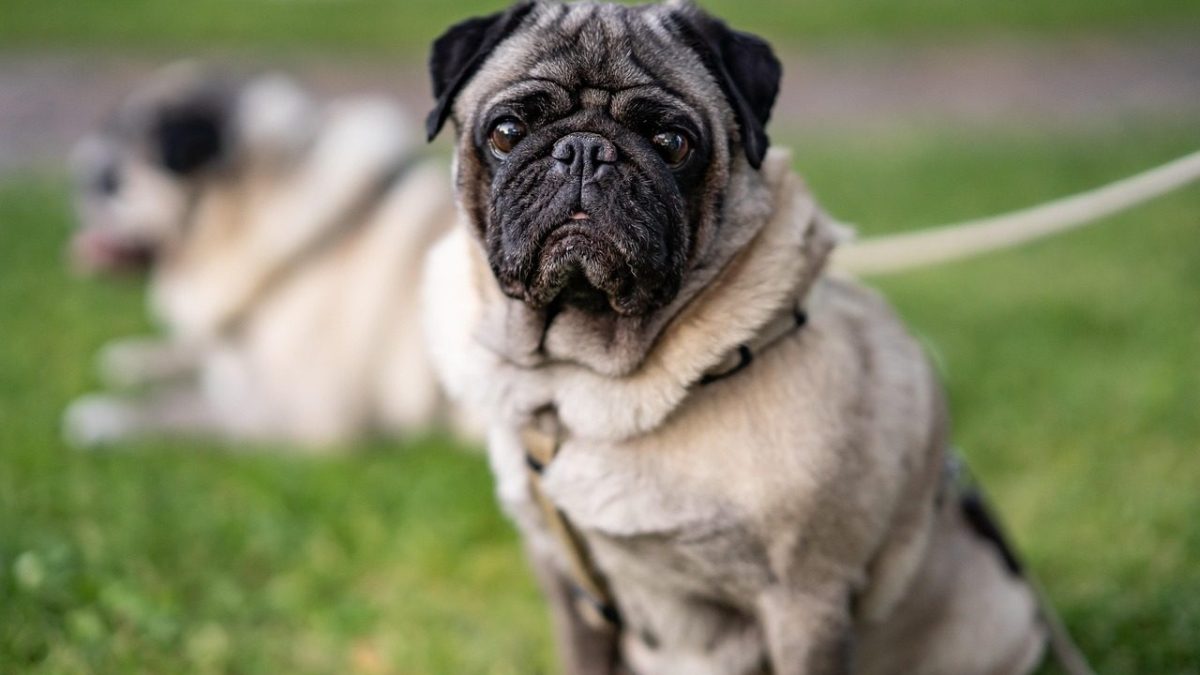
The Pug is a compact, square, thickset toy dog — 14 to 18 pounds and 10 to 13 inches — with a deeply wrinkled flat face, large round dark eyes, a tightly curled tail and a short glossy coat. It is unmistakable, and it has been unmistakable for a very long time; this is an ancient breed that has changed less in outline than most.
Temperamentally, Pugs are among the best companions in the toy group. They are even-tempered, affectionate, comical without being frantic, sociable with strangers and children alike, and largely free of the nervousness and sharpness that affect some small breeds. The old description of the breed as a lot of dog in a small space is accurate in personality if not in athleticism.
Exercise needs are genuinely low, which suits apartments and less active owners.
Here is the honest headline, and this page would be dishonest without it. The flat face that defines the breed is also the source of its most serious problems. Pugs are among the most affected brachycephalic breeds: breathing difficulty, poor heat tolerance, prominent eyes vulnerable to injury, and skin folds needing daily care are common rather than rare. There is also a fatal inflammatory brain disease that occurs almost exclusively in this breed. None of that makes a Pug a bad dog — they are wonderful dogs — but it makes buying one a decision to make deliberately, with a good breeder and a realistic veterinary budget.
Breed Origin & History
The Pug is an ancient Chinese breed, kept as a companion to emperors and housed with considerable ceremony. Flat-faced small dogs appear in Chinese records well over a thousand years ago, and the Pug is among the oldest surviving companion breeds.
Dutch traders brought Pugs to Europe in the sixteenth century, where the breed attached itself firmly to the House of Orange — a Pug is said to have alerted William the Silent to an approaching attack, and the breed became a fixture of the Dutch royal household and subsequently of European aristocracy generally. Pugs appear in European portraiture with a frequency few breeds match.
The breed reached the United States after the Civil War and was recognized by the American Kennel Club in 1885, in the Toy group.
The Pug Dog Club of America, established in 1931, is the AKC parent club. Its stated mission includes supporting humane treatment, public education about selective ethical breeding, and advocating humane genetic research — which is relevant context for a breed whose health is actively debated.
One piece of history matters practically: the modern Pug’s face is flatter than that of Pugs depicted in eighteenth and nineteenth century art. The exaggeration is comparatively recent, and the health consequences discussed below track it. Some breeders now select deliberately for more open nostrils and a slightly longer muzzle, and those are the breeders worth seeking out.
Temperament & Personality
Pugs are affectionate, even-tempered, playful and sociable. They are typically friendly with strangers, tolerant of children, and comfortable around other dogs and cats. Aggression and nervousness are both uncommon in well-bred Pugs, which is a genuine advantage over several other toy breeds.
They are companion dogs in the fullest sense. Pugs want to be with their people, follow them from room to room, and are happiest sitting alongside whatever is happening. They tend not to cope well with long isolation.
They are also funny in a way owners consistently remark on — clownish, expressive, and inclined to perform for attention. The breed has a reputation for stubbornness in training, which is fair: Pugs are food-motivated and willing but not especially driven to comply, so reward-based training works and repetition-heavy obedience work often does not.
Energy is low. Short bursts of play followed by long naps is the normal pattern, and Pugs are content with modest walks.
Two practical notes. Pugs shed considerably more than the short coat suggests — this is not a low-shedding breed, and fawn Pugs in particular leave hair everywhere. And they are prone to weight gain, which matters more here than in most breeds because excess weight compounds breathing difficulty directly.
Is This Breed Right for You?
The Pug suits people who want an affectionate, low-exercise, sociable companion and can commit to the care the breed’s structure requires. Specifically: apartment and condo dwellers. Retirees, people working from home, and anyone who wants a dog that is content indoors. Families with children, given the tolerant temperament. First-time owners, in terms of temperament — though not in terms of health management. Households in temperate or air-conditioned environments. Owners prepared for a realistic veterinary budget rather than a minimal one.
Here is who should think twice. Anyone in a hot climate without reliable air conditioning; heat is genuinely dangerous for this breed, not merely uncomfortable. People who want a jogging, hiking or outdoor-sport companion. Anyone unwilling to clean facial folds regularly and watch the eyes closely. Owners who cannot absorb potentially significant veterinary costs — airway surgery, eye procedures and skin management are common enough that budgeting for them is prudent. Anyone out for long working days, since Pugs are attached and do poorly alone. People wanting a low-shedding dog.
And anyone shopping on price or appearance alone. In this breed more than most, the breeder determines what you get. Ask specifically about nostril openness, breathing under exertion in the parents, eye health and the line’s history. A breeder selecting for a slightly more open face is doing the right thing, and their puppies are the ones worth waiting for.
If you want a comical, devoted, undemanding companion and you go in prepared, a Pug is a delight. Just go in prepared.
Care & Exercise Needs
Exercise is modest — two short walks a day plus indoor play suits most adults. The important part is when and how. Walk in the cool parts of the day, keep sessions short, and stop at the first sign of labored breathing. A harness rather than a collar is strongly preferable for a dog with a compromised airway.
Heat management is a genuine safety issue rather than a comfort preference. Pugs cannot cool themselves efficiently by panting, and heat stroke risk is high. Never leave a Pug in a warm car, a sunny yard or an unairconditioned room on a hot day, and keep water available always.
Weight control matters more in this breed than almost any other, because excess weight directly worsens breathing. Measure food, resist the begging — which Pugs are exceptionally good at — and weigh regularly.
Facial folds need daily attention. Wipe and thoroughly dry the wrinkles, particularly the nose roll, to prevent the moist dermatitis that otherwise develops. Damp folds are the problem; drying is as important as cleaning.
Eyes deserve daily observation. The prominent, shallow-set eyes are exposed and easily injured, and any squinting, cloudiness, redness or pawing at the face should be treated as urgent rather than watched.
Otherwise: routine nail trimming, ear cleaning, and dental care — crowded teeth in a shortened jaw make periodontal disease common. Grooming the coat itself is easy; a weekly rubber curry handles the substantial shedding.
Health Considerations
This is a breed where the health section deserves careful reading.
Brachycephalic Obstructive Airway Syndrome is common. Narrowed nostrils, an elongated soft palate and a narrow windpipe combine to restrict airflow, producing snoring, snorting, exercise intolerance and, in more affected dogs, real distress. Surgical correction is available and often significantly improves quality of life. Heat stroke risk follows directly from the same anatomy.
Eye problems are frequent. The prominent eyes are vulnerable to corneal ulcers and to proptosis, where the eyeball is displaced from the socket by trauma — a genuine emergency. Dry eye and pigmentary keratitis are also common.
Skin fold dermatitis in the facial wrinkles is common and largely preventable with daily care.
Pug Dog Encephalitis — necrotizing meningoencephalitis — is an inflammatory brain disease that occurs almost exclusively in this breed. It typically affects young adults, causes seizures and neurological decline, and is usually fatal. A DNA test identifies dogs at elevated risk, and responsible breeders use it. Ask about it directly.
Hemivertebrae, malformed vertebrae associated with the screw tail, can cause spinal problems ranging from none to significant. Patellar luxation, hip dysplasia and Legg-Calvé-Perthes disease are also reported, as is obesity, which compounds everything above.
A healthy Pug commonly lives 13 to 15 years. Ask breeders for eye and patella documentation, PDE risk testing, and honest answers about breathing in their dogs. For any concern about your dog’s breathing, eyes, skin or weight, consult your veterinarian rather than relying on general breed information.
Recommended Gear Categories
A few items are close to mandatory rather than optional. A well-fitted harness replaces the collar for walking — pressure on the throat is a poor idea on a compromised airway. Keep a collar for tags only.
Cooling equipment is genuine safety gear for this breed: a cooling mat, a collapsible water bowl for walks, and a cooling vest if you live somewhere warm. Plan walks around temperature rather than schedule.
Facial care supplies belong in a daily routine: soft pet-safe wipes and, importantly, something dry to finish with — the folds need to be dried, not just cleaned. Some owners use a dedicated soft cloth per wrinkle.
For weight management, a measuring scoop and a slow feeder both help with a food-motivated breed that gains easily, and puzzle feeders give a clever dog something to do while slowing meals.
A raised or supportive orthopedic bed suits a heavy-bodied small dog, and ramps or steps at the sofa reduce impact on the spine — relevant given the hemivertebrae risk.
Dental supplies matter given the crowded jaw. For grooming, a rubber curry brush and a good vacuum handle the shedding, which is heavier than people expect. Your editor will add specific product recommendations with current pricing and details.
Similar Breeds to Consider
The French Bulldog is the most common cross-shop and shares nearly all of the Pug’s structural concerns — flat face, breathing difficulty, heat intolerance, spinal malformations — with the addition of a higher rate of intervertebral disc disease. It is not the healthier alternative it is sometimes assumed to be. Choose on temperament, not on the belief that one avoids the other’s problems.
The Boston Terrier is the pick for someone who wants a similar size and a comparable companion temperament with a somewhat less extreme face. Bostons are still brachycephalic and still heat-sensitive, but generally less affected than Pugs, and they are more athletic.
The Shih Tzu offers a similar affectionate, low-energy companion temperament with a long coat instead of a short one. It is also flat-faced, though usually less severely, and the trade-off is a serious grooming commitment in place of some of the airway risk.
For someone who loves the Pug’s personality but wants to avoid brachycephalic problems entirely, the Havanese is the honest recommendation — similarly affectionate and sociable, genuinely good with children, with a normal muzzle and no heat limitation, at the cost of daily grooming.
The Miniature Pinscher or a smooth Chihuahua suit those wanting low grooming and low exercise with a normal face, accepting a more reactive temperament.
In short: choose the Pug for the temperament with eyes open about the structure, the Boston for a less extreme version, the Havanese if you want the personality without the flat face, and think carefully before assuming a French Bulldog is a safer bet.