
Overview
The Pembroke Welsh Corgi is one of those breeds that fools people. The short legs and fox-like face read as a lap dog. The brain and the drive behind that face belong to a full working herder. Corgis were bred to move cattle across Welsh farmland, and that job left its mark — they’re alert, quick to react, and happiest when they have something to do.
Pembrokes bond hard to their people. Most want to be in the same room as you, following from kitchen to couch to bathroom door. That devotion is the breed’s best quality and also the source of a lot of its noise. A bored, under-exercised Corgi will bark, herd your ankles, and reorganize your day to suit its own agenda.
They’re compact — usually 25 to 30 pounds — but don’t mistake small for low-maintenance. This is a double-coated, high-energy dog with a stubborn streak and a strong opinion about how things should go. In the right home, that adds up to one of the most entertaining, loyal companions you’ll ever share a house with. In the wrong home, it’s a lot of dog packed into a frame that can’t outrun its own boredom.
Breed Origin & History
The Pembroke Welsh Corgi comes from Pembrokeshire, in southwest Wales, where farmers used them as cattle drovers. The low stance was practical: a dog close to the ground could nip at a cow’s heels and duck under the kick that came back. That heeling instinct is still very much alive in the breed today.
The Pembroke and the Cardigan Welsh Corgi were long considered variations of the same type and were shown together until the 1930s, when the AKC and the UK Kennel Club recognized them as separate breeds. They differ in more than tail length: the Pembroke is generally lighter, with a straighter foreleg and a shorter body, and its ears are more pointed. The two breeds have distinct ancestry, with the Pembroke often linked to spitz-type dogs brought over by Flemish weavers.
The breed’s public profile owes a great deal to Queen Elizabeth II, who owned more than 30 Pembrokes over her lifetime, starting with a dog named Susan in 1944. That royal association turned the Corgi into a recognizable icon far beyond farm country.
The AKC recognized the Pembroke Welsh Corgi in 1934. It sits in the Herding Group, and while most Pembrokes today live as companions rather than working dogs, the herding wiring hasn’t gone anywhere. It shows up in how they play, how they watch movement, and how they handle a house full of running children.
Temperament & Personality
Pembrokes are smart, funny, and bold — a big personality in a small package. They learn fast, which is a gift and a problem. They pick up the commands you teach them and also the habits you didn’t mean to teach, like barking to make you get up.
They’re affectionate and people-oriented. Most Pembrokes want to be near their family and can get restless or anxious when left alone for long stretches. This is a companion breed as much as a working one — it does not thrive as a backyard dog.
Here’s the honest trade-off: the qualities that make a Corgi delightful are the same ones that make it demanding. That sharp intelligence needs a job or it turns into mischief. That alertness makes them excellent watchdogs and also frequent, enthusiastic barkers. That herding instinct means many Pembrokes will nip at moving heels — children, joggers, other pets — unless you redirect it early and consistently.
They tend to be confident with strangers, though some are reserved. With other dogs they’re usually sociable but can be bossy; the herding dog wants to manage the room. Early, ongoing socialization matters here more than most people expect from a small breed.
Corgis are also stubborn in a cheerful way. They’ll do what you ask when they see the point, and stall when they don’t. Training works best when it’s short, upbeat, and rewarding. Heavy-handed correction backfires — you’ll get a dog that digs in rather than one that complies.
Is This Breed Right for You?
A Pembroke Welsh Corgi suits an owner who is home a lot, enjoys training, and genuinely likes a dog with opinions. If you want a companion who’s involved in everything you do and you find that charming rather than exhausting, this breed can be a perfect match.
They work well for active households — people who’ll commit to 45 to 60 minutes of real exercise daily plus mental work like trick training, puzzle feeders, or scent games. Corgis excel at dog sports: agility, herding trials, obedience, and rally. If you want a training project, this is a rewarding one.
They can live in an apartment, but only if you meet two conditions: you exercise them properly, and you manage the barking early. An under-stimulated Corgi in a small space with thin walls is a recipe for noise complaints.
They do well with children who are old enough to handle a dog that may herd by nipping. Families with toddlers should supervise closely and train the dog to redirect that instinct.
Who should skip this breed: people gone 10 hours a day, neat freaks who can’t tolerate heavy shedding, anyone who wants a quiet dog, and first-time owners who aren’t ready to out-stubborn a clever animal. The Corgi’s smarts mean it will train you if you don’t train it.
Also reconsider if you can’t commit to weight management. Corgis love food and gain weight easily, and extra pounds on that long back are a genuine health risk. If mealtime discipline isn’t your strength, this may not be your breed.
Care & Exercise Needs
Plan on 45 to 60 minutes of exercise a day, split into a couple of sessions — a brisk walk plus a training or play session works well. Because of the long back and short legs, avoid repetitive high-impact activity like jumping off furniture or long stair runs, especially in puppies and seniors. Keep them lean; those joints and that spine do better without extra weight.
Mental work matters as much as physical. A Corgi that only gets a walk and no thinking work will invent its own entertainment, usually loud. Rotate puzzle toys, teach new tricks weekly, and consider a dog sport. Herding, agility, and nosework all suit this breed’s wiring.
Grooming: the Pembroke has a thick double coat that sheds year-round and blows out heavily twice a year. Brush at least two to three times a week, daily during seasonal shedding. Expect fur on everything. Bathe occasionally, keep nails trimmed, and check ears. Never shave the double coat — it protects them and doesn’t grow back the same.
Training should be short, positive, and consistent. Corgis get bored with repetition, so keep sessions to 5 to 10 minutes and make them fun. Start socialization and bite-inhibition work early to manage the herding nip. Reward-based methods work far better than corrections with this sensitive, opinionated breed.
Feeding requires discipline. Measure meals, go easy on treats, and check body condition regularly. Obesity is one of the most common — and most preventable — problems in the breed, and it directly worsens the back and joint issues Pembrokes are prone to.
Health Considerations
Pembroke Welsh Corgis are generally hardy, with a typical lifespan of 12 to 13 years, but there are breed-specific concerns worth knowing. Because of their long spine and short legs, they’re known to have a higher incidence of intervertebral disc disease (IVDD), a back problem that can range from mild to serious. Keeping them lean and limiting repetitive jumping helps reduce risk.
The breed is also known to have a higher incidence of hip dysplasia and degenerative myelopathy, a progressive spinal cord condition. Responsible breeding programs screen for both, and a DNA test exists for the gene associated with degenerative myelopathy. Some Pembrokes are affected by eye conditions such as progressive retinal atrophy, and von Willebrand’s disease (a bleeding disorder) appears in the breed as well.
Obesity deserves its own mention because it’s both common and largely preventable. Extra weight strains the back, hips, and joints and shortens lives. A Corgi should have a visible waist and easily felt ribs.
Because they’re a dwarf breed with a lot of coat, they can also overheat more easily than they look like they should, so be cautious in hot weather.
The Pembroke Welsh Corgi Club of America and the Orthopedic Foundation for Animals maintain recommended health screening panels for the breed. None of this is a diagnosis or a substitute for professional care — talk to your veterinarian about screening, weight management, and any symptoms specific to your dog.
Recommended Gear Categories
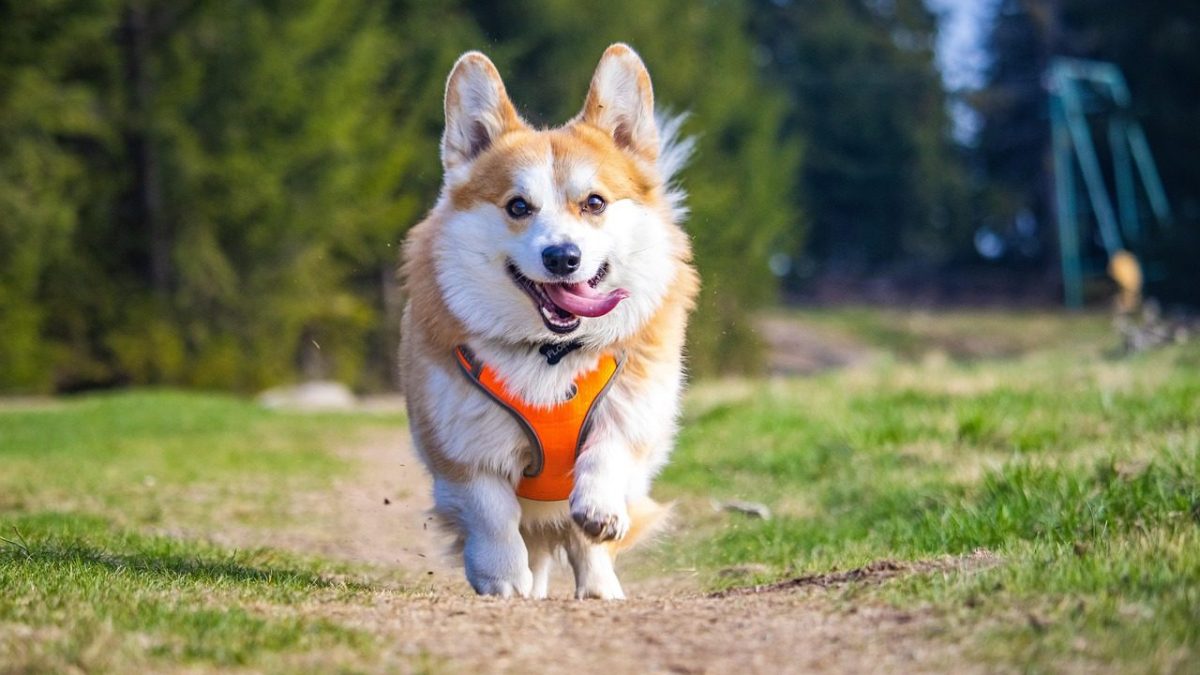
A few gear categories matter more for this breed than others. A well-fitted harness is worth considering over a collar-only setup — Corgis are strong pullers for their size, and a front-clip or no-pull harness gives you better control on walks without straining the neck. Choose one that clears the chest and doesn’t rub the front legs.
Because of the heavy double coat, invest in real grooming tools: an undercoat rake and a slicker brush make seasonal shedding manageable. A quality de-shedding tool during coat-blow season saves a lot of vacuuming.
For a food-motivated breed that gains weight easily, a slow-feeder bowl and a set of food-dispensing puzzle toys do double duty — they slow eating and provide the mental work Corgis need. A measuring cup or kitchen scale for portioning meals is one of the cheapest tools for a longer, healthier life.
Given the IVDD risk, consider a ramp or steps for the couch and car to reduce jumping onto and off of high surfaces, especially for puppies and older dogs. Look for one with a low, stable incline the dog can actually use.
Similar Breeds to Consider
If you love the Corgi look but want a slightly steadier, less common alternative, look at the Cardigan Welsh Corgi. It’s the Pembroke’s close cousin — a bit larger, with a full tail and a somewhat more reserved, thoughtful temperament. Many owners find the Cardigan a touch calmer and less reactive, though it shares the same herding drive and shedding.
If the intelligence and drive appeal but you don’t need the short legs and back-health concerns, consider the Shetland Sheepdog. Shelties are similarly smart, trainable, and devoted, and they excel at dog sports. They bark plenty too, so that trade-off carries over, but they’re built without the spine vulnerability of a dwarf breed.
For someone who wants a smaller, lower-shedding companion with a big personality but less herding intensity, a Miniature Schnauzer is worth a look — sturdy, alert, and affectionate, with a coat that sheds far less. And if you’re drawn to the Corgi’s devotion but want a more relaxed, less vocal housemate, a French Bulldog trades the herding energy for lower exercise needs, though it comes with its own set of respiratory and heat concerns to research carefully.