
Overview
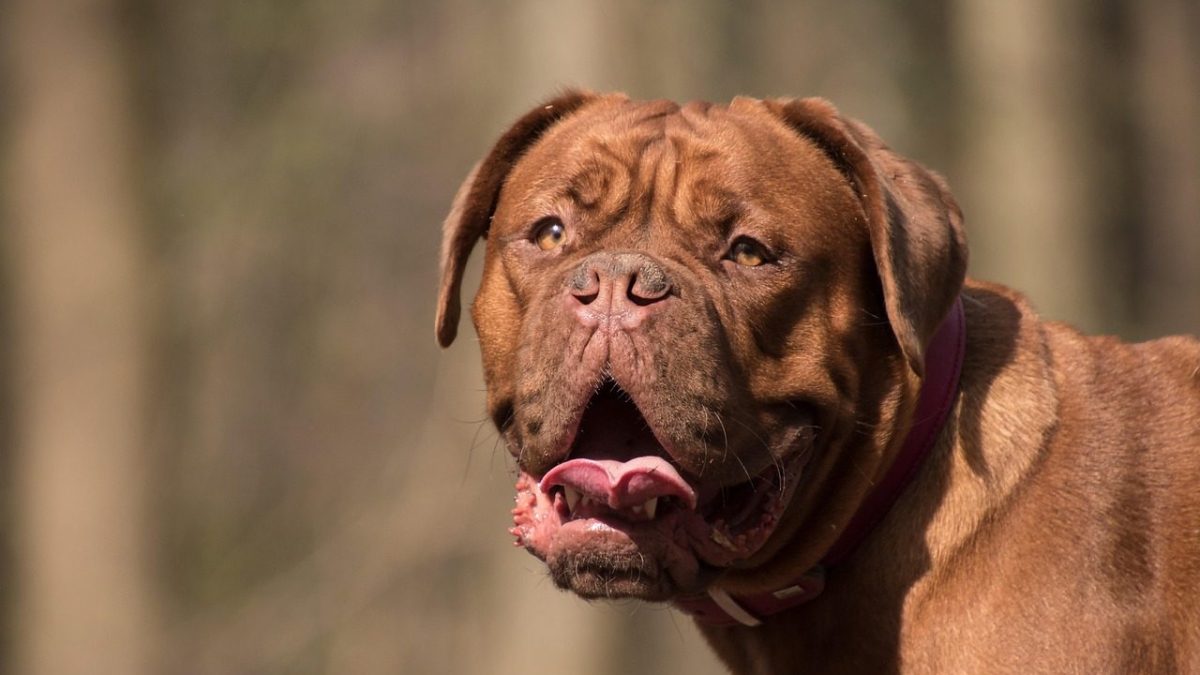
The Mastiff is one of the heaviest dog breeds in the world. Males commonly run 160 to 230 pounds and stand 30 inches or more at the shoulder; females are somewhat smaller but still enormous. The build is massive and rectangular, with a broad heavy head, a short coat, and the dark mask that defines the breed’s expression.
Temperamentally, this is not what people expect from the size. Mastiffs are docile, dignified, good-natured and remarkably calm indoors. They are guardians by instinct rather than aggressors — the breed’s historic job was deterrence and, if necessary, interposition, not attack. A well-bred, well-socialized Mastiff is steady, patient and notably gentle with its family.
Exercise needs are moderate and much lower than the frame suggests. An adult Mastiff is largely a couch dog punctuated by walks.
Here is the honest headline, and it is about scale rather than temperament. Everything costs more with a Mastiff: food, bedding, crates, medication dosed by body weight, and veterinary care including anesthesia, which the breed’s own parent club publishes guidance on. A dog this heavy that decides not to move is not going to be moved. And the lifespan is short — six to ten years is typical, which means committing to a breed you will lose sooner than almost any other. Those are the realities that decide whether this works, not the temperament, which is excellent.
Breed Origin & History
Mastiff-type dogs are ancient, and the modern English Mastiff descends from the large guardian dogs of Britain, recorded well before the Roman period and used for centuries as estate guardians, war dogs and, less creditably, in the blood sports that were legal into the nineteenth century.
The breed’s purpose across most of that history was guarding: property, livestock and people. That job selected for size, presence, nerve stability and a temperament that intervenes without unnecessary aggression. The modern dog’s calmness is not a dilution of the working type; it is the working type.
The breed nearly disappeared twice. Both world wars devastated British Mastiff numbers — feeding a dog this size was impossible under rationing, and by the end of the Second World War very few remained in Britain. The breed was rebuilt substantially from dogs in North America, and the modern population traces to that narrow post-war base.
The Mastiff Club of America, established in 1929, is the AKC parent club. Notably, it maintains a dedicated health website for owners and breeders, publishes guidance on anesthesia in the breed, and partners with UC Davis on discounted DNA testing for copper transport gene mutations — a level of health engagement that is worth taking advantage of when evaluating a breeder.
Temperament & Personality
Mastiffs are calm, affectionate with family, dignified with strangers, and slow to react. They are watchful rather than reactive, and a stable Mastiff assesses a situation before responding. Nervousness or unprovoked aggression in the breed is a serious fault and a reason to walk away from a litter.
They are people-oriented and want to be near their families. Despite the size, most consider themselves lap dogs, and they do not do well relegated to a yard or kennel.
With children they are typically patient and tolerant. The practical caution is purely physical: a dog that outweighs an adult can knock over a child without any intent, and supervision is about mass rather than temperament.
Training requires early start and consistency, for a specific reason. Everything a Mastiff puppy does is charming at 40 pounds and unmanageable at 180. Leash manners, greeting behavior and door manners must be established young, because you cannot physically overpower an adult and correcting habits later is genuinely difficult. They are sensitive and respond poorly to harsh handling.
Socialization is essential. A guardian breed of this size that is under-socialized becomes a liability rather than a nuisance.
Two realities owners mention constantly: they drool, substantially, and they snore.
Is This Breed Right for You?
The Mastiff suits people with space, budget and realistic expectations. Specifically: households with room — not necessarily acreage, since exercise needs are moderate, but space for a dog that occupies a sofa entirely. Owners who want a calm indoor companion with a natural deterrent presence. Families with older children. People home a good part of the day, since the breed is attached and does badly isolated. Owners who can absorb genuinely high running costs. Anyone prepared to do serious puppy training before the dog outweighs them.
It also suits people who specifically want a guardian temperament without a high-drive working dog’s demands.
Here is who should think twice. Anyone on a tight budget — food, bedding, crates, preventatives and any surgery all scale with weight, and this is a breed where cost is a legitimate welfare consideration. People who cannot tolerate drool, and there is a lot of it. Apartment dwellers, less because of exercise than because of stairs, elevators and the practicalities of moving a very large dog. Owners unwilling to start training immediately. Anyone who would struggle emotionally with a six to ten year lifespan. Households with very young children, on physics rather than temperament. Anyone wanting a jogging or hiking partner.
And anyone who cannot commit to careful growth management in the first two years, which materially affects joint development.
If you have the space, the budget and the willingness to train early, a Mastiff is one of the most rewarding companions there is — for a shorter time than you will want.
Care & Exercise Needs
Exercise is moderate and must be age-appropriate. Adults do well on a couple of steady walks daily; they are not endurance dogs and they overheat easily given their mass and short muzzle. Avoid exercise in heat.
Growth management in the first two years is the single most important care decision. Giant-breed puppies grow fast, and excessive exercise, jumping, stairs or overfeeding during that window contributes to joint problems later. Keep young dogs lean, avoid forced running and repeated stair work, and use a large-breed puppy diet formulated for controlled growth — your veterinarian’s input here is worth more than any general article.
Feeding is a significant ongoing expense and portion control matters; excess weight on this frame accelerates joint deterioration.
Grooming is easy: a short coat needing weekly brushing, with heavier seasonal shedding. The face is the exception — wipe facial folds and keep them dry, and expect to manage drool with towels.
Bloat prevention deserves real attention: feed measured meals rather than one large one, avoid heavy exercise around mealtimes, and learn the signs of gastric torsion, which is a life-threatening emergency in deep-chested breeds.
One breed-specific point: raise anesthesia with your veterinary practice before any procedure. The parent club publishes guidance on anesthesia in Mastiffs, and giant breeds are not simply scaled-up medium dogs where dosing and recovery are concerned.
Health Considerations
The Mastiff’s size and narrow post-war gene pool both shape its health picture, and lifespan is short — commonly six to ten years.
Hip and elbow dysplasia are primary concerns and evaluation of breeding stock is standard.
Gastric dilatation-volvulus, or bloat, is a major risk in deep-chested giant breeds and is rapidly fatal without emergency surgery. Many owners discuss preventive gastropexy with their veterinarian, often at the time of spay or neuter. Knowing the signs — unproductive retching, a distended abdomen, restlessness and distress — is essential rather than optional for this breed.
Cardiac conditions including dilated cardiomyopathy and subaortic stenosis are reported, and cardiac evaluation of breeding stock is appropriate.
Eye conditions include progressive retinal atrophy and eyelid abnormalities such as entropion and ectropion, both common in heavy-headed breeds.
Cystinuria, an inherited kidney-transport disorder causing bladder stones, is documented in Mastiffs and is DNA testable. Degenerative myelopathy, a progressive spinal cord disease, is likewise DNA testable. The parent club also partners on discounted testing for copper transport gene mutations affecting how the liver handles copper — a screening opportunity specific to this breed worth asking a breeder about.
Osteosarcoma and other cancers occur at elevated rates in giant breeds.
Ask for hip, elbow, eye and cardiac documentation plus the available DNA results. For any concern about your dog’s joints, breathing, abdomen or appetite, consult your veterinarian rather than relying on general breed information.
Recommended Gear Categories
Everything needs to be sized up, and undersized equipment fails quickly with a dog this heavy.
Start with an orthopedic bed rated for giant breeds — joint support genuinely matters for a dog carrying this much weight, and a cheap bed flattens within weeks. A raised feeder is often recommended for comfort, though talk to your veterinarian about it in the context of bloat risk.
A wide padded collar and a strong harness distribute load properly, and a sturdy lead with solid hardware is a safety item rather than a preference — light clips fail under this much force.
A giant crate, if you crate, needs to be genuinely rated for the weight. Vehicle ramps are worth buying before the dog is too heavy to lift, not after, and the same applies to teaching a dog to use them while young.
Drool management is a real category: absorbent towels by the door, washable slipcovers, and a drool bib for some households.
For grooming, a rubber curry handles the short coat and seasonal shedding. Cooling mats and shade matter given heat sensitivity.
Keep a note of the parent club’s anesthesia guidance with your veterinary file. Your editor will add specific product recommendations with current pricing and details.
Similar Breeds to Consider
The Bullmastiff is the most direct alternative — a Mastiff and Bulldog cross developed as a gamekeeper’s dog, at roughly 100 to 130 pounds. It is meaningfully more manageable in size and generally more active and responsive, while keeping the guardian temperament. For most households wanting this type, the Bullmastiff is the more practical choice.
The Great Dane is the comparison for people drawn to sheer size with a somewhat more elegant build and a similarly gentle temperament. It shares the short lifespan, the bloat risk and the cost profile, and is typically more athletic and more prone to leaning on you.
The Newfoundland suits someone who wants a giant, exceptionally gentle family dog with a different working history — water rescue rather than guarding. Expect heavy grooming and equal drool.
The Saint Bernard is another giant with a famously tolerant temperament and similar size-related health and lifespan considerations.
For a guardian temperament in a dog you can physically manage, the Rottweiler or a well-bred Boxer offer a fraction of the mass with more energy and a longer life expectancy.
In short: choose the Mastiff if the scale genuinely suits your life, the Bullmastiff for the same temperament at a workable size, the Newfoundland if you want gentle giant without the guarding instinct, and a Rottweiler if you want a guardian you can still lift.