
Overview
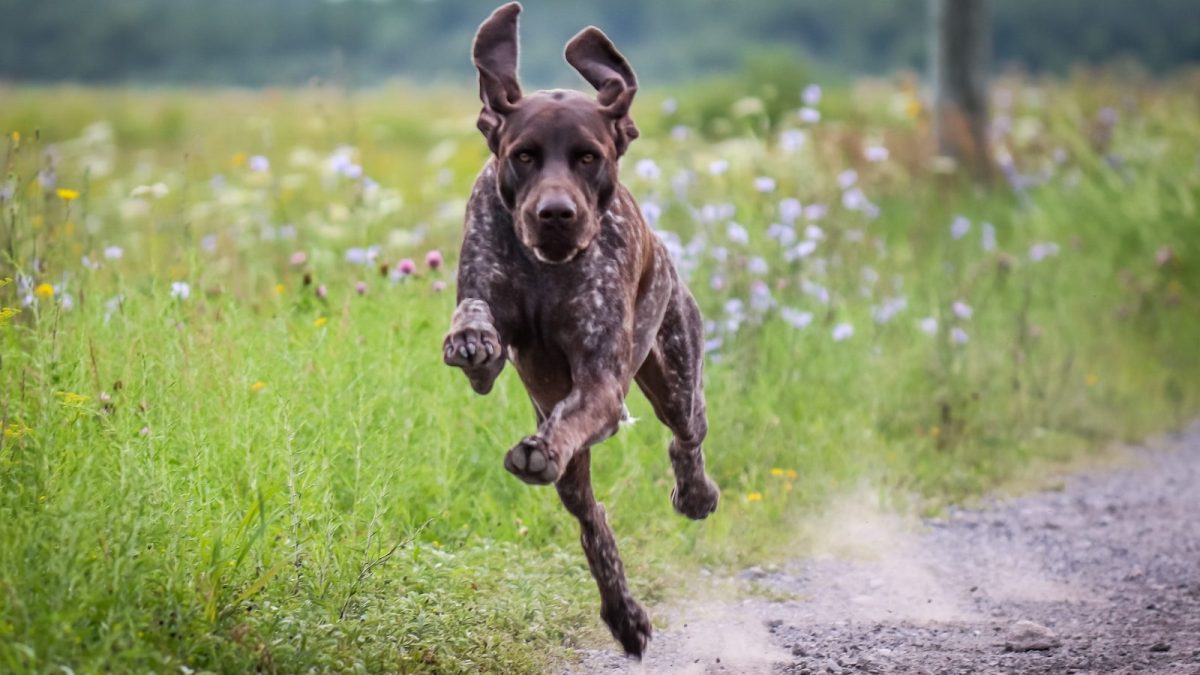
The German Shorthaired Pointer is a medium-to-large sporting dog built for endurance and versatility. Bred to hunt fur and feather on land and in water, the GSP does a little of everything and does it well. You’ll recognize the breed by its lean, athletic frame, distinctive liver-and-white or solid liver coat, and a face that always seems to be asking what you’re doing next.
This is a dog with an engine. GSPs were built to work all day in the field, and that drive doesn’t switch off just because you live in a suburb. Owners who match that energy get one of the most devoted, biddable, and fun companions in the sporting group. Owners who don’t tend to end up with a bored dog who redecorates the living room.
Most GSPs are affectionate to the point of being clingy, sharp enough to learn quickly, and social with people and other dogs. They’re not a low-maintenance breed in the exercise or attention department, but their grooming needs are simple and their loyalty runs deep. This is a dog that wants to be part of everything you do.
Breed Origin & History
The German Shorthaired Pointer was developed in 19th-century Germany by hunters who wanted a single dog capable of pointing, tracking, and retrieving across varied terrain and water. Rather than keeping separate specialists, breeders aimed for one versatile gun dog. The breed’s ancestry likely includes older German pointing dogs, scenthounds, and possibly the English Pointer, which is credited with refining the GSP’s style and elegance.
Careful, records-driven breeding in Germany produced a dog that could point upland birds, trail wounded game, and retrieve from cold water — all in a day’s work. The German parent organization, the Deutsch-Kurzhaar Verband, emphasized proven working ability alongside conformation, a tradition that still shapes the breed.
The GSP came to the United States in the 1920s and was recognized by the American Kennel Club in 1930. It steadily gained a following among American hunters and, later, among active families and dog-sport competitors. Today the breed excels in field trials, agility, dock diving, tracking, and obedience.
One note on standards: the AKC places GSP height at 23–25 inches for males and 21–23 inches for females, with weight ranging roughly 45–70 pounds. The FCI standard, which governs the breed in much of Europe, uses similar ranges but places greater emphasis on demonstrated hunting performance. For US readers, the AKC figures are the practical reference.
Temperament & Personality
GSPs are enthusiastic, affectionate, and intensely people-oriented. Most bond hard with their family and want to be in the same room as you, ideally leaning against your leg. This makes them delightful companions and also means they don’t do well left alone for long stretches — separation anxiety and destructive boredom are common complaints from owners who underestimate the breed’s need for company.
They’re smart and eager to please, which makes training rewarding, but that same intelligence means an under-stimulated GSP will invent his own jobs. Digging, counter-surfing, escaping fences, and chewing are the usual symptoms of a mind with nothing to do.
The hunting drive is strong and real. Most GSPs have a high prey drive and will point, chase, and pursue small animals. Cats can work if the dog is raised with them, but pet rabbits, birds, or a free-roaming hamster are a genuine risk. Off-leash reliability takes serious recall training, because a bird flushing across a field is far more interesting than you are.
With people, GSPs are typically friendly and social rather than protective. They may bark to announce a visitor but generally welcome guests warmly — this is not a guard dog. They’re usually good with children, though a young, bouncy GSP can knock over a toddler without meaning any harm. The trade-off is consistent: the same energy and drive that make this breed extraordinary in the field make it a handful in a quiet home.
Is This Breed Right for You?
The German Shorthaired Pointer suits people who are already active and want a dog to share that life — trail runners, hunters, hikers, cyclists, dock-diving hobbyists, and families whose weekends involve being outdoors. If you can commit to 60–90 minutes of hard physical exercise every single day, plus mental work like training or scent games, this breed will reward you with one of the most versatile, joyful companions you’ll ever own.
This breed does NOT suit someone who works long hours away from home, wants a calm apartment dog, or expects a couple of short walks to be enough. A GSP left alone and under-exercised becomes anxious and destructive, and no amount of love fixes that — only meeting the exercise need does. Apartment living is possible, but only for an owner who is honest about doing the daily work, not the average apartment dweller.
First-time owners can succeed with a GSP if they’re athletic and willing to invest in training, but this is not an easy starter breed. The combination of high energy, strong prey drive, and a stubborn streak when bored can overwhelm someone expecting a plug-and-play family pet.
Families with older, active kids often do beautifully with this breed. Households with cats need to introduce carefully and manage expectations; households with small caged pets should probably choose a different breed. If you’re gone all day, retiring to a slow pace, or hoping for a low-drive lap dog, keep looking. But if your life already has room for a running partner who never wants to stop, few breeds give back more.
Care & Exercise Needs
Exercise is non-negotiable. Plan for 60–90 minutes of vigorous activity daily — running, off-leash fetch in a safe area, swimming, or field work. A leashed neighborhood stroll does not meet a GSP’s needs. Puppies need controlled exercise to protect developing joints, but adults are genuine endurance athletes.
Mental stimulation matters just as much as physical. Rotate training sessions, scent games, puzzle feeders, and dog sports like agility or tracking. A GSP who works his brain is far calmer at home than one who only gets physical exercise.
Training should start early and lean on positive, consistent methods. GSPs are quick learners but sensitive; harsh corrections tend to backfire. Prioritize recall from puppyhood, because the prey drive is strong. Early socialization to people, dogs, and situations pays off for life.
Grooming is refreshingly simple. The short, dense coat needs a weekly once-over with a rubber curry brush or grooming mitt, more often during seasonal sheds. They shed moderately year-round — those short liver hairs stick to everything. Bathe only as needed. Check ears regularly, since drop ears can trap moisture, especially in a breed that loves water. Trim nails every few weeks and keep up with dental care.
GSPs feel the cold. The short coat and low body fat mean a coat or vest is wise for winter exercise in cold climates, and they’d much rather be indoors with the family than living outside. This is an inside dog who works outside, not an outdoor kennel dog.
Health Considerations
The German Shorthaired Pointer is generally a hardy, athletic breed, but there are conditions prospective owners should understand. The breed is known to have a higher incidence of hip dysplasia, a malformation of the hip joint that can lead to arthritis. Responsible health screening of breeding dogs helps reduce risk.
Like many deep-chested breeds, GSPs carry an elevated risk of gastric dilatation-volvulus (bloat), a sudden, life-threatening condition where the stomach twists. Learning the warning signs and discussing prevention with your veterinarian is worthwhile for any owner of a deep-chested dog.
The breed is also known to have a higher incidence of certain eye conditions and, in some lines, hereditary heart concerns and von Willebrand’s disease (a blood-clotting disorder). Their active, water-loving lifestyle and drop ears mean ear infections are relatively common, so routine ear checks help.
The national parent club participates in health screening programs through the Orthopedic Foundation for Animals (OFA), and reputable health testing typically covers hips, eyes, cardiac function, and thyroid. GSPs generally live around 10–12 years and stay active well into their senior years.
None of this is meant to diagnose or predict what any individual dog will experience — breeds have tendencies, not guarantees. For any specific health question, screening recommendation, or concern about your own dog, consult your veterinarian.
Recommended Gear Categories
Because GSPs are strong and driven, a well-fitted front-clip or no-pull harness helps manage leash pulling during training, and a sturdy 6-foot leash gives you control without restricting a working dog. For recall training in open areas, a long training line (15–30 feet) lets you practice safely before trusting off-leash freedom.
Given the cold sensitivity of the short coat, look for a snug, warm dog coat or vest for winter walks and cold-weather activity. A cooling vest or plenty of water access helps in summer, since these dogs will push themselves in the heat.
Mental enrichment gear earns its keep with this breed: puzzle feeders, snuffle mats, and durable chew toys help drain energy on days you can’t get outside. A crate sized for the dog supports house training and gives an anxious GSP a secure den. If you’re heading into fields or water, consider a high-visibility vest and, for water work, a canine flotation device for long swims. Choose from these categories based on your climate and how you plan to use your dog — your editor will add specific product recommendations.
Similar Breeds to Consider
If you love the GSP’s versatility but want a distinctive coat and slightly quirkier personality, look at the German Wirehaired Pointer. It’s built for the same all-around hunting work but carries a harsh, weather-resistant wire coat that offers more protection in cold and thorny terrain — a better fit for rougher climates, though grooming is a bit more involved.
For a comparably athletic dog with an even more velcro personality, the Vizsla is worth considering. Vizslas are similarly people-focused and high-energy, but often even more sensitive and prone to separation distress — a great match for someone home most of the day who wants a shadow, less so for a household that’s frequently out.
The Weimaraner offers a similar athletic build and hunting heritage with an unmistakable gray coat, but tends to be more intense and stubborn, often needing an experienced, confident owner. And if you want the retrieving drive and friendliness in a more easygoing, first-timer-friendly package, the Labrador Retriever trades some of the GSP’s sharp field style for a more forgiving temperament — still active, but generally calmer and more tolerant of a mistake or two in training.