
Overview
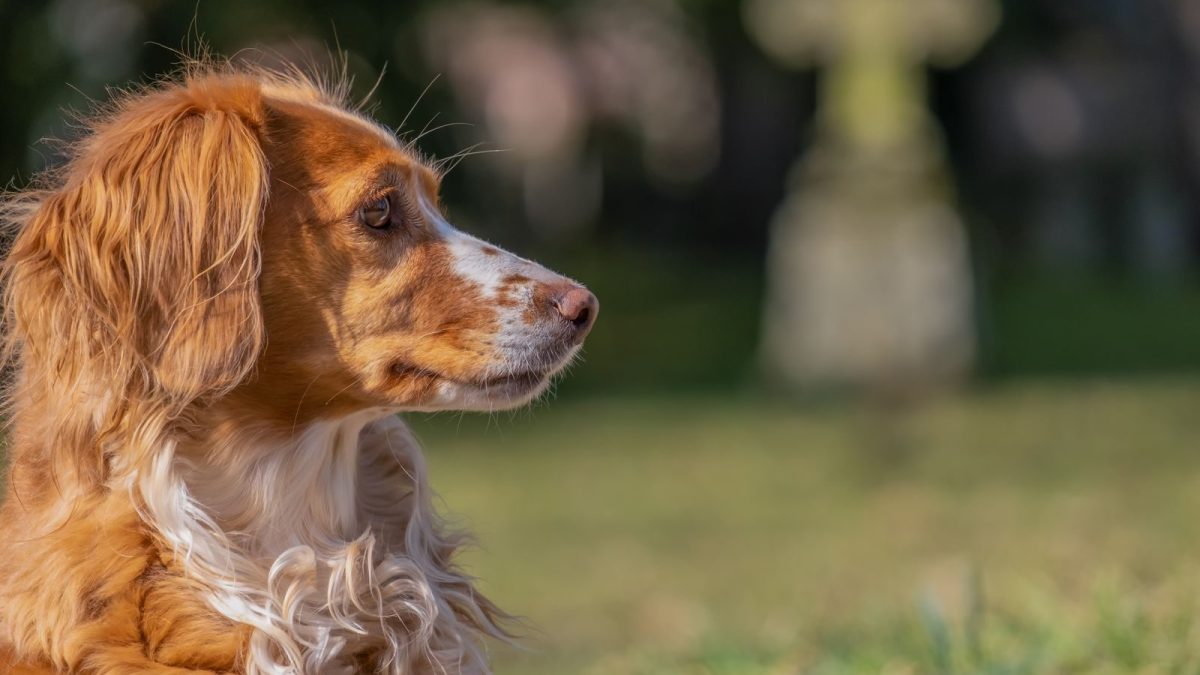
The Brittany is a compact, leggy gundog of medium size — 30 to 40 pounds and 17.5 to 20.5 inches at the shoulder — built to cover ground with agility. It is strong, vigorous, energetic and quick of movement, and the small size is a practical virtue rather than an aesthetic one: this is a serious hunting dog that fits easily in a car.
One point of confusion worth clearing up immediately. The breed was long called the Brittany Spaniel, but the AKC dropped “Spaniel” from the name in 1982, because the dog does not work like a spaniel. A Brittany points and holds its game the way a pointer does, though without the great range of the big running pointers, and retrieves on both land and water. Calling it a spaniel describes neither its style nor its job.
The coat is deliberately modest: enough to protect the dog from briars but not enough to catch burrs to any great extent. It is not a heavily coated dog, just lightly fringed, in orange and white or liver and white, with clear or roan patterns. Grooming demands are correspondingly low for a sporting breed.
Here is the honest headline. For a genuinely active owner — someone who runs, hikes, hunts or competes — the Brittany is a superb, affectionate, highly capable companion with an exceptionally keen nose and a very biddable disposition. For a household that walks the dog twice a day and calls it done, this breed will be miserable and will make you miserable.
Breed Origin & History
The breed takes its name from Brittany, the region in northwestern France where it developed as a versatile hunting dog for ordinary sportsmen rather than for estates. That origin shaped the breed in a specific way: a small farmer or village hunter needed one dog that could find, point and retrieve game on land and in water, not a kennel of specialists. The Brittany is the result of that constraint.
The dogs worked on both fur and feather in France, and that versatility persists. In the United States the breed is used primarily on upland game, though the underlying ability is broader.
The American Brittany Club was established in 1942 as a member of the American Kennel Club and remains the parent club, composed of regional clubs across the country that run licensed AKC trials in spring and fall as well as specialty shows, hunting tests and training sessions.
One thing that distinguishes this breed’s culture from many others is how successfully it has resisted the split between show and field lines that has divided breeds like the English Springer Spaniel. The American Brittany Club celebrates having produced more than seven hundred dual champions — dogs holding championships in both conformation and field trials — which is a genuinely unusual achievement and a reasonable proxy for a breed where looks and working ability have not diverged.
Temperament & Personality
Brittanys are affectionate, eager and notably biddable. They want to work with you, they learn quickly, and they bond closely with their people. For an owner who enjoys training, this is a rewarding dog — responsive, attentive and capable across field work, agility, obedience and scent sports.
Energy is the defining practical trait and it is genuinely high. This is a dog bred to quarter ground for hours. A Brittany that does not get real exercise becomes restless, destructive and hard to live with, and the failure mode is not mild.
The nose is exceptional, which has a practical consequence: a Brittany following a scent may stop hearing you entirely. Recall needs deliberate, sustained work, and a securely fenced yard matters.
The most important temperament caveat is sensitivity. Brittanys are soft dogs. Harsh corrections, shouting or heavy-handed training produce a shut-down, anxious animal rather than a compliant one. Some lines carry a tendency toward shyness, and thorough early socialization makes a real difference — an under-socialized Brittany can become timid with strangers and startled by novelty.
Most are good with children and other dogs, and they are generally poor watchdogs, being more inclined to greet than to guard. They are house dogs that work outdoors, not kennel dogs, and they do badly with long isolation.
Is This Breed Right for You?
The Brittany suits people whose lives already involve sustained physical activity. Specifically: hunters, obviously, particularly on upland game. Runners, hikers, cyclists and anyone who spends real hours outdoors. Competitors in agility, field trials, hunt tests or scent work. Families with active school-age children. Households with a securely fenced yard and someone home a reasonable part of the day. Owners who train with rewards and patience rather than corrections.
It also suits people who want a capable gundog in a manageable size — the Brittany does a big dog’s job in a 35-pound package, and the light coat means far less grooming than most sporting breeds.
Here is who should think twice. Anyone whose exercise plan is two walks a day. Apartment dwellers without a serious outdoor routine. People out of the house for long working days with no arrangement, since the breed is attached and does poorly isolated. Owners inclined toward firm or correction-based training, which backfires with a soft breed. Anyone who wants a guard dog. And anyone unwilling to invest months in recall training with a dog whose nose will regularly outvote them.
First-time owners can do well here provided they are honest about activity level. The temperament is forgiving; the energy is not.
If you want an affectionate, biddable, highly capable dog and your life genuinely has room for it, the Brittany is one of the best value propositions in the sporting group.
Care & Exercise Needs
Exercise is the central requirement and it is substantial: plan on at least ninety minutes to two hours of real activity daily for a healthy adult, with more on offer being welcomed. Running, hiking, swimming, retrieving games and field work all suit the breed. Mental work counts — scent games and training sessions genuinely reduce the physical demand on days when a long outing is not possible.
As with any medium-to-large sporting breed, hold off on sustained concentrated running until the dog is physically mature. Build distance gradually rather than taking a young dog on long runs.
Grooming is one of the easier aspects. The coat is not heavy — flat or wavy with light fringing — and weekly brushing keeps it in order, with more attention after work in cover. Check the feathering for burrs and debris after outings. Ears need routine checking and cleaning, and thorough drying after swimming, since drop ears trap moisture.
Training should be reward-based, patient and started early. Socialize broadly and deliberately during puppyhood, because shyness is a real risk in some lines and it hardens if left alone. Recall deserves the single largest share of your training effort.
Because Brittanys are people-oriented, build tolerance for short periods alone from puppyhood in small increments, before you need it. Otherwise routine care applies — nails, teeth and regular veterinary checkups.
Health Considerations
The Brittany is generally a hardy, athletic breed, but several conditions are documented.
Hip dysplasia is the standard orthopedic concern for a dog of this size and activity level, and hip evaluation is part of routine breeder screening.
Epilepsy is reported in the breed. It is not straightforwardly testable, which makes a breeder’s openness about seizure history in their lines the most useful information available to a buyer.
Hypothyroidism occurs and is manageable once identified; signs can include weight gain, lethargy and coat changes.
Eye conditions are screened routinely, and annual ophthalmologic evaluation of breeding stock is standard practice among responsible breeders.
One condition genuinely specific to this breed is complement component 3 deficiency, an inherited immune-system disorder that leaves affected dogs vulnerable to recurrent infections. It is rare but documented in Brittanys specifically, and it is worth being aware of if a young dog shows a pattern of unexplained repeat infections.
A healthy Brittany commonly lives 12 to 14 years. Ask breeders for documented hip and eye results and ask directly about epilepsy and thyroid disease in the line rather than accepting a general assurance of health. For any specific concern about your dog’s joints, seizures, thyroid or repeated infections, consult your veterinarian rather than relying on general breed information.
Recommended Gear Categories
Gear for a Brittany is built around distance and fieldwork. A well-fitted harness suits a dog that pulls toward scent, and a long training line is essential equipment while recall is being proofed — with this nose, an unreliable recall is not a theoretical problem.
A GPS or tracking collar is worth genuine consideration for anyone working the dog in open country or hunting. It is the difference between a brief inconvenience and a lost dog.
For ear care, a veterinary cleaning solution and absorbent pads belong in the routine kit, used after swims and wet work. Drop ears and water are a predictable combination.
Grooming needs are modest: a slicker brush and a comb handle the light fringing, and a rubber curry helps with shedding on the body coat. A burr comb is useful after work in cover.
Because Brittanys work hard and often get wet and muddy, a quick-dry towel, a waterproof car seat cover and a portable water bottle earn their place immediately. High-visibility vests matter for anyone working the dog during hunting season.
Enrichment is not optional for a high-drive breed on rest days: snuffle mats, scent-work kits, puzzle feeders and durable retrieving dummies all give the dog something to do. Your editor will add specific product recommendations with current pricing and details.
Similar Breeds to Consider
The closest functional comparison is the English Springer Spaniel, which the Brittany is frequently cross-shopped against. The Springer flushes rather than points and carries considerably more coat and feathering. If you want less grooming and a pointing style, the Brittany is the pick; if you want a flushing dog and do not mind the coat, the Springer is.
The Vizsla is the other natural comparison — a similarly affectionate, high-energy pointing breed with an even shorter coat and an even stronger attachment to its people. Vizslas are larger and generally more prone to separation anxiety. Choose the Brittany if you want a smaller dog that copes slightly better on its own.
The German Shorthaired Pointer suits someone who wants the same job description in a bigger, harder-driving dog with more range. GSPs are typically more intense and need more work; the Brittany is the more manageable of the two for a family that also hunts.
For households drawn to the temperament but unable to meet the exercise demand, there is no honest smaller substitute within the pointing breeds — the energy is the breed. A Cocker Spaniel or Cavalier King Charles Spaniel would be a better match for a lower-activity home, accepting an entirely different kind of dog.
In short: choose the Brittany for a compact, biddable pointing dog with minimal grooming, the Springer if you want a flusher, the Vizsla if you want similar in a larger short-coated dog, and the GSP if you want more range and drive.