
Overview
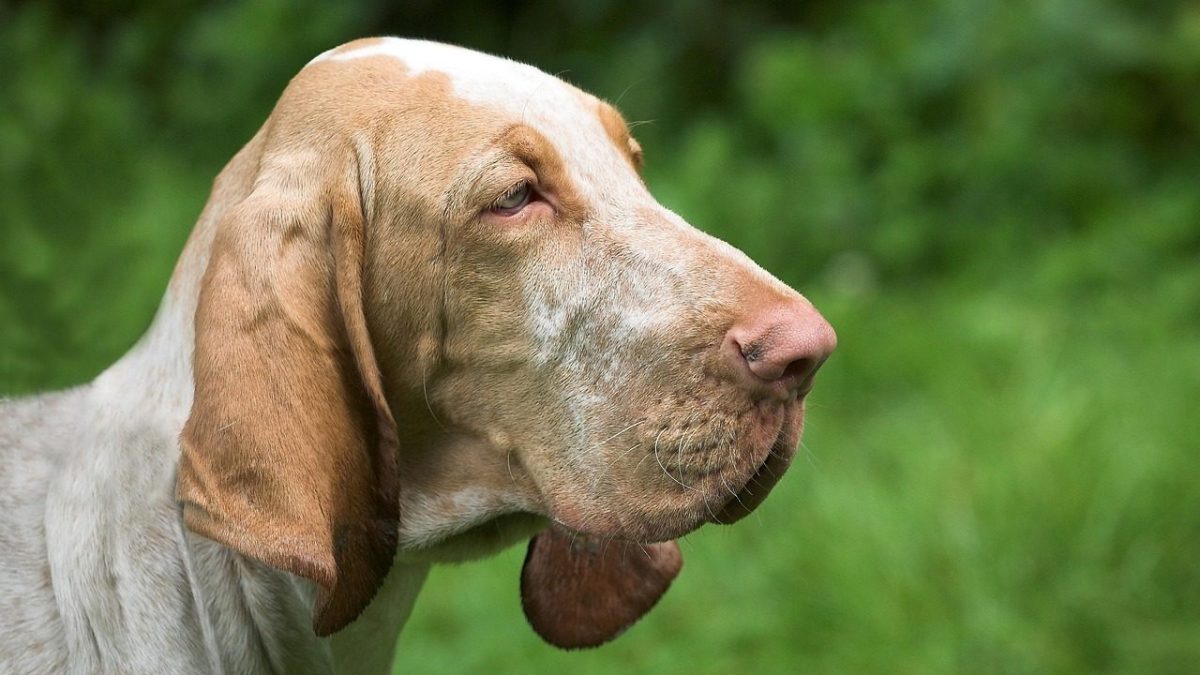
The Bloodhound is a large, powerfully built scent hound — 80 to 110 pounds, standing 23 to 27 inches — with a long wrinkled face, enormous drooping ears, loose skin and deep-set eyes that give the breed its characteristic expression of solemn dignity. Coats come in black and tan, liver and tan, or red.
It is the oldest scent hound and has the keenest sense of smell of any dog. That is not breed-club flattery — the Bloodhound’s trailing ability is sufficiently reliable that its work has been accepted as evidence in American courts, which is a distinction no other breed holds.
The physical features are all functional. The loose facial skin and long ears help trap and channel scent toward the nose as the dog works, and the powerful legs allow it to scent over miles of punishing terrain.
Temperamentally, Bloodhounds are gentle, affectionate and famously stubborn. They are tolerant with people and typically excellent with children.
Here is the honest headline, and the parent club states it as plainly as anyone could: these dogs are big, powerfully built, they slobber, and they eat a lot. They also have absolutely no road sense, which means a fenced yard and a lead are not precautions but requirements. Accept all of that and you get a devoted, funny, extraordinary animal.
Breed Origin & History
The breed traces to medieval Europe and is closely associated with the monastery of Saint-Hubert in what is now Belgium, where monks maintained a strain of scent hounds that gave the breed its European name, the Chien de Saint-Hubert.
Those dogs were bred for a single purpose pursued to an extreme degree: following a scent trail accurately over long distances and considerable time. Everything about the modern Bloodhound follows from that selection — the nose, the skin, the ears, the stamina and the single-mindedness.
The breed moved into law enforcement and search work, where it remains genuinely employed rather than symbolically so. Bloodhounds work missing person searches and criminal trails today, and their capacity to follow trails that are days old is the reason.
The American Bloodhound Club is the AKC parent club. It describes the relationship between breed and owner in a telling way — members refer to themselves not as owners but as Bloodhound people, and the club is candid that this is not a dog one simply owns.
The club has supported Canine Health Foundation initiatives for over twenty years, a length of commitment recognized with a specific designation. For a buyer, that matters practically: a parent club with two decades of health research investment is a club that knows where the breed’s problems are, and its guidance is worth reading before choosing a breeder.
Temperament & Personality
Bloodhounds are gentle, affectionate, patient and profoundly stubborn. With their families they are devoted and often comically undignified for such a serious-looking animal. They are typically excellent with children, tolerating handling and noise with considerable patience.
They are also independent thinkers. Bloodhounds were bred to work a trail without direction, and they apply the same self-direction at home. Training is possible but slow, and repetition produces boredom rather than compliance. Food motivates most of them, which helps.
The defining practical trait is what happens when a Bloodhound picks up a scent. The dog becomes effectively unreachable — not disobedient, but wholly absorbed in the task it was built for. Calling, whistling and waving are futile. This is why the parent club advises a fenced yard and walking only on a lead, and it is not overcautious advice: a trailing Bloodhound will cross roads without registering them.
They are vocal in a distinctive way. The bay is deep, loud and carries a long distance, and many Bloodhounds use it liberally.
They are slow to mature and remain adolescent in behavior for a long time in a very large body.
With strangers they are typically friendly rather than protective. This is not a guard dog.
Is This Breed Right for You?
The Bloodhound suits owners who want an extraordinary animal and will build their life around its limitations. Specifically: households with secure, tall fencing — this is the first requirement, not an optional feature. Owners with space and a tolerance for mess. People interested in tracking or trailing sport, or in search and rescue work, where the breed excels. Families with children, given the patient temperament. Rural and semi-rural homes. Owners home a reasonable part of the day.
It also suits people who want a large dog that is affectionate rather than protective.
Here is who should think twice, and the list is substantial. Anyone bothered by drool — it is constant, it flings when the dog shakes, and it reaches walls and ceilings. People who want a dog that can be trusted off leash; that will not happen with this breed. Apartment dwellers. Anyone in a noise-sensitive situation, since the bay carries. Owners on a tight budget, given the food bill for a 100-pound dog and the veterinary costs of a breed with real health risks. People who want quick, reliable obedience. Households without secure fencing.
And anyone who has not thought about bloat, which is the most serious health risk in this breed and a leading cause of death.
If you have the fencing, the towels and the patience, few breeds are more rewarding to live with — and few offer anything remotely like the nose.
Care & Exercise Needs
Containment is the first care requirement. Secure, tall fencing checked for gaps, and a lead on every walk without exception. A Bloodhound on a trail does not come back, and traffic is the most common fatal outcome.
Exercise needs are substantial but should be structured. Long walks on lead, and ideally trailing work, which satisfies the dog mentally in a way distance alone does not. Be conservative with young dogs, since large breeds grow slowly and joints stay vulnerable well past a year.
Facial and ear care is a routine rather than an occasional task. The wrinkles and folds trap moisture and debris and need cleaning and, importantly, drying several times a week. The long heavy ears restrict airflow and are prone to infection — check and clean regularly, and dry thoroughly after any wet outing. Ears also drag through food and water, and a narrow deep bowl or a snood helps.
Drool management is daily. Towels by every door, washable throws, and acceptance.
Bloat prevention deserves a genuine routine: measured meals rather than one large one, no vigorous exercise immediately before or after eating, and knowing the signs cold. Many owners of deep-chested giants discuss preventive gastropexy with their veterinarian.
Grooming is otherwise simple — weekly brushing of the short coat.
Health Considerations
The Bloodhound’s health picture is dominated by one emergency and shaped by its anatomy.
Gastric dilatation-volvulus — bloat — is the most serious risk and a leading cause of death in the breed. The stomach fills with gas and can twist, cutting off blood supply, and it is rapidly fatal without emergency surgery. Every Bloodhound owner should know the signs before they are needed: unproductive retching, a distended or tight abdomen, restlessness, pacing and evident distress. This is measured in hours, not days.
Hip and elbow dysplasia are common in a dog of this size, and orthopedic evaluation of breeding stock is standard.
Eyelid abnormalities follow from the loose facial skin. Ectropion, where the lower lid rolls outward, and entropion, where it rolls inward, both occur and can require surgical correction. Eyes are also more exposed to irritation as a result.
Skin fold dermatitis is common wherever moisture collects in the facial wrinkles, and chronic ear infections are frequent and largely structural rather than a matter of bad luck.
Hypothyroidism is reported, as are certain cancers including lymphoma.
A healthy Bloodhound commonly lives 10 to 12 years, which is reasonable for the size but short in absolute terms. Ask breeders for hip, elbow and eye documentation, and ask what their experience with bloat has been in their lines. For any concern about your dog’s abdomen, eyes, ears or skin folds, consult your veterinarian rather than relying on general breed information — and treat a suspected bloat as an emergency.
Recommended Gear Categories
Containment and control come first. Fencing of real height and integrity, a strong wide collar or harness, and a sturdy lead with hardware rated well above what looks adequate. A tracking harness and a long line are the right equipment if you do trailing work, which is the best outlet this breed has.
A GPS tracking collar is worth genuine consideration. It is the difference between an inconvenience and a lost dog on a road.
Ear and fold care supplies belong in a routine kit: veterinary ear cleaner, absorbent pads and something for drying the wrinkles. A snood keeps the ears out of food and mud, and narrow deep bowls do the same job at mealtimes.
Drool management is a genuine category — absorbent towels by every door, washable throws on furniture, and a drool bib for some individuals.
A slow-feeder bowl addresses bloat risk, and measured feeding equipment helps with a dog that eats a great deal.
Everything else needs sizing up: an orthopedic bed rated for a large breed, heavy-duty nail clippers, and a vehicle ramp, since lifting a 100-pound hound is not realistic in an emergency.
Non-slip runners help on hard floors. Your editor will add specific product recommendations with current pricing and details.
Similar Breeds to Consider
The Basset Hound is the closest temperamental relative in a much lower, heavier package — same extraordinary nose, same stubbornness, same long ears and drool, at roughly half the height. The shorter legs bring their own orthopedic considerations, but for someone who loves the hound character and cannot manage a 100-pound dog, the Basset is the obvious step down.
The Coonhound breeds — Black and Tan, Redbone, Treeing Walker — offer similar scenting ability and hound independence with a lighter build, far less drool and considerably more athleticism. They are generally more energetic and equally vocal.
The Beagle is the small-scale version of the same idea: superb nose, cheerful stubbornness, loud voice, and a recall that evaporates on a scent — in a dog that fits in a normal house.
The Saint Bernard is worth comparing for anyone whose priority is the gentle giant temperament rather than the nose. It is similarly massive and slobbery, calmer, and does not vanish after a scent trail.
For search and rescue or tracking sport specifically, the Bloodhound has no equal, and the whole point of choosing one is the nose.
In short: choose the Bloodhound if the nose and the character are what you want and you can meet the fencing and drool requirements, the Basset for the same temperament at half the size, a Coonhound for a lighter working scent hound, and a Beagle if you want the hound personality in a manageable package.