
Overview
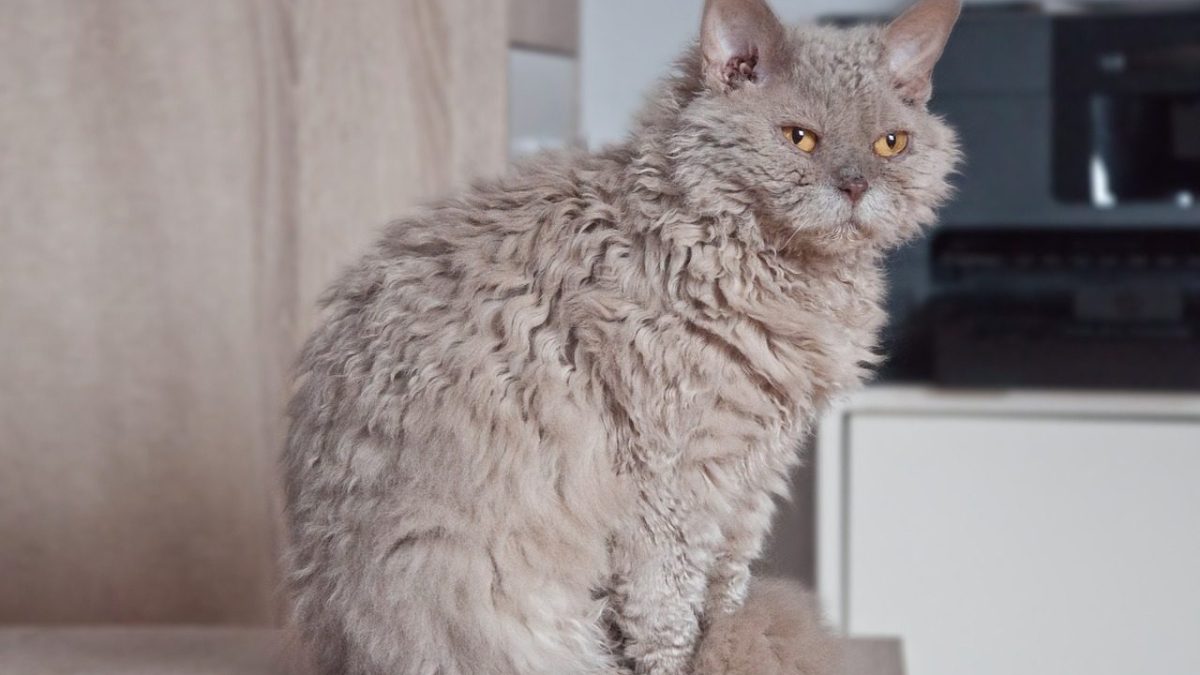
The Selkirk Rex is a curly-coated cat that shares almost nothing else with the other Rex breeds. Where the Cornish and Devon Rex are slender, hyperactive and fine-boned, the Selkirk is heavy-boned, cobby and calm — a substantial cat, typically 6 to 16 pounds, with a rounded head and a plush, woolly curled coat that has earned it the description of a cat in sheep’s clothing.
The coat comes in both short and long varieties. The curl extends to the whiskers, which are curly and notably brittle — they break easily, which is normal rather than a sign of poor health.
The genetics are what set the breed apart. The Selkirk’s curl comes from a dominant mutation, unlike the recessive mutations behind the Cornish and Devon Rex. That means a single copy produces a curly cat, and litters routinely contain both curly and straight-coated kittens. Straight-coated Selkirks are fully Selkirk Rex and are actively used in breeding programs.
Temperamentally this is a patient, tolerant, affectionate cat with moderate energy — the direct result of the breeds used to develop it.
Here is the honest headline. If you want an unusual-looking cat without the relentless social demands of a Devon or Cornish Rex, the Selkirk is genuinely the answer. It is one of the easier pedigree cats to live with, and the main things to check are inherited from its Persian and British Shorthair ancestry rather than from the curl.
Breed Origin & History
The breed began in Montana in 1987 with a single cat. A kitten with an unusual curly coat was born in a shelter litter and came to the attention of a local Persian breeder, Jeri Newman, who recognized the coat as something new and acquired her. The cat was named Miss DePesto.
Breeding her to a Persian produced a litter in which several kittens were curly, which immediately established two things: the mutation was dominant, and it was distinct from the recessive curls of the Cornish and Devon Rex.
Development involved deliberate outcrossing to Persian, Exotic Shorthair and British Shorthair. Those choices shaped the breed profoundly, and not just the coat. The heavy boning, the cobby body, the rounded head and above all the calm, patient temperament all come from those foundation breeds. The Selkirk is essentially a British Shorthair or Persian in temperament wearing a Rex coat.
The breed is named for the Selkirk mountains near where it originated, making it one of very few cat breeds named after a geographic feature rather than a country of origin.
The Cat Fanciers’ Association recognizes the breed and maintains its standard. Because the outcross breeds are still permitted in some programs, the inherited health picture follows those lines directly, which is why the questions to ask a breeder are the Persian and British Shorthair questions.
Temperament & Personality
Selkirk Rex are patient, tolerant, affectionate and notably laid-back. They are cuddly in a genuine sense — many are happy to be picked up, held and carried, which distinguishes them from the British Shorthair that contributed so much else to the breed.
Energy is moderate. They play willingly and retain a playful streak into adulthood, but they are not the perpetual-motion animals the Cornish and Devon Rex are. A Selkirk will play, then settle.
They are people-oriented without being demanding. Most follow their people around, involve themselves mildly in what is happening, and are content to be near rather than insisting on being the center of attention.
Vocalization is low to moderate — soft and infrequent.
They are typically excellent with children, dogs and other cats. The patience that makes them tolerant of handling also makes them forgiving of household chaos, which is a genuine advantage over the more sensitive breeds.
They tolerate being alone better than the Rex breeds they are named after, though like most cats they do better with company and enrichment.
The main trade-off is simply that this is not an athletic, acrobatic cat. Owners who want a Devon Rex’s constant entertainment will find the Selkirk sedate by comparison — which is precisely why people who want a calm cat choose it.
Is This Breed Right for You?
The Selkirk Rex suits households wanting an unusual-looking cat with an easy temperament. Specifically: families with children, given the patience and tolerance for handling. Multi-pet homes including those with dogs. Apartment dwellers, since energy is moderate and the voice is quiet. First-time cat owners. People who work regular hours, since the breed copes with solitude better than other Rex breeds. Anyone who wants a cat that genuinely enjoys being held.
It also suits people drawn to the curly coat who have looked at Devon and Cornish Rex and concluded the social demands were too much.
Here is who should think twice. Anyone wanting an athletic, acrobatic, endlessly entertaining cat — that is the other Rex breeds, not this one. People who want a genuinely low-maintenance coat; the plush curl needs gentle, correct handling rather than none. Households wanting a cat that will not shed; Selkirks shed normally and the longhaired variety needs more attention.
And anyone buying should ask specifically about the Persian and British Shorthair inheritance. Polycystic kidney disease and hypertrophic cardiomyopathy both come down those lines, and both are checkable. If the breeder works with Persian-type faces, ask about the muzzle too — a moderate face avoids the breathing and tear-duct problems that flat-faced cats carry.
If you want a plush, patient, cuddly cat with an unusual coat and an easy personality, the Selkirk Rex is one of the most underrated pedigree breeds available.
Care & Exercise Needs
Coat care is the thing most owners get wrong, and the rule is counterintuitive: do not overbrush. Vigorous or frequent brushing relaxes the curl and can leave the coat looking limp and frizzy rather than plush. A gentle comb-through once or twice a week is generally enough for the shorthaired variety, with a little more attention for the longhair, particularly around the ruff and trousers.
Avoid heavy slicker brushing, and let the coat dry naturally after any bath rather than blow-drying it straight.
The curly whiskers break easily. This is normal and not a health problem — they regrow.
Some Selkirks, particularly those from Persian-influenced lines, can have oilier skin or benefit from an occasional bath. Ear cleaning is worth checking on individually rather than assuming.
Weight deserves attention. A moderately active, heavy-boned cat with a plush coat hides gain well, so measure portions rather than free-feeding and weigh periodically rather than judging by eye.
Provide climbing and perching options, but height matters less here than for the athletic breeds — sturdy, generously sized platforms suit a substantial cat better than tall narrow towers.
Otherwise routine care applies: nail trimming, dental attention, litter hygiene and regular checkups. Selkirks are generally cooperative for handling, which makes all of this easier than with a less patient cat.
Health Considerations
The Selkirk Rex’s health picture follows its foundation breeds rather than its coat, which makes the questions to ask a breeder quite specific.
Polycystic kidney disease comes down the Persian line. It is DNA testable, and responsible breeders test. Ask for the result on both parents rather than a general assurance.
Hypertrophic cardiomyopathy, a thickening of the heart muscle, occurs in both Persians and British Shorthairs and is reported in the Selkirk accordingly. Screening is by echocardiogram — ask when the parents were last examined and by whom.
Hip dysplasia has been reported in British Shorthair-derived lines and can occur in heavy-boned cats.
For cats from Persian-influenced programs with shortened faces, the brachycephalic considerations apply: breathing noise, tear-duct problems and eye discharge. A moderate muzzle avoids this entirely, and choosing a breeder who breeds for moderation rather than an extreme face is the simplest protection.
Beyond inherited disease, obesity is the practical concern for a moderately active cat with a coat that disguises weight gain, and dental disease is common in cats generally.
The curly coat itself carries no known health burden — this is one of the rare cases where an unusual coat mutation is not associated with welfare problems, which is worth saying given that several other distinctive cat traits are.
A healthy Selkirk Rex commonly lives 12 to 15 years. For any concern about your cat’s breathing, heart, weight or kidney function, consult your veterinarian rather than relying on general breed information.
Recommended Gear Categories
Grooming tools should be gentle and few. A wide-toothed comb is the main item; avoid aggressive slickers and de-shedding tools, which relax the curl and spoil the coat’s texture. A gentle cat shampoo is worth having for the occasional bath, particularly for oilier Persian-influenced lines, along with an ear cleaner.
Furniture should be sized for a substantial cat rather than a lithe one. Look for wide, stable platforms and mid-height perches rather than tall narrow towers — a heavy-boned cat wants somewhere it fits and can settle rather than somewhere to sprint to.
A large litter box suits a cat that may reach the upper end of the weight range.
For feeding, a measured scoop and a slow or puzzle feeder help with weight control, and a water fountain encourages intake.
For play, wand toys and puzzle feeders suit a cat that is playful but not frantic. You do not need the elaborate enrichment infrastructure a Devon Rex or Abyssinian demands.
A soft carrier is usually well tolerated by a breed this patient, and nail clippers get regular use given how cooperative most Selkirks are about handling. Your editor will add specific product recommendations with current pricing and details.
Similar Breeds to Consider
The Devon Rex and Cornish Rex share the curly coat and nothing else. Both are slender, hyperactive, intensely social and poor at being alone. If you want an entertaining acrobat, they are the answer; if you want a calm cat with an unusual coat, the Selkirk is. This is the most important comparison on the page because the shared word Rex misleads people constantly.
The British Shorthair is the closest match on temperament, and the resemblance is not coincidental given it was used in the Selkirk’s development. It is calm, patient and undemanding, with a dense straight coat. Choose the Selkirk if the curl appeals and the British Shorthair if it does not.
The Persian is the other foundation breed and shares the plush look and calm disposition, with a far heavier grooming burden and, in the flat-faced varieties, breathing and tear-duct problems.
The Exotic Shorthair is often described as a shorthaired Persian and occupies similar ground — calm, plush and undemanding.
The Ragdoll is worth considering for anyone whose priority is a large, docile cat that enjoys being held, with a semi-long straight coat.
In short: choose the Selkirk Rex for a curly coat with a calm temperament, a British Shorthair if you want that temperament without the curl, a Devon or Cornish Rex if you actually want the Rex personality, and a Ragdoll if being carried is the main appeal.