
Overview
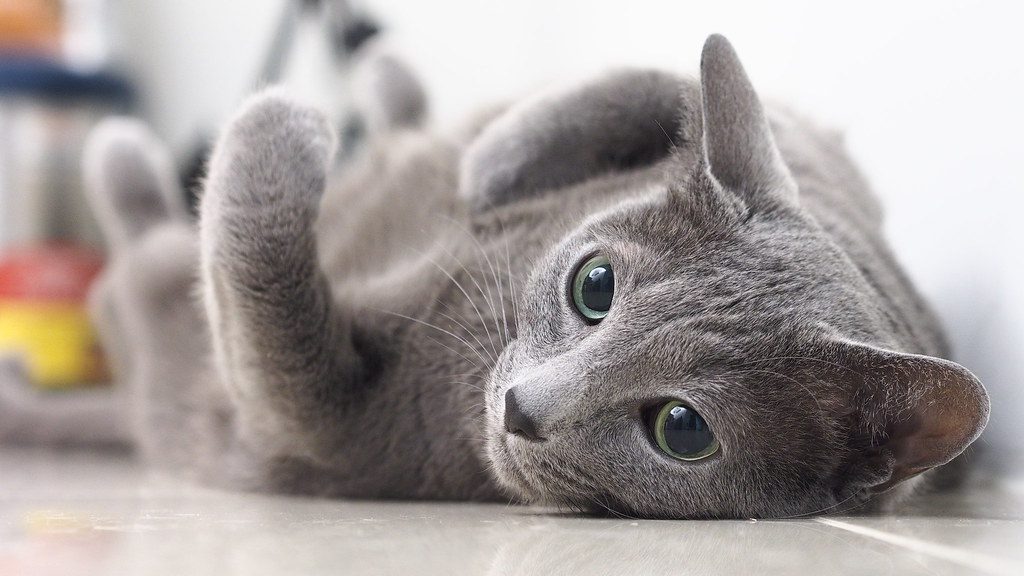
The Russian Blue is one of the most immediately recognizable cat breeds: a fine-boned, elegant cat with a short, dense, silver-tipped blue coat and vivid green eyes. The coat is the breed’s signature — plush, standing out from the body rather than lying flat, with each hair tipped in silver, which is what produces the shimmering quality people notice first.
The temperament is quieter than the appearance suggests. Russian Blues are gentle, soft-voiced and strongly attached to their chosen people, but they are genuinely reserved with strangers. Many will disappear when guests arrive and return when the house is quiet again. Within the family they are affectionate and often follow their person from room to room.
They are also notably routine-oriented. This is a breed that likes things where it left them — the same feeding times, the same furniture, the same people. Disruption is tolerated less gracefully than in more easygoing breeds.
Here is the honest headline. For a calm adult household that wants a devoted, undemanding, clean and quiet companion, the Russian Blue is superb. For a busy home with children coming and going, frequent visitors or an unpredictable schedule, this is the wrong cat, and pushing a reserved animal into that environment tends to produce a cat that lives under the bed.
Breed Origin & History
The breed is generally held to have originated in the port of Arkhangelsk in northern Russia, which is why it was historically known as the Archangel Blue. The traditional account is that sailors carried the cats from Arkhangelsk to Britain and northern Europe in the nineteenth century. The dense, plush coat is consistent with a cat that developed in a cold northern climate.
Russian Blues appeared at early British cat shows in the second half of the nineteenth century, where they were initially judged against British shorthaired blue cats and generally lost, because their finer build did not match what judges of the day were looking for. Separate classification eventually followed.
The Second World War nearly ended the breed in Europe. With numbers severely depleted, breeders rebuilt using outcrosses — most commonly to Siamese and to British Blues — which introduced traits later breeders worked to remove. The Siamese influence in particular left a more angular type and a louder voice that took decades of careful selection to breed back out. Modern American and European breeding programs have largely restored the moderate, fine-boned type.
The Cat Fanciers’ Association recognizes the breed and maintains the standard, which describes a fine-boned, long, firm-muscled cat with a short, dense coat standing out from the body, distinct from any other breed in texture. Green eye color and the even blue coat with silver tipping are central to the standard.
Temperament & Personality
Russian Blues are gentle, quiet and intensely loyal to their own household. They typically choose one or two people and follow them around, often sitting nearby rather than on top of them, and greeting them at the door. The affection is real but restrained — this is not a cat that demands attention loudly.
With strangers they are reserved to genuinely shy. Many hide when visitors arrive and stay hidden until the house returns to normal. This is not anxiety in a clinical sense, it is simply the breed’s default, and no amount of socialization turns a Russian Blue into a gregarious greeter.
They are intelligent and more playful than their dignified appearance suggests. Most enjoy fetch, puzzle toys and interactive play well into adulthood, and many learn to open doors and cupboards they were not meant to open. Mental engagement matters.
Vocalization is low. Russian Blues have quiet, soft voices and use them sparingly, which makes them well suited to apartments and shared walls.
The main trade-off beyond shyness is sensitivity to change. They notice a moved litter box, a late meal, a new piece of furniture, a visitor staying over. Some react to disruption by withdrawing or by going off their food. Households that are stable and fairly predictable get the best from this breed; chaotic ones do not.
Is This Breed Right for You?
The Russian Blue suits calm, stable households that want a devoted but undemanding cat. Specifically: quiet adult homes, single people and couples, and anyone who wants a cat that bonds deeply with them personally. Apartment dwellers, since the breed is quiet, clean and content indoors. People who work regular hours and keep a predictable routine. Allergy-sensitive households may find this breed more tolerable than most, though the reason is disputed and no cat is truly hypoallergenic. Owners who prefer a low-grooming cat — the dense coat needs surprisingly little work.
It also suits people who want a cat that will not shred the furniture or scream for attention at dawn.
Here is who should think twice. Families with young children or a busy stream of visitors — a reserved cat in a loud, unpredictable home spends its life hiding, which is a poor outcome for everyone. People who want an immediately sociable cat that greets guests. Anyone whose schedule is erratic or who moves frequently, since this breed handles change badly. Households that want a cat to be handled and carried by many different people. And anyone buying specifically on the hypoallergenic claim without testing it first.
If your home is quiet and consistent and you want a cat that will attach itself to you specifically and stay attached, the Russian Blue is one of the most rewarding breeds there is.
Care & Exercise Needs
Grooming is one of the easiest things about this breed. The coat is short and dense but does not mat, and a weekly brushing with a soft brush or grooming mitt is generally sufficient, increasing slightly during seasonal shedding. Overbrushing can actually damage the plush texture, so restraint is appropriate. Russian Blues are fastidious self-groomers and tend to stay clean with minimal help.
Diet needs attention. The breed is known to enjoy its food, and combined with an indoor lifestyle and moderate activity level, weight gain is a common problem. Measure portions rather than free-feeding, and weigh the cat periodically — the dense coat hides gain effectively.
Environment matters more for this breed than most. Provide hiding places and elevated retreats so a reserved cat has somewhere to go when the house gets busy; a cat with a reliable escape route is a more confident cat than one with nowhere to withdraw to. Keep the litter box, feeding station and furniture arrangement stable, and introduce changes gradually.
They are active enough to need play but not demanding about it. Daily interactive sessions with a wand toy suit their intelligence and keep weight in check. Many enjoy fetch and puzzle feeders.
Otherwise standard care applies: routine nail trimming, dental attention, litter hygiene and regular veterinary checkups. They are generally cooperative for handling by people they trust, less so for strangers, which is worth mentioning to your vet.
Health Considerations
The Russian Blue is regarded as one of the healthier pedigree cat breeds, with no large cluster of breed-specific inherited disease of the kind seen in some other pedigrees. Lifespan is typically 15 to 20 years, which is long even by cat standards.
The most common health issue owners actually encounter is obesity. A food-motivated, moderately active indoor cat with a coat that disguises weight gain is a predictable combination, and excess weight contributes to diabetes, urinary problems, arthritis and a shortened life. Portion control is the single most useful preventive measure for this breed.
Beyond that, the conditions to be aware of are the ones common to cats generally rather than specific to the breed: dental disease, which is near-universal in cats without dental care; urinary tract issues, including bladder stones, where stress and low water intake are contributing factors; and in older cats, chronic kidney disease and hyperthyroidism.
Some lines have been reported to carry polycystic kidney disease, and reputable breeders may test for it. Ask any breeder what screening they perform on their breeding cats rather than assuming the breed’s general reputation for health covers an individual animal.
Because this breed is stress-sensitive, stress-linked conditions deserve particular attention. Cats that stop eating, over-groom or develop urinary symptoms after a household change should be seen promptly rather than given time to settle. For any specific concern about your cat’s weight, urinary habits or behavior after a change, consult your veterinarian rather than relying on general breed information.
Recommended Gear Categories
Because weight management is the main ongoing task, feeding gear matters most. A measured scoop, an accurate scale and a puzzle or slow feeder all help a food-motivated cat eat less and work harder for it. Timed feeders suit owners out during the day who want rations split rather than a full bowl left down — and a predictable feeding schedule suits this routine-oriented breed particularly well.
Environment gear is the second priority, and it is genuinely functional rather than decorative for a reserved cat. Elevated perches, a covered bed or two, and a cat tree with an enclosed component give the cat somewhere to retreat when the house is busy. Window perches suit a breed that likes to observe.
For grooming, a soft-bristled brush or rubber mitt is all that is required; heavy slickers and undercoat rakes are unnecessary and can spoil the coat’s texture.
Water intake is worth supporting given urinary health in cats generally — many cats drink more from a circulating fountain than a bowl. A large, uncovered litter box in a quiet location suits a cat that values privacy and predictability.
For play, wand toys and fetch-friendly small toys match a breed that is more playful than it looks, and puzzle toys give an intelligent cat something to solve. Your editor will add specific product recommendations with current pricing and details.
Similar Breeds to Consider
Three breeds are commonly confused with the Russian Blue on appearance alone. The Chartreux is a French blue-coated breed with a stockier build, orange or copper eyes rather than green, and a somewhat more easygoing temperament. The Korat is a Thai blue breed, smaller and with a heart-shaped face and peridot-green eyes, and is generally more outgoing and more vocal. The British Shorthair in blue is the heaviest of the group, with a round face and a very different, placid temperament. If it is specifically the silver-tipped shimmering coat you want, only the Russian Blue has it.
On temperament rather than looks, the closest match is probably the Chartreux — quiet, loyal, undemanding, though usually less shy with visitors.
If the Russian Blue’s reserve is the sticking point and you want a similarly elegant cat that is far more sociable, the Abyssinian or the Oriental Shorthair are the obvious alternatives, at the cost of considerably more energy and, for the Oriental, a great deal more noise.
For a quiet, low-maintenance cat that handles a busier household better, the British Shorthair is the practical answer — equally undemanding but less troubled by visitors and disruption. In short: choose the Russian Blue for a deep bond in a calm home, the Chartreux for something similar but slightly more relaxed, the British Shorthair if your household is busier, and an Abyssinian if you want the elegance with an outgoing personality attached.