
Overview
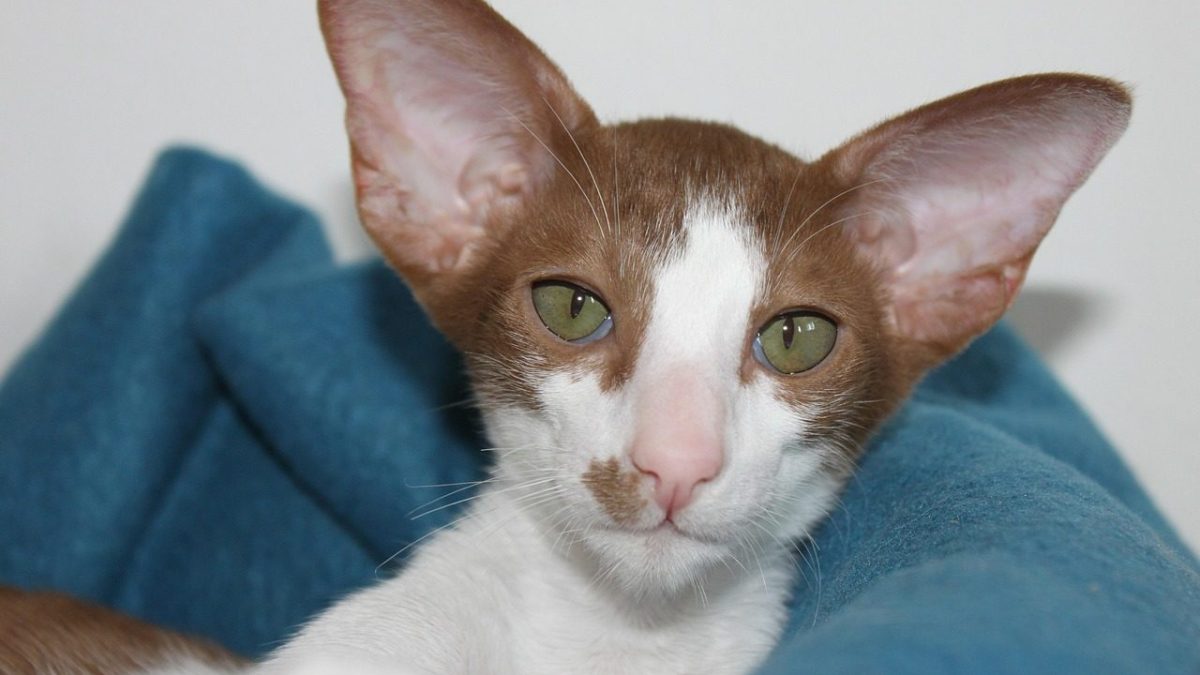
The Oriental Shorthair is, genetically and temperamentally, a Siamese wearing different colors. Same long tubular body, same wedge-shaped head, same enormous ears, same fine short coat — but where the Siamese is restricted to the colorpoint pattern, the Oriental comes in hundreds of color and pattern combinations, most commonly with green eyes rather than blue.
Adults are small to medium, typically 5 to 10 pounds, and deceptively heavy for their size because the slender frame is genuinely muscular. These are athletic cats built along greyhound lines.
Temperamentally this is one of the most engaged, demanding and communicative breeds in existence. Orientals are highly intelligent, endlessly curious, and they involve themselves in everything. They open cupboards, investigate bags, supervise cooking and follow their people continuously.
And they talk. Constantly. The Oriental’s voice is loud, insistent and used for running commentary rather than occasional requests. This is the single most important thing to understand before acquiring one, because it is not trainable away and it is the reason these cats get rehomed.
Here is the honest headline. For a person who wants a genuinely interactive, dog-like, conversational companion and is home a great deal, the Oriental Shorthair is a superb cat. For anyone who values a quiet house or is out all day, it is close to the worst possible choice.
Breed Origin & History
The Oriental Shorthair’s story is really the Siamese’s story. Siamese cats arrived in Britain from Siam, now Thailand, in the nineteenth century, and early imports included both colorpoint cats and solid-colored cats of the same type. The cat fancy of the day standardized on the colorpoint pattern, and the solid-colored siblings fell out of favor.
British and later American breeders revived the solid-colored type in the mid-twentieth century, deliberately crossing Siamese with other shorthaired breeds to introduce new colors and patterns while breeding back toward the Siamese body type. The result was a cat with Siamese conformation and temperament in an enormous range of coats — solids, tabbies, smokes, shadeds and bicolors.
Registries differ slightly in how they classify the family. In some, the Oriental and the Siamese are separate breeds; in others, they are varieties within a single group, and colorpoint kittens born in Oriental litters may be registered as Siamese. The Cat Fanciers’ Association recognizes the Oriental and maintains its standard.
That shared foundation is directly relevant to health: the Oriental inherits the Siamese group’s genetic profile, including its documented inherited conditions, so the screening questions below are the same ones a Siamese buyer should ask.
Temperament & Personality
Orientals are intensely social, demanding, athletic and clever. They do not observe the household; they participate in it. Expect a cat on your shoulder, in your bag, on the keyboard, in the cupboard you just opened, and in conversation with you about all of it.
They bond intensely, often with one person in particular, and the attachment is genuinely strong. Many follow their chosen person room to room for their entire lives.
They are among the most trainable cats. Fetch is routine, harness walking is realistic, and many learn tricks, respond to names and work happily with a clicker. Puzzle toys are close to essential rather than optional, because an Oriental with nothing to do finds something to do.
Athleticism is high. They climb to the top of everything, jump farther than seems reasonable, and stay active well into old age.
The defining trait remains the voice. Orientals are loud and frequent talkers — they comment on your arrival, your departure, the contents of the fridge, and the fact that it is four in the morning. Some individuals are louder than others, but the breed as a whole is at the far end of the scale, and this cannot be trained out.
They are typically excellent with children, dogs and other cats, and they generally greet visitors enthusiastically rather than hiding. They do very badly alone.
Is This Breed Right for You?
The Oriental Shorthair suits people who want a cat as an active participant in daily life. Specifically: people who work from home or are around most of the day. Households prepared to keep two cats, or that already have a compatible dog. Owners who enjoy training, play and enrichment. Families with children who want a cat that genuinely engages. Anyone who wants a cat they can harness-train, teach to fetch, or take places. People who want a very low-grooming cat, since the fine short coat needs almost nothing.
Apartments are fine physically — these cats are small — provided the noise is acceptable to you and your neighbors.
Here is who should think twice. Anyone who wants a quiet home. This is the first and most important filter, and people consistently underestimate it. Anyone out for long working days with a single cat, since the breed is intensely social and copes badly alone. Households that need counters, shelves and high surfaces respected. Light sleepers, since an Oriental that wants attention at 5 a.m. will say so loudly. Anyone wanting an independent, dignified or low-input cat.
And anyone buying without asking about amyloidosis and progressive retinal atrophy, both of which are documented in the Siamese group.
If you want a cat that behaves like a small, opinionated, extremely vocal dog and you are around to enjoy it, few breeds give back more.
Care & Exercise Needs
Grooming is minimal. The fine, short, close-lying coat needs an occasional pass with a rubber mitt or soft cloth, and shedding is low. This is among the easiest coats to maintain.
Everything else is about engagement. Plan on at least two interactive play sessions a day, and treat enrichment as a daily requirement rather than an occasional treat. Puzzle feeders, treat balls, rotating toys and climbing structures all matter. Clicker training and harness work are realistic outlets that also give a very bright cat something to think about.
Vertical space is important — Orientals climb high and will use whatever is available, so tall cat trees and shelving are worth providing before the bookcases become the route.
Company is a care requirement. For a household that is out during the day, a second cat or a compatible dog is close to necessary rather than optional. Orientals left alone for long stretches become distressed, and the distress is loud.
The fine coat offers little insulation, so these cats seek warmth and appreciate heated or covered beds and sunny spots.
Dental attention deserves particular priority: dental disease is reported at elevated rates across the Siamese group, so brushing and regular veterinary dental checks are worth establishing early. Otherwise routine care applies — nails, litter hygiene and regular checkups.
Health Considerations
The Oriental shares the Siamese group’s inherited health profile, and several conditions are well documented.
Amyloidosis is the most significant. Abnormal protein deposits accumulate in the organs — most often the liver in this group — and can cause organ failure, typically in young to middle-aged adults. Signs can be vague at first: lethargy, poor appetite, weight loss. There is no simple DNA test, which makes a breeder’s transparency about their lines particularly important.
Progressive retinal atrophy occurs in the Siamese group and causes gradual vision loss leading to blindness. A DNA test is available for the form found in these breeds, so ask any breeder for results on both parents.
Hypertrophic cardiomyopathy is reported, and breeders should be screening breeding cats by echocardiogram.
Dental disease, including gingivitis and periodontal disease, appears at elevated rates across this group, which is why early and consistent dental care matters more here than in many breeds.
Asthma and other bronchial disease are reported more commonly in Siamese-type cats than in the general population. Persistent coughing or laboured breathing warrants prompt veterinary attention rather than watchful waiting.
A healthy Oriental commonly lives 12 to 15 years, and many exceed that. Ask breeders specifically about PRA testing, cardiac screening and any history of amyloidosis in the line. For any concern about your cat’s breathing, appetite, weight or vision, consult your veterinarian rather than relying on general breed information.
Recommended Gear Categories
Enrichment gear is the core category, and it should be generous and rotated. Wand toys for daily interactive play, fetch toys, treat-dispensing balls, puzzle feeders and foraging toys all earn constant use from a cat this intelligent and active.
Vertical infrastructure matters: tall stable cat trees, wall shelving and window perches. Orientals climb high and will find a route regardless, so providing a good one protects your shelves.
A harness and lead are genuinely realistic for this breed. Many Orientals take to harness walking readily, and it is a real outlet for their curiosity.
Because the fine coat gives little insulation, heated beds, covered beds and warm sleeping spots get heavy use.
Grooming needs are minimal — a rubber mitt or soft cloth.
Dental supplies belong in the kit from the start given the breed group’s elevated rate of dental disease: a cat toothbrush and veterinary toothpaste, introduced gradually while the cat is young.
For households out during the day, timed feeders and a camera help, though neither substitutes for a companion animal. Sturdy scratching posts in both vertical and horizontal forms suit an athletic cat. Your editor will add specific product recommendations with current pricing and details.
Similar Breeds to Consider
The Siamese is the obvious comparison and is effectively the same cat in colorpoint. If you like everything about the Oriental but prefer the classic points and blue eyes, choose the Siamese; the temperament, voice and health profile are the same.
The Balinese and the Oriental Longhair are the semi-longhaired versions of the same type, for anyone who wants the personality with a flowing coat and a plumed tail.
The Abyssinian is the strongest alternative for someone who wants comparable energy, intelligence and engagement with far less noise. Abys chirp and trill rather than announce, which for many households is the deciding difference. Athleticism and enrichment needs are similar.
The Devon Rex offers similar social intensity and playfulness in a smaller, quirkier package, and is similarly poor at being alone.
The Tonkinese, a Siamese and Burmese cross, sits between the extremes — social and talkative but less relentless than either parent breed, and a reasonable middle path for someone drawn to the type but wary of the volume.
If the noise is the dealbreaker and the personality is what you want, the honest recommendation is an Abyssinian or a Burmese. In short: choose the Oriental for maximum engagement and conversation, the Siamese for the same in points, the Abyssinian for energy without volume, and the Tonkinese for a moderated version of the whole package.