
Overview
The British Shorthair is the pedigree version of the ordinary British domestic cat, refined over more than a century into a heavy-boned, round-faced, plush-coated animal. It is one of the oldest recognized cat breeds, and its temperament reflects that long domestic history: steady, undramatic, and easy to live with.
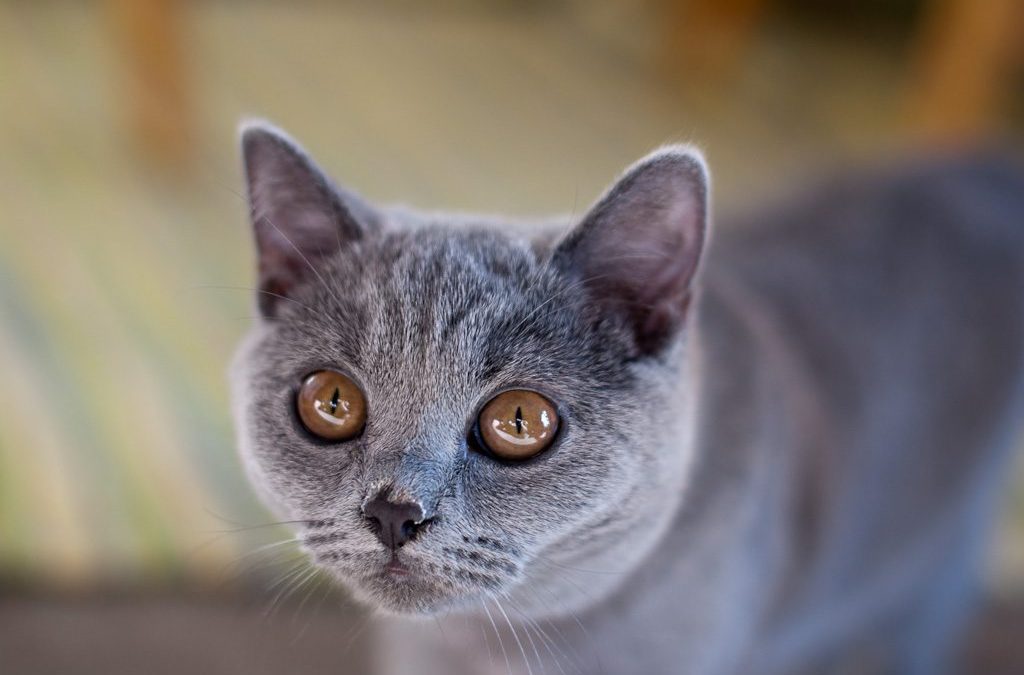
The build is distinctive. British Shorthairs are compact and powerful, with a broad chest, short strong legs, round paws, and a thick tail. The head is round and substantial, with large round eyes — copper in the classic blue variety — set wide apart. The coat is short and exceptionally dense, denser than almost any other breed, which gives the cat its characteristic plush, firm texture. The best-known color is the solid blue-grey “British Blue,” though the breed is bred in a wide range of colors and patterns.
Here is the honest headline. The British Shorthair is an excellent choice for people who want a calm, self-sufficient cat that tolerates being alone and does not demand constant interaction. It is a poor choice for anyone who wants a cat that lives in their lap and wants to be carried. Most British Shorthairs are affectionate on their own terms and firmly prefer four feet on the floor. The other thing worth knowing up front is the maturity timeline: this breed takes three to five years to reach full physical development, so the cat you bring home is a long project rather than a finished product.
Breed Origin & History
Cats reached the British Isles early — apparently before the Roman occupation — and interbred with local populations over centuries to produce a sturdy, weatherproof working cat. The British Shorthair is the pedigree formalization of that landrace, developed by Victorian breeders who selected the best examples of the ordinary British street and farm cat rather than importing an exotic type.
The breed was among the earliest exhibited at organized cat shows in Britain in the late nineteenth century, and for a time it was one of the most prominent breeds in the fancy. Both world wars devastated pedigree breeding programs, and the British Shorthair population was reduced severely. Rebuilding involved outcrossing to other breeds, including Persians, which contributed to the rounder head and denser coat seen in the modern cat and also introduced the longhaired variant recognized in some registries.
By the late 1970s breeders had reestablished the distinctive British type and secured full recognition from the major registries. Registered British Shorthairs had been imported into the United States since the early 1900s, though for decades they were registered simply as domestic shorthairs. A campaign for championship recognition began in the 1970s, and the Cat Fanciers’ Association granted the breed championship status in 1980.
The CFA standard describes a compact, well-balanced and powerful cat with good depth of body, emphasizing balance and proportion with no exaggerated feature. That emphasis on moderation is a deliberate part of the standard.
Temperament & Personality
British Shorthairs are calm, even-tempered, and undemanding. They are affectionate without being clingy, and most form strong attachments to their household while expressing it quietly — following you between rooms, settling nearby, greeting you at the door rather than climbing into your arms.
The defining behavioral trait is a preference for staying on the ground. This is a heavy, solidly built cat that is not especially interested in leaping onto counters, bookshelves, or the top of the refrigerator. For owners, that translates into a notably low-mischief cat: fragile objects on high shelves tend to survive.
They are quiet. Vocalization is low compared to Oriental breeds, and a British Shorthair is unlikely to hold long conversations or yowl for attention. They also tolerate being alone better than most breeds, which makes them a realistic option for people who work full days outside the home.
Now the trade-offs. Most British Shorthairs dislike being picked up and carried, and many actively resist it. If your mental image of cat ownership involves a cat draped over your shoulder, this breed will disappoint you. They are also slow to mature, both physically and behaviorally, and kittenish playfulness fades earlier than in more active breeds. Combined with a naturally low activity level, that makes weight gain a genuine and common problem. They are generally tolerant of children and other pets, but tolerance is the right word — this is a cat that accepts company rather than seeking it out.
Is This Breed Right for You?
The British Shorthair suits people who want a low-drama, low-maintenance cat with a stable temperament. Specifically: apartment dwellers, since the cat is not a climber and is content in a modest footprint. People who work full days, because this breed handles solitude better than most. First-time cat owners, given the forgiving temperament and simple grooming. Households with children old enough to respect an animal that does not want to be carried. Quiet homes, and homes with other calm pets.
It also suits people who want a cat that will not systematically destroy the furniture or patrol the kitchen counters.
Here is who should think twice. Anyone who wants a lap cat or a cat that enjoys being held — this is the single most common mismatch with the breed. People who want an interactive, highly playful, talkative companion would be better served by an Oriental or Abyssinian. Anyone unwilling to manage diet carefully, because a sedentary cat with a hearty appetite gains weight quickly and obesity drives a long list of secondary health problems. Households wanting a cat that will bond intensely with one person and follow them everywhere. And anyone expecting a finished adult quickly, since this breed takes three to five years to fill out.
If you want a calm, quietly affectionate, self-possessed cat that fits into a busy adult household without asking much of you, the British Shorthair is one of the most reliable choices available.
Care & Exercise Needs
Grooming is straightforward but not zero. The coat is short, but it is exceptionally dense — denser than most breeds — which means loose hair gets trapped rather than falling free. A weekly brushing keeps it in order for most of the year, increasing to two or three times a week during seasonal shedding in spring and autumn. A rubber grooming mitt or a short-bristled brush works better on this coat texture than a long pin brush.
Diet management is the real ongoing task. This is a low-activity cat with a good appetite and a body type that hides weight gain under a dense coat. Measure food rather than free-feeding, weigh the cat periodically, and adjust portions as it matures. Obesity in this breed contributes to diabetes, joint problems, and reduced lifespan, and it is far easier to prevent than to reverse.
Because they are not natural climbers, vertical space matters less than it does for other breeds, but sturdy low-to-mid-height perches, window seats, and a solid scratching post still earn their place. Play needs deliberate encouragement: a British Shorthair will happily do nothing, so short daily interactive play sessions with a wand toy are a practical way to keep both weight and boredom in check.
Standard care applies otherwise — regular nail trimming, dental attention, litter box hygiene, and routine veterinary checkups. They are generally easy to handle for grooming and nail trims provided you avoid picking them up unnecessarily.
Health Considerations
The British Shorthair is generally considered a robust breed, but two inherited conditions are well documented and worth understanding before you buy.
Hypertrophic cardiomyopathy, a thickening of the heart muscle, is the most significant. The breed is known to have a higher incidence than the general cat population, and a genetic mutation associated with the condition has been identified in some lines. Responsible breeders commonly screen breeding cats by echocardiogram and, where applicable, by DNA test. Ask any breeder directly about cardiac screening.
Polycystic kidney disease has also been reported in the breed, largely through historical outcrossing to Persians during postwar reconstruction. A DNA test exists, and reputable breeders test for it. Hemophilia B, an inherited bleeding disorder, has been identified in some lines and is likewise testable.
Beyond inherited disease, obesity is the health issue most owners will actually face. A naturally sedentary cat that matures slowly and eats well is an obvious candidate for weight gain, and excess weight is linked to diabetes, arthritis, urinary problems, and shortened lifespan. Dental disease is common in cats generally and this breed is no exception.
A healthy British Shorthair typically lives 12 to 16 years, and many exceed that. When buying a kitten, ask to see documentation of cardiac and PKD screening for the parents — this is the single most useful question you can put to a breeder of this breed. For any specific concern about your cat’s heart, kidneys, or weight, consult your veterinarian rather than relying on general breed information.
Recommended Gear Categories
A few gear categories matter more for this breed than for the average cat. Start with feeding equipment, because weight control is the central ongoing task. A measured portion scoop, an accurate kitchen scale, and a slow-feeder or puzzle bowl all help a food-motivated, low-activity cat eat less and work harder for it. Timed automatic feeders suit owners who are out for long days and want to split rations across the day rather than leaving a full bowl down.
For grooming, the dense coat responds better to a rubber curry mitt or a short, firm-bristled brush than to a long pin brush designed for flowing coats. A fine-toothed comb is useful during seasonal shedding.
Because this is a heavy, ground-oriented cat, furniture should be chosen accordingly. Look for sturdy, wide, low-to-mid-height cat trees with generous platforms rather than tall narrow towers with small perches — a stocky adult needs a base that will not tip and a platform it actually fits on. Scratching posts should be robust and well anchored, and horizontal scratchers often suit this breed better than tall vertical ones.
Litter boxes should be large. Many standard boxes are undersized for a full-grown British Shorthair. Interactive wand toys and treat-dispensing toys are worth keeping on hand to prompt the daily activity this breed will not seek out on its own. Your editor will add specific product recommendations with current pricing and details.
Similar Breeds to Consider
The closest comparison is the Scottish Fold, which shares the round face, dense coat, and placid temperament. The significant difference is health: the cartilage mutation responsible for the folded ears is associated with painful degenerative joint disease, and several registries and veterinary bodies have raised welfare objections to the breed. If you are drawn to the look, the British Shorthair delivers a similar aesthetic without that particular concern.
The American Shorthair is the closest functional equivalent — another sturdy, easygoing, low-maintenance breed developed from a working domestic population. It tends to be slightly more active and more inclined to play into adulthood, with a less extreme round build. Choose the American Shorthair if you want a similar temperament in a somewhat more athletic cat.
The Ragdoll is worth considering for anyone whose main disappointment with the British Shorthair is the reluctance to be held. Ragdolls are large, docile, and genuinely enjoy being picked up and carried, which is precisely the trait the British Shorthair lacks. The trade-off is a semi-long coat that needs more grooming.
If you want a calm cat that is more openly affectionate and more of a lap cat, the Persian is the traditional answer, though it brings a flat face with associated breathing and eye issues and a long coat requiring daily work. In short: choose the British Shorthair for calm independence, the Ragdoll or Persian if you want a cat that seeks physical closeness, and the American Shorthair if you want similar steadiness with a bit more activity.