
Overview
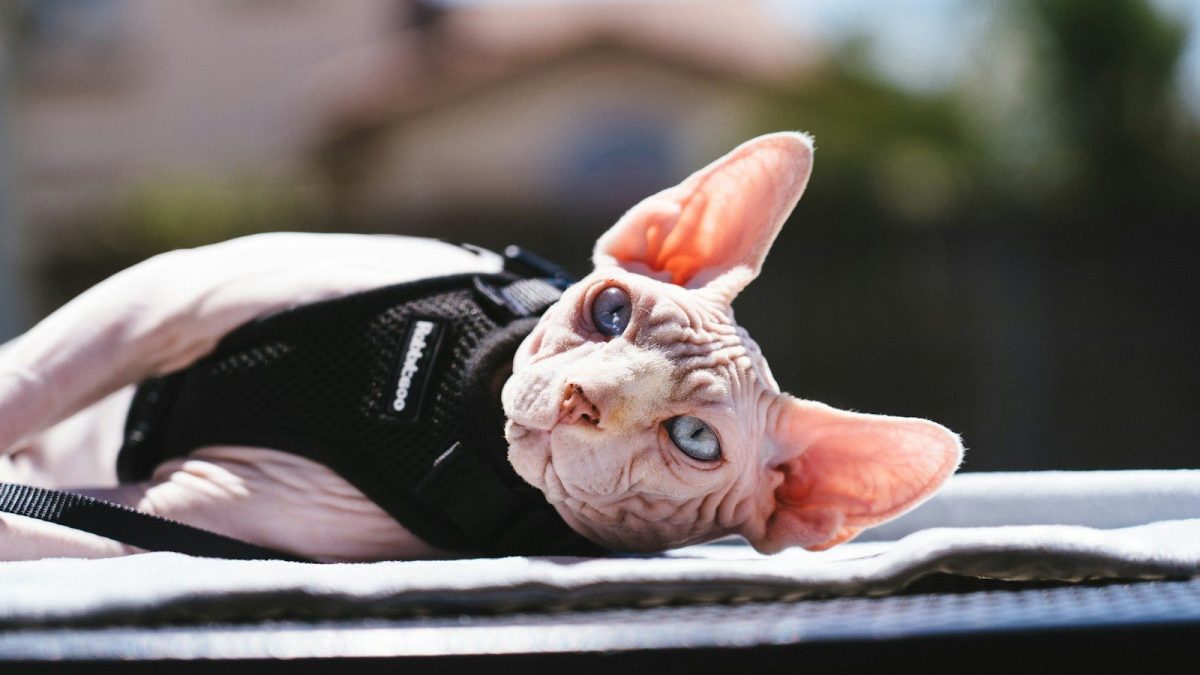
The Sphynx is the cat people notice from across the room and then can’t stop asking about. No coat, big ears, wrinkled skin, and a body that feels like a warm suede water bottle. But the look is the least interesting thing about them. Sphynx cats are famously people-focused — they follow you between rooms, wedge under the covers, and treat your keyboard as prime seating.
Despite what ‘hairless’ suggests, this is not a low-maintenance cat. The absence of fur means the oils a normal coat would absorb sit directly on the skin, so most Sphynx need regular bathing and ear cleaning. They also lose heat fast, which shapes daily life more than new owners expect: they seek warmth constantly and often need sweaters in cool homes.
What you get in return is a cat with real presence. Sphynx tend to be clownish, curious, and vocal about wanting company. They’re often described as more dog-like than typical cats. If you want a pet that participates in your day rather than observing it from a windowsill, this breed delivers — as long as you can meet the care and attention it demands.
Breed Origin & History
The modern Sphynx traces to Toronto, Canada, in 1966, when a domestic shorthair produced a hairless kitten named Prune through a natural genetic mutation. Breeders worked to establish the trait, later crossing hairless cats with Devon Rex and other domestic cats to widen the gene pool and improve health. Additional hairless kittens found in the late 1970s and early 1980s contributed to the breed’s foundation.
The hairlessness comes from a recessive genetic mutation affecting the hair keratin — not the same mutation seen in other hairless breeds. Many Sphynx aren’t fully bald; they carry a fine, downy fuzz, especially on the ears, nose, and tail, giving the skin a peach-fuzz feel.
The Cat Fanciers’ Association (CFA) accepted the Sphynx for championship status in 2002, and The International Cat Association (TICA) recognized the breed earlier, in the 1980s. In Europe, the FCI does not register cats — cat pedigrees there fall under bodies like FIFe and WCF — so recognition and standards vary by registry. Registry standards agree broadly on the essentials: a medium-sized, muscular cat with a wedge-shaped head, prominent cheekbones, very large ears, and a pot-bellied, sturdy body. The name references the Egyptian sphinx, though the breed has no connection to ancient Egypt.
Temperament & Personality
Sphynx are affectionate to a degree that surprises people. Most want physical contact more or less constantly — lap-sitting, shoulder-riding, sleeping under blankets against you. Owners often describe them as needy in the most literal sense. This is wonderful if you wanted a cat that acts like a small, warm shadow. It’s harder if you imagined a self-sufficient pet.
They’re also highly intelligent and playful well into adulthood. Many learn to fetch, open cabinets, and problem-solve their way into places you’d rather they stay out of. Expect a cat that gets bored and, when bored, gets into things. They’re vocal but not usually loud — more chirps, trills, and commentary than yowling.
Sphynx are typically social with strangers, other cats, and dogs, which makes them a good fit for busy, multi-pet households. The trade-off is separation stress. A Sphynx left alone for long workdays with no companion often becomes anxious or destructive. The same trait that makes them delightful — their deep need for company — is exactly what makes them a poor choice for someone who’s rarely home.
Remember these are tendencies, not guarantees. Individual cats vary, and early socialization matters. But if you meet a dozen Sphynx, most will be busy, warm, and firmly convinced they belong in your lap.
Is This Breed Right for You?
The Sphynx suits people who are home often and want a cat that’s genuinely involved in daily life. Remote workers, retirees, and households with someone usually around do well. So do multi-pet homes — a second cat or a friendly dog gives the Sphynx company when humans are busy. If you’ve always wanted a cat with the attachment style of a dog, this is close to it.
They’re a strong fit for people with mild cat-fur allergies who still react — but read the fine print below. And they’re excellent for owners who actively enjoy grooming rituals, because the weekly bath and ear-cleaning become part of the relationship rather than a chore.
This breed is a poor fit for several people. If you work long hours away from home and won’t add a companion pet, skip it — Sphynx get lonely and anxious. If you want a hands-off, independent cat, this is the opposite. If you keep a cool house, run air conditioning heavily, or live somewhere cold without reliable heating, the constant warmth-seeking and sweater management will wear on you. If you dislike bathing pets or budget is tight, factor in that skin issues, dental care, and heart screening can make this a genuinely expensive cat over its life.
First-time cat owners can absolutely succeed with a Sphynx if they’ve done the research and accept the care load. It’s not a beginner cat because it’s difficult to please — it’s demanding because it needs so much of you. Go in eyes open, and it’s one of the most rewarding companions in the cat world. Go in expecting ‘hairless equals easy,’ and you’ll be frustrated within a month.
Care & Exercise Needs
Plan on bathing your Sphynx roughly every one to two weeks with a gentle cat-safe shampoo. Because there’s no coat to distribute skin oils, they build up in skin folds and on the paws, and unwashed Sphynx can leave greasy marks on furniture and bedding. Ears produce wax quickly and need cleaning weekly. Trim nails and wipe the nail beds, where oil collects.
Temperature management is daily work. Sphynx lose body heat fast, so most homes need warm resting spots, heated cat beds, or sweaters in winter. In summer, their exposed skin can sunburn through windows, so limit direct sun exposure and ask your veterinarian about safe options for skin protection.
Feed a good-quality diet; many Sphynx have fast metabolisms and hearty appetites to fuel their body heat. Watch weight, since their pot-bellied build can hide gain.
For stimulation, budget 30–45 minutes of active play across the day — wand toys, puzzle feeders, and climbing structures. These are athletic, clever cats that scale bookshelves and open drawers when under-stimulated. Cat trees, window perches, and rotating toys reduce trouble. Training works well: they respond to clicker training and food rewards, and many enjoy learning tricks. Keep sessions short and positive. A bored Sphynx is a destructive Sphynx, so mental engagement matters as much as physical play.
Health Considerations
The Sphynx is known to have a higher incidence of hypertrophic cardiomyopathy (HCM), a thickening of the heart muscle that is one of the most significant health concerns in the breed. Responsible screening with periodic cardiac ultrasound is common among careful breeders and owners. The breed is also associated with a higher incidence of a skin condition called urticaria pigmentosa, as well as general skin sensitivity, sunburn risk, and yeast or oil buildup in folds and nail beds.
Dental disease is frequently reported in Sphynx, so many owners establish tooth-brushing and dental checks early. Because they run warm and burn energy fast, they can be prone to digestive upset if diet changes abruptly, and some lines carry a neurological condition affecting muscle function seen in related Rex breeds. Their large open ears also accumulate wax quickly, raising the chance of ear infection without routine cleaning.
With attentive care, many Sphynx live long, full lives — commonly into their early or mid-teens. But this is not a low-cost cat to keep healthy. Regular bathing, dental care, and monitoring for heart disease add up.
None of this is a diagnosis or a treatment plan. If you’re considering a Sphynx or already have one, talk with your veterinarian about a screening schedule, heart monitoring, skin care, and dental care tailored to your individual cat.
Recommended Gear Categories
Because the Sphynx has no protective coat, gear leans toward warmth and skin care. Look for well-fitted cat sweaters or shirts in soft, breathable fabric for cool rooms — several sizes, since one thin layer isn’t always enough in winter. A heated or self-warming cat bed gives them a reliable warm spot when your lap isn’t available.
For skin care, you’ll want a gentle, cat-safe shampoo and unscented pet wipes for between-bath touch-ups, plus a cat-formulated ear-cleaning solution and cotton pads. A soft-bristled cat toothbrush and vet-approved dental products help with the breed’s dental risk.
For enrichment, prioritize sturdy climbing furniture, puzzle feeders, and interactive wand toys, since these cats are athletic and easily bored. If you want your Sphynx to enjoy sunny windows safely, consider window film that filters UV to reduce sunburn risk. Choose specific products with your veterinarian’s input, especially anything applied to skin.
Similar Breeds to Consider
If the Sphynx appeals but the bathing and temperature management give you pause, consider the Devon Rex. It shares the big-eared, mischievous, people-loving personality and was part of the Sphynx’s breeding history, but it has a short, wavy coat that handles temperature better and needs less skin maintenance.
The Cornish Rex is another close match in personality — active, affectionate, and clownish — with a soft, curly coat instead of bare skin. Both Rex breeds give you the Sphynx-style attachment and playfulness without the greasy-skin cleanup, which makes them a better fit for owners who want the temperament but not the grooming schedule.
If you love the Sphynx’s need for constant closeness and don’t mind fur, look at the Burmese or the Siamese. Both are famously social, vocal, and dog-like in their attachment to people, and both do well in busy, interactive households. The Siamese in particular is a strong option for someone who wants a talkative, follow-you-everywhere companion. For allergy-motivated buyers, be cautious: no cat is truly hypoallergenic, and a full-coated breed won’t help if fur is your trigger.