
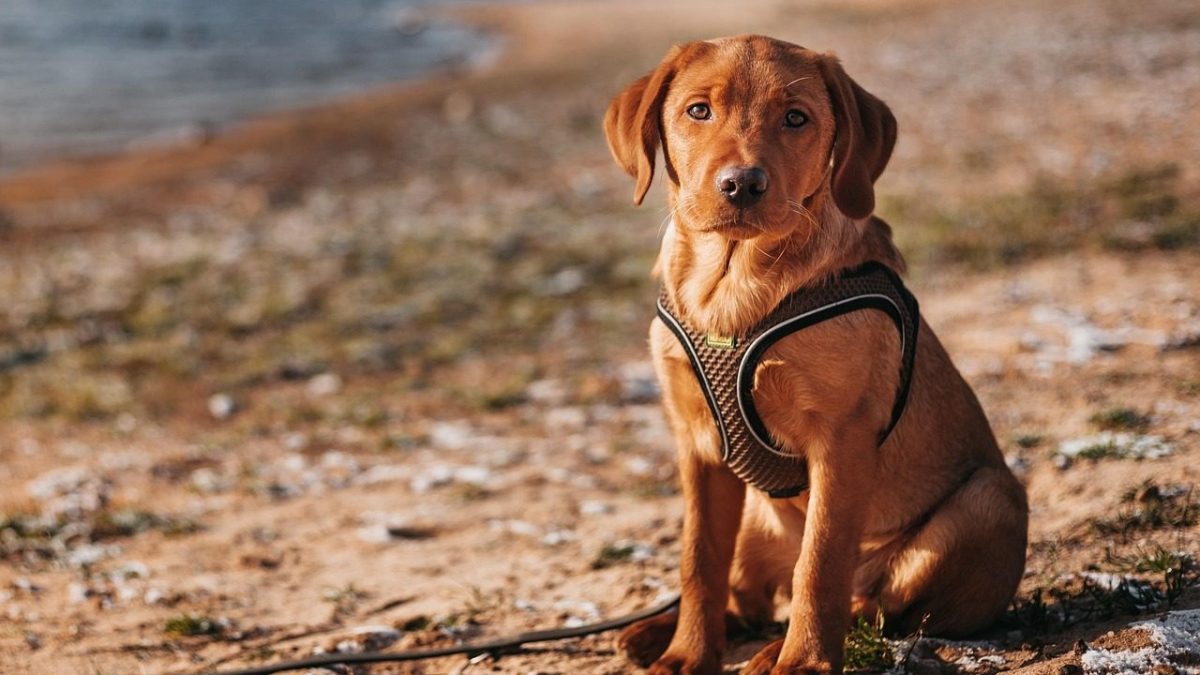
Overview
The Labrador Retriever has topped the AKC’s most-popular-breed list for decades, and that popularity is earned. Labs are outgoing, biddable, and genuinely good with people. They want to be part of whatever you’re doing. For the right household, that makes them one of the easiest dogs to live with and train.
But popularity has a downside: a lot of people get a Lab expecting a mellow family dog and end up with an 70-pound adolescent who chews the couch and knocks over the kids. Labs were bred to work — retrieving birds from cold water, all day, without quitting. That drive doesn’t disappear because you keep the dog in a suburban living room. A Lab that doesn’t get enough exercise and mental work will find its own entertainment, and you usually won’t like the results.
There are two rough types you’ll hear about: the show/bench line (blockier, calmer, heavier) and the field/working line (leaner, more athletic, higher-drive). Both are Labs, but the energy difference between them is real. If you’re choosing a Lab, understanding which type you’re getting matters more than coat color.
Breed Origin & History
The Labrador Retriever’s roots are in Newfoundland, Canada — not Labrador, despite the name. In the 1700s and 1800s, fishermen there kept a smaller water dog often called the St. John’s Dog, which helped haul nets and retrieve fish that slipped the lines. These dogs had the water-resistant coat, the love of swimming, and the willingness to work that still define the breed.
English nobles who visited Newfoundland brought the dogs back to Britain, where breeders in the 1800s — notably associated with the Earl of Malmesbury and the Duke of Buccleuch — refined them into the retriever we’d recognize today. The Malmesbury kennels are often credited with standardizing the breed and the name “Labrador.”
The Kennel Club (UK) recognized the breed in 1903, and the AKC followed in 1917. From there, the Lab’s calm-under-pressure temperament and trainability pushed it far beyond hunting. Labs became the dominant breed in service work — guide dogs, search-and-rescue, detection, and assistance work — because they combine a soft mouth, a strong work ethic, and a stable, people-focused temperament. That same versatility is why the breed sits at the top of registration numbers year after year.
Temperament & Personality
Labs are famous for being friendly, and it’s mostly true. Most Labs like people, like other dogs, and greet the world with an open, tail-wagging optimism. They’re one of the more emotionally stable breeds — not skittish, not sharp, rarely aggressive. That temperament is exactly why they dominate service and therapy work.
Here’s the trade-off. The same friendliness means a Lab is a terrible guard dog — a stranger is just a friend they haven’t jumped on yet. And that enthusiasm comes with a body that doesn’t know its own size. A young Lab will greet you by launching at your chest. They mouth and carry things constantly; this is a breed that wants something in its mouth, and if you don’t give it a toy, it’ll grab a shoe.
They’re smart and eager to please, which makes training genuinely enjoyable — but they mature slowly. A Lab can stay puppy-brained until two or three years old. That long adolescence catches people off guard. You’re not getting a dog that settles down at one.
Most Labs are also deeply food-motivated. Great for training, risky for their waistline, and occasionally dangerous — many Labs will eat things they shouldn’t. This is a breed that bonds closely to its family and does not do well left alone for long stretches. Chronic isolation turns a happy Lab into a destructive, anxious one.
Is This Breed Right for You?
A Labrador Retriever suits an active household that wants a dog fully woven into daily life. If you hike, run, swim, or hunt — and want a companion for it — the Lab is close to ideal. Families with kids old enough not to be flattened by an exuberant dog (roughly 6 and up) do well, because Labs are patient and tolerant. First-time owners can succeed with a Lab, provided they commit to training and exercise, because the breed’s willingness to please forgives a lot of beginner mistakes.
This breed is a strong fit if someone is home for chunks of the day, or can bring the dog along. Labs want company. They’re also a genuinely good option for people who want a service, therapy, or working prospect, or who simply want a dog that’s easy to train and social with almost everyone.
Here’s who should skip the Lab. If you want a low-energy dog that’s happy with a short daily walk, this isn’t it — an under-exercised Lab is a chewing, digging, counter-surfing problem. If you’re gone 10 hours a day with no dog care in between, choose a more independent breed. If you can’t tolerate shedding — Labs shed heavily, year-round, with two big blowouts a season — the daily hair will wear you down. If you want a dog that alerts to strangers or protects the house, look elsewhere. And if a jumpy, mouthy adolescent for two-plus years sounds exhausting rather than manageable, a calmer breed will make you happier. Apartments can work only if you’re truly committed to getting the dog out for one to two hours of real activity daily.
Care & Exercise Needs
Exercise is non-negotiable. Plan on 60–90 minutes of real activity daily for an adult Lab — ideally including off-leash running, swimming, or retrieving games, not just leash walks. Field-line Labs need the higher end of that. A tired Lab is a well-behaved Lab; a bored one is destructive.
Mental work matters as much as physical. This breed was built to problem-solve on the job. Ten to fifteen minutes of training, scent games, or puzzle feeders a couple of times a day keeps their brain occupied and reduces nuisance behavior. Retrieving is deeply satisfying to most Labs — use it.
Training should be reward-based and started early. Labs respond beautifully to food and praise and poorly to harsh corrections. Prioritize loose-leash walking, a solid recall, and impulse control around food and greetings — those are the areas Labs struggle with most. Because they’re strong pullers as youngsters, early leash work pays off.
Grooming is easy but constant. The double coat needs brushing a couple of times a week normally, and daily during the twice-yearly shed. Expect hair on everything. Bathe only occasionally — the coat’s natural oils are water-repellent, and over-bathing strips them. Check ears regularly, since floppy-eared water dogs are prone to ear issues, and keep nails trimmed.
Watch the food bowl. Labs are prone to obesity, partly due to their appetite and, in some individuals, a genetic factor affecting satiety. Measure meals, go easy on treats, and keep your Lab lean — it’s one of the biggest things you control for their long-term health.
Health Considerations
Labs are generally hardy, but the breed is known to have a higher incidence of several conditions worth knowing about. Hip and elbow dysplasia are among the most significant — the breed’s parent club recommends screening breeding dogs for both. Responsible testing (OFA or PennHIP for joints) reduces but doesn’t eliminate the risk in offspring.
The breed is also known to have a higher incidence of certain eye conditions, including progressive retinal atrophy, and of exercise-induced collapse (EIC), a genetic condition for which a DNA test exists. Some Labs are affected by a hereditary form of muscle weakness (centronuclear myopathy) that DNA testing can also identify.
Obesity deserves its own mention because it’s so common and so preventable. Excess weight worsens joint problems and shortens lifespan. Keeping a Lab at a healthy body condition is one of the most protective things an owner can do.
Like many deep-chested breeds, Labs carry some risk of bloat (gastric dilatation-volvulus), a sudden, life-threatening emergency. Learn the warning signs. Ear infections are common because of the breed’s floppy ears and love of water.
None of this means a given Lab will develop these issues — these are breed tendencies, not guarantees, and many Labs live full, healthy lives into their teens. For any specific concern about screening, prevention, or symptoms, talk with your veterinarian, who can advise based on your individual dog.
Recommended Gear Categories
A Lab’s strength and enthusiasm shape what gear you’ll want. For adolescents who pull, a well-fitted no-pull front-clip harness helps you manage them without hurting the dog while you train loose-leash walking. Because Labs love water, a quick-dry collar and a canine life vest are worth considering if you boat or swim in open water.
For the mouthy, food-driven personality, invest in durable chew toys rated for strong chewers and puzzle or slow-feeder bowls — the latter also help pace fast eaters and add mental work. Retrieving toys (bumpers, floating fetch toys) tap into the breed’s core drive and burn energy efficiently.
Given the heavy shedding, a good deshedding tool and a slicker brush will save your floors and furniture. For grooming ears after swims, look for a vet-recommended ear-cleaning routine rather than a specific product. Finally, a crate sized for a large dog supports house-training and gives a young Lab a safe place to settle — helpful during that long adolescence.
Similar Breeds to Consider
If you love the Lab’s temperament but want a bit more coat and often a touch more sensitivity, the Golden Retriever is the obvious comparison. Goldens are similarly friendly, trainable, and family-oriented, but their longer coat needs more grooming and they can be somewhat softer emotionally. Energy and exercise needs are comparable.
If you want a smaller retriever with a similar work ethic and playful nature, consider the Nova Scotia Duck Tolling Retriever. Tollers are more compact, sometimes more independent and vocal, and every bit as high-drive — a good fit for an active person who doesn’t want a big dog. For someone drawn to the Lab’s smarts but wanting a lower-shedding coat, the Standard Poodle is worth a look; it’s highly trainable and athletic, though the curly coat demands regular professional grooming.
If the Lab’s energy sounds like too much, the Cavalier King Charles Spaniel or a mellow adult from a rescue might suit better — but understand you’re trading away the athleticism and outdoor drive that define the Lab. There’s no smaller, calmer version of a Labrador; there are just different dogs with different jobs.
Attributes
Array