
Overview
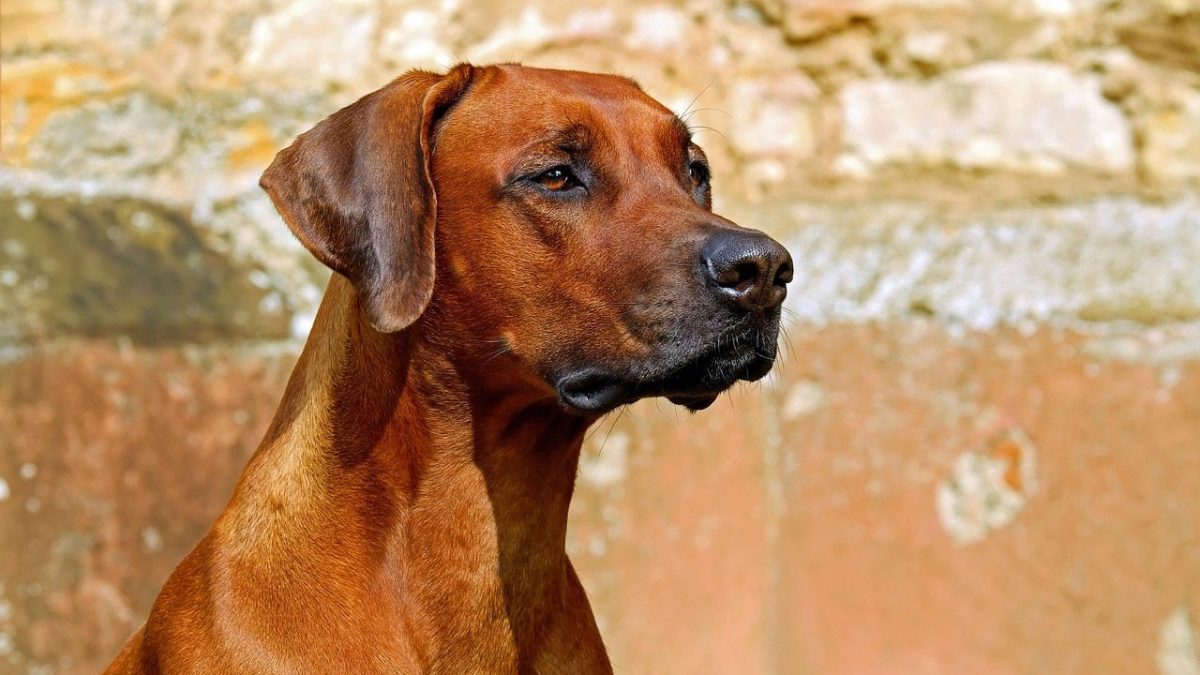
The Rhodesian Ridgeback is a large, athletic southern African hound — males around 85 pounds and 25 to 27 inches, females around 70 pounds and 24 to 26 — with a short, sleek wheaten coat and the ridge of backward-growing hair along the spine that gives the breed its name.
The ridge is genuinely diagnostic. The hair grows in the opposite direction to the rest of the coat, forming a defined pattern with two symmetrical whorls. No other breed carries it in quite this form.
Temperamentally this is a hound rather than a companion dog, and the distinction matters. Ridgebacks are independent, strong-willed, reserved with strangers and quietly affectionate with their own people. They are not eager to please in the retriever sense; they consider requests and decide.
They are also remarkably quiet indoors. A mature Ridgeback is often close to inert in the house, which surprises people who expect a large athletic dog to be restless.
Here is the honest headline. This is a superb dog for an experienced, confident owner who wants an independent partner rather than a biddable follower, and a frustrating one for anyone expecting a Labrador in a different coat. The ridge also carries a genetic complication that a responsible profile has to explain rather than gloss over.
Breed Origin & History
The breed developed in southern Africa from European hounds brought by settlers crossed with the ridged dogs kept by the Khoikhoi people, whose dogs already carried the distinctive dorsal ridge.
The resulting dog was bred for a specific and demanding job: working in packs to track big game, particularly lion, and to hold and harry the animal at bay until the hunter arrived. The breed was never intended to kill a lion — the job was tracking, courage and agility under pressure, which is why the old name African Lion Hound describes function rather than outcome.
That history explains the temperament directly. A dog that works at distance from its handler, makes independent decisions in dangerous situations and stands its ground is not a dog bred for instant obedience.
The American Kennel Club recognized the breed in 1955 and placed it in the Hound group. The Rhodesian Ridgeback Club of the United States was formed on 10 July 1957 and serves as the parent club, running national and regional specialties and maintaining an active education program for both newcomers and experienced breeders.
The club’s breeder directory carries a caution worth repeating to anyone shopping: the club does not endorse or guarantee any breeder, and prospective buyers are advised to contact several in order to develop a frame of reference, looking for someone dedicated to improving the breed rather than producing Ridgebacks for profit.
Temperament & Personality
Ridgebacks are independent, confident, intelligent and strong-willed. They bond deeply with their families and are affectionate at home in an understated way, often leaning against people rather than demanding attention.
With strangers they are reserved and watchful. This is normal for the breed and distinct from aggression, but it does mean early and broad socialization is essential rather than advisable — an under-socialized Ridgeback of this size and power is a management problem.
Training requires a particular approach. Ridgebacks are perfectly capable of learning, but they weigh instructions rather than obeying reflexively, and they lose interest in repetition quickly. Harsh handling produces a dog that shuts down or resists; endless drilling produces boredom. Short, motivated, consistent sessions from someone the dog respects work far better.
Prey drive is high. A Ridgeback that sights something worth chasing may be entirely unreachable, and recall in open country should not be relied upon. Secure fencing is non-negotiable.
They are typically good with children in their own household, with the usual caution about a powerful dog and small children.
Indoors they are quiet and calm to a degree that surprises people. Barking is infrequent, and a mature Ridgeback will spend much of the day asleep on the most comfortable available surface.
Is This Breed Right for You?
The Rhodesian Ridgeback suits experienced, confident owners who want an independent dog. Specifically: people who have owned strong-willed breeds before and are comfortable with a dog that negotiates. Active owners who run, hike or cycle, since the breed needs real exercise despite being calm indoors. Households with secure, tall fencing. Owners home a reasonable part of the day. Families with older children. People who want a large dog with minimal grooming and a quiet house.
It also suits warm climates well — the short coat and African origin make heat far less of a problem than for most large breeds, though cold is another matter.
Here is who should think twice. First-time owners, and anyone hoping for a biddable, eager-to-please dog. People who cannot physically manage a powerful 85-pound animal that has decided to pursue something. Households with cats or small pets, given the prey drive. Anyone relying on off-leash freedom in unfenced areas. Owners who train by repetition or correction. Apartment dwellers, mostly on exercise grounds. Anyone in a cold climate unwilling to manage a short-coated dog in winter.
And anyone who has not read the ridge genetics section below, because it affects which puppy you choose and what questions you ask.
If you want a dignified, independent, quietly affectionate dog and you have the experience to earn its cooperation, the Ridgeback is genuinely rewarding — just not on the terms most people expect.
Care & Exercise Needs
Exercise is substantial despite the calm indoor demeanor. Plan on an hour to two hours of real activity daily for an adult — running, hiking, and free galloping in a securely fenced space. Ridgebacks are built for endurance and they need to use it, but they also switch off completely afterwards.
Secure containment is essential. Fencing needs height and integrity; a Ridgeback in pursuit will not be recalled, and the consequences of a failed fence are serious for the dog and for local wildlife.
Grooming is minimal — a weekly pass with a rubber curry handles the short coat, and shedding is modest.
Temperature works in both directions. The breed tolerates heat well, which is unusual in a dog this size, but the short coat with little undercoat means cold weather calls for a coat.
Training should start early and stay short and motivating. Socialize broadly during puppyhood, because reserve hardens into suspicion if left unaddressed. Invest heavily in obedience while the dog is still a manageable size, and accept that recall against prey drive may never be fully reliable.
Bloat prevention deserves a routine given the deep chest: measured meals, no vigorous exercise immediately around eating, and knowing the signs.
One breed-specific note: check puppies for dermoid sinus, which reputable breeders do at birth, and be aware of the condition as described below.
Health Considerations
The ridge itself is the place to start, because the genetics are unusual and directly relevant to buyers.
The ridge is produced by a dominant genetic duplication, and the same genetic variant is associated with dermoid sinus — a neural tube defect in which a tube of skin extends inward from the surface toward the spine. It can become infected and generally requires surgical removal. Responsible breeders check every puppy at birth. A dog inheriting two copies of the ridge variant carries a higher risk than one carrying a single copy, which is why ridgeless puppies — which do occur in litters and are entirely healthy — have a role in thoughtful breeding programs rather than being a defect to hide. A ridgeless Ridgeback makes a perfectly good pet and cannot be shown; that is the whole difference.
Beyond the ridge, several conditions are DNA testable, which is good news for buyers. Degenerative myelopathy, a progressive spinal cord disease of older dogs, has a test. So does juvenile myoclonic epilepsy, a seizure disorder identified in this breed specifically. Early-onset deafness has also been identified with a test available.
Hip and elbow dysplasia are standard concerns, as is hypothyroidism.
Gastric dilatation-volvulus — bloat — is a genuine risk in this deep-chested breed and is rapidly fatal without emergency surgery.
A healthy Ridgeback commonly lives 10 to 12 years. Ask breeders for hip, elbow and thyroid results plus DNA results for degenerative myelopathy, juvenile myoclonic epilepsy and early-onset deafness, and ask how they check for dermoid sinus. For any concern about your dog’s gait, seizures, hearing or a distended abdomen, consult your veterinarian rather than relying on general breed information.
Recommended Gear Categories
Containment comes first. Fencing needs height and integrity, and a long training line is essential equipment while recall is being built — though it should be understood as a management tool rather than a solution, because prey drive in this breed can override training entirely.
A well-fitted harness gives more control than a collar on a powerful dog, and hardware should be rated well above what looks sufficient. A GPS tracking collar is worth genuine consideration for anyone whose dog has any access to open country.
Cold-weather gear is functional. The short coat has little undercoat, so a fitted winter coat earns its place in colder climates despite the dog’s size.
For training, a treat pouch and high-value rewards matter more than usual, because a Ridgeback needs a reason rather than a command. Keep sessions short.
A slow-feeder bowl addresses bloat risk, and an orthopedic bed suits a large dog that will spend a great deal of the day asleep on furniture — providing an acceptable alternative is a practical strategy.
Grooming needs only a rubber curry mitt. Sun protection is worth considering for light-coated dogs, and quick-dry towels and a waterproof seat cover handle the muddy consequences of real exercise. Your editor will add specific product recommendations with current pricing and details.
Similar Breeds to Consider
The Vizsla and Weimaraner are frequently cross-shopped on looks, and the comparison is instructive: those breeds are velcro dogs that suffer badly when left alone, while a Ridgeback is independent and self-contained. If you want a dog that needs you constantly, they fit; if you want one that respects you and gets on with its day, the Ridgeback does.
The Doberman Pinscher is the alternative for someone wanting a powerful, short-coated dog that is considerably more trainable and more handler-focused, at the cost of higher sensitivity and a heavier health burden around cardiac disease.
The Greyhound suits someone drawn to a quiet, calm, short-coated large sighthound with far lower exercise demands and a similarly unreliable recall around prey. Retired racing Greyhounds are widely available and often excellent pets.
The Boxer is worth considering for families wanting a large, short-coated, playful dog with a far more biddable temperament, accepting a brachycephalic muzzle and a shorter lifespan.
For anyone specifically drawn to the independence and dignity of the Ridgeback but concerned about size and power, there is no small version — the temperament comes attached to the physicality.
In short: choose the Ridgeback if you want an independent partner and have the experience to earn its cooperation, a Doberman if you want trainability with the same presence, a Greyhound if calm and low-demand matters most, and a Vizsla or Weimaraner only if you actually want a dog that never leaves your side.