
Overview
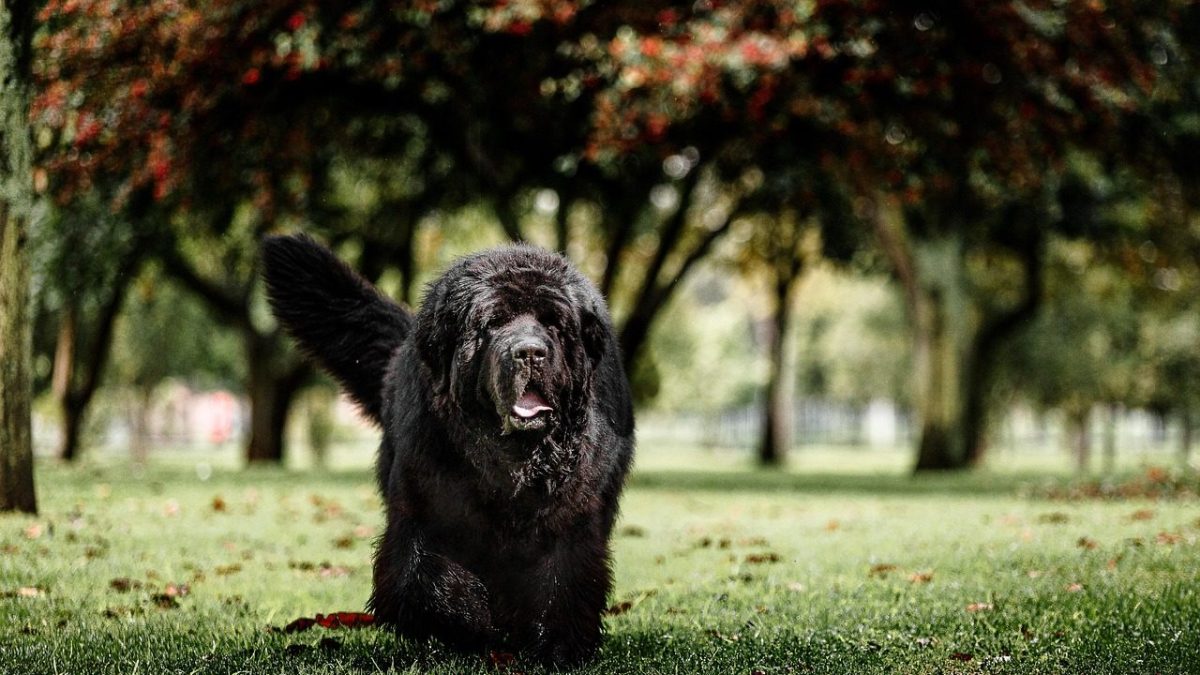
The Newfoundland is a massive working dog — males typically 130 to 150 pounds and around 28 inches, females 100 to 120 pounds and around 26 — built for water. The webbed feet, the oily water-resistant double coat, the powerful chest and the rudder-like tail are all functional equipment rather than incidental features. This breed was developed to haul nets, pull carts and pull people out of the sea, and it still does the last one in organized water rescue work.
The temperament is what the breed is most known for. The AKC standard says the sweetness of disposition is the hallmark of the Newfoundland, and unusually for a breed standard, that is a plain description of reality rather than aspiration. Newfs are gentle, patient, deeply tolerant and genuinely good with children.
Exercise needs are moderate rather than extreme, and swimming is the ideal outlet.
Here is the honest headline. Everything hard about this breed is logistical rather than behavioral. The coat is a serious commitment. The drool is constant and travels. Heat is a real danger for a dog wearing this much insulation. Costs scale with a 140-pound body. And the lifespan is around nine to ten years, which makes the commitment intense rather than long. Accept all of that and you get one of the finest family temperaments in any breed.
Breed Origin & History
The breed comes from the island of Newfoundland, off Canada’s Atlantic coast, where it worked alongside fishermen. The jobs were practical and varied: hauling nets in from the water, pulling loaded carts, carrying lines between ship and shore, and retrieving anything or anyone that went overboard.
The cold North Atlantic shaped the dog. The dense oily double coat sheds water and insulates in freezing conditions, the webbed feet drive a powerful swimming stroke, and the sheer size provides the strength to tow a grown adult. Newfoundlands are documented in numerous accounts of sea rescues, and water rescue remains an organized activity for the breed today rather than a historical curiosity.
The Newfoundland Club of America, founded in 1930, is the sanctioned parent club and an AKC member club. Alongside the usual breed-club activities, the NCA and its regional clubs actively support canine health research and provide rescue adoption assistance — both of which matter in a breed with a documented cardiac problem and a size that leads some owners to surrender.
The practical reason to note the club’s health research support is that it has produced real screening protocols. In a giant breed with an inherited heart condition, an organized parent club funding research is how the situation improves, and it gives a buyer a clear standard to hold breeders to.
Temperament & Personality
Newfoundlands are gentle, calm, patient and affectionate. The disposition is the defining feature of the breed and it is remarkably consistent — a sound Newfoundland is slow to take offense, tolerant of noise and handling, and steady with children.
They are attached to their families and want to be included in household life. Despite the size, most are content indoors and are notably undemanding compared with working breeds of similar weight.
They are trainable but sensitive. Harsh handling is both unnecessary and counterproductive, and a dog this large needs to be taught manners early — while it is still liftable — because a 140-pound adult that has never learned leash manners is a genuine physical problem.
They are not guard dogs. Newfoundlands typically greet strangers with interest rather than suspicion, and aggression is a serious fault in the breed.
The water drive is real and worth planning for. Most Newfoundlands love water to the point of enthusiasm, and a dog this strong swimming toward something it has decided to investigate is not easily redirected.
The caveats are practical. Drool is constant in most individuals. Barking is infrequent but deep. And they do not cope well with heat, becoming lethargic and, in bad cases, dangerously overheated — which changes what outdoor life looks like in a warm climate.
Is This Breed Right for You?
The Newfoundland suits households with space, budget and a tolerance for mess. Specifically: families with children, where the patient temperament genuinely shines. Owners home a reasonable part of the day. Households near water, or willing to seek it out, since swimming is the ideal exercise. People in cooler climates, or with reliable air conditioning. Owners prepared to groom seriously or pay someone who will. Anyone who wants a large dog that is calm indoors rather than driven.
It also suits people interested in water rescue, draft work or therapy work, all of which the breed does well.
Here is who should think twice. Anyone bothered by drool — it is constant, it flings when the dog shakes its head, and it lands on walls and ceilings. People unwilling to commit to the coat, which needs thorough weekly work and daily attention during seasonal shedding. Anyone on a tight budget, since food, medication dosed by weight, and giant-breed veterinary care are all expensive. Households in hot climates without serious climate control. Apartment dwellers, on practical grounds. Anyone who wants a long relationship with a dog, given the nine-to-ten-year lifespan.
And critically: anyone unwilling to insist on cardiac screening by a veterinary cardiologist. Subvalvular aortic stenosis is the breed’s most serious inherited problem, and a general practice auscultation is not the same thing as a specialist evaluation.
If you have the space, the budget and the towels, few breeds are better company.
Care & Exercise Needs
Grooming is a substantial commitment. The dense double coat needs thorough brushing at least weekly, working down to the skin, with daily attention during the twice-yearly shed when the undercoat comes out in quantity. Mats form behind the ears, in the ruff, behind the elbows and in the feathering. Professional grooming several times a year is common, and a high-velocity dryer is genuinely useful for a coat this dense. Never shave a Newfoundland — the coat insulates against heat as well as cold.
Heat management is a safety issue rather than a comfort one. Exercise in the cool parts of the day, provide shade and water, use cooling mats, and be alert to lethargy or heavy panting. Swimming is the perfect summer exercise for this breed for exactly that reason.
Exercise is moderate: two decent walks a day plus swimming or draft work where available. Be conservative with young dogs, as giant breeds grow slowly and joints stay vulnerable well past a year. Limit repetitive running, jumping and stairs during growth.
Bloat prevention deserves a routine given the deep chest: measured meals rather than one large one, no vigorous exercise immediately around eating, and knowing the signs.
Drool management is daily reality. Keep towels by every door and washable throws on furniture.
Ear checks, nail trimming and dental care round out the routine.
Health Considerations
The Newfoundland’s health picture is dominated by one cardiac condition and shaped generally by giant-breed biology.
Subvalvular aortic stenosis is the most significant inherited problem in the breed. It is a narrowing below the aortic valve that forces the heart to work harder, and it can cause exercise intolerance, fainting or sudden death in young dogs. Severity varies widely. Evaluation should be by a board-certified veterinary cardiologist rather than a general practitioner listening for a murmur, because mild cases are easily missed. Ask breeders specifically who performed the cardiac evaluation and when.
Cystinuria is an inherited kidney and bladder stone disorder documented in Newfoundlands specifically, and a DNA test is available. It is a precise, answerable question to put to any breeder.
Hip and elbow dysplasia are common in a dog of this size, and orthopedic evaluation of breeding stock is standard.
Gastric dilatation-volvulus — bloat — is a genuine risk in this deep-chested breed and is rapidly fatal without emergency surgery. Learn the signs before you need them: unproductive retching, a distended abdomen, restlessness and distress.
Dilated cardiomyopathy, cruciate ligament rupture and heat-related illness are all reported.
A healthy Newfoundland commonly lives 9 to 10 years. Ask for cardiac evaluation by a cardiologist, hip and elbow results, and a cystinuria DNA test on both parents. For any concern about your dog’s exercise tolerance, fainting, joints or a suddenly distended abdomen, consult your veterinarian immediately rather than relying on general breed information.
Recommended Gear Categories
Grooming equipment does the heavy lifting. An undercoat rake, a slicker and a sturdy metal comb are the working set, and a high-velocity dryer pays for itself quickly on a coat this dense — it moves undercoat that brushing alone leaves behind. Expect to spend real time on this.
Drool management is a genuine category: absorbent towels by every door, washable throws on furniture, and a drool bib for some individuals.
Cooling gear matters given the insulation: cooling mats, shade, a collapsible water bowl on every outing, and ideally access to water for swimming.
Everything needs sizing up. Orthopedic beds rated for giant breeds, heavy-duty nail clippers, extra-large crates if used, and leashes and hardware rated well above what looks sufficient.
A vehicle ramp is close to essential — lifting a 140-pound dog into a car is not realistic, least of all in an emergency, and a ramp the dog already knows how to use is worth introducing early.
A slow-feeder bowl helps with bloat risk. Non-slip runners on hard floors reduce slips and joint strain.
For the water-loving side of the breed, a canine life jacket with a strong handle is useful for boating, and quick-dry towels get constant use. Your editor will add specific product recommendations with current pricing and details.
Similar Breeds to Consider
The Saint Bernard is the closest comparison — a similarly massive, gentle, family-oriented giant with comparable drool and a comparable short lifespan. The Saint is generally less water-oriented and comes in both long and short coats, the latter being meaningfully easier to maintain.
The Leonberger occupies similar ground with a slightly more athletic build and a strong swimming instinct of its own, and it is often somewhat more active than a Newfoundland.
The Mastiff is the option for someone wanting maximum calm presence with far less coat, at the cost of the Newfoundland’s sweetness with children and its love of water.
The Bernese Mountain Dog is the smaller alternative for families wanting a gentle, handsome, long-coated working dog. The serious caveat is lifespan — Bernese are notably short-lived even by large-breed standards, with a heavy cancer burden.
For a family that wants a big, water-loving, child-friendly dog without giant-breed logistics, the Labrador Retriever or Golden Retriever are the honest recommendations: far less drool, far less coat, longer lives and much lower costs.
In short: choose the Newfoundland for the temperament and the water work if you can handle the coat and the drool, the Saint Bernard for a similar giant with less water drive, the Leonberger for something more athletic, and a retriever if what you actually want is a family water dog at a manageable scale.