
Overview
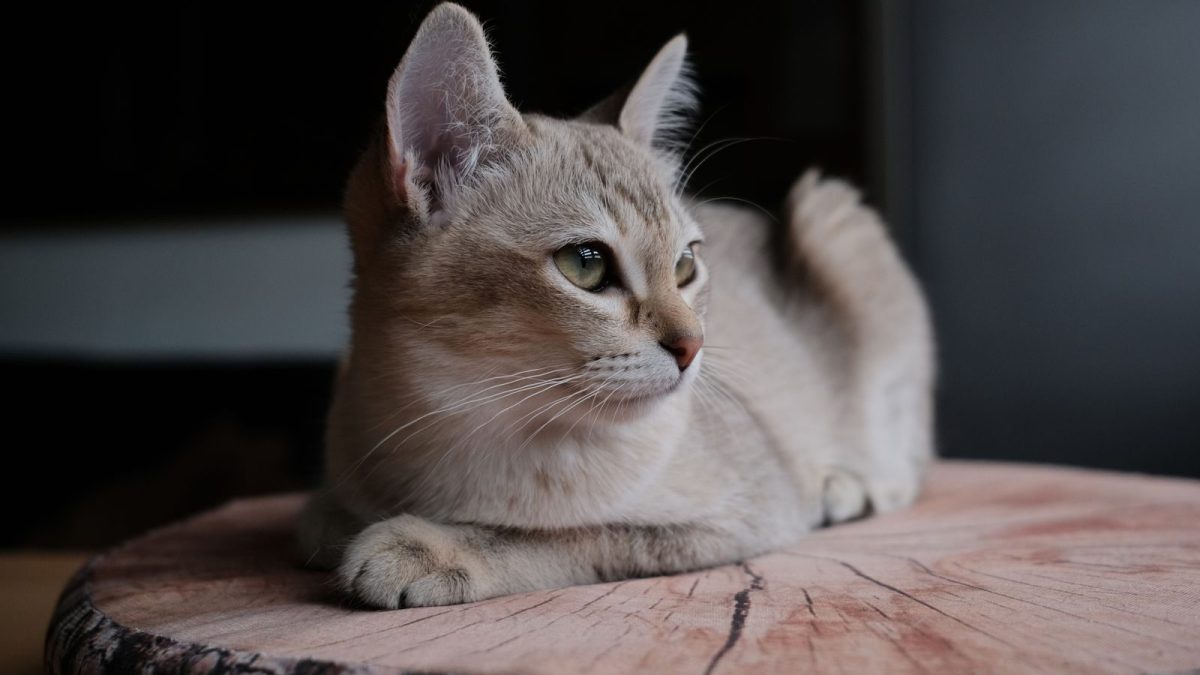
The Singapura is the smallest recognized cat breed, with adults typically weighing four to eight pounds — females at the lower end, males at the upper. Despite the size it is a muscular, solid little animal rather than a delicate one, with unusually large eyes and ears relative to the head.
The coat is the second distinguishing feature: a short, fine, close-lying coat in a single color known as sepia agouti, where each hair carries bands of dark brown ticking over a warm ivory ground. The effect is subtle and warm rather than patterned.
Temperamentally, the Singapura is intensely people-focused, curious and active. It wants to be involved in whatever is happening, frequently from a shoulder or a work surface, and it retains that interest well into adulthood. Owners often describe the breed as a pesky people cat, and the description is affectionate rather than complaining.
Here is the honest headline. This is an engaging, interactive companion for someone who wants a cat genuinely in their business — but the size brings real fragility, the breed needs company, and the romantic origin story attached to it is disputed enough that an honest profile has to say so. The cat is delightful regardless of where it came from.
Breed Origin & History
The traditional account is that the Singapura descends from the street cats of Singapore — small brown ticked cats living around the drains and riverside of the city — and that three were brought to the United States in 1975 by Hal and Tommy Meadow, forming the basis of the breed.
That account has been seriously challenged. In 1990, questions arose after import records indicated that the Meadows had taken cats from the United States to Singapore several years before the supposed discovery, suggesting the foundation animals may have descended from Abyssinian and Burmese crosses already in America rather than from Singapore street cats. An investigation by the Cat Fanciers’ Association examined the matter and the breed retained its recognition, but the origin question was never resolved to everyone’s satisfaction and remains genuinely disputed.
What is not disputed is that small brown ticked cats do exist in Singapore, that the breed as it stands today is a consistent and recognized type, and that the cats themselves are exactly what they appear to be.
The Cat Fanciers’ Association recognizes the breed and maintains its standard, which describes a small, muscular cat with large eyes and ears and the distinctive sepia agouti coat.
The practical consequence of the disputed history is a narrow gene pool. The breed descends from very few founders, which makes a breeder’s approach to genetic diversity a relevant question rather than an academic one.
Temperament & Personality
Singapuras are curious, active, affectionate and persistently involved. They investigate everything, supervise everything, and position themselves wherever the action is — frequently on a shoulder, a keyboard or the edge of whatever you are doing.
They are intelligent and playful into adulthood, and they retain a kittenish quality that owners find charming and occasionally exhausting. Puzzle toys and interactive play suit them well.
They are climbers and lovers of height. A Singapura will find the highest accessible point in a room and sit there, and the small size means it can reach places a larger cat cannot.
Vocalization is moderate — Singapuras communicate readily but with soft voices, not the volume of a Siamese.
They are strongly people-focused and do not thrive alone. This is a social breed that becomes bored and unhappy in an empty house, and many owners keep two.
They are typically good with children, dogs and other cats, and most greet visitors with curiosity rather than suspicion.
The main caveat is physical rather than behavioral. At four to eight pounds this is a genuinely small animal, easily injured by ordinary rough handling, a closing door, or a misplaced foot. Households need to be aware of where the cat is in a way that a ten-pound cat does not require.
Is This Breed Right for You?
The Singapura suits households wanting a small, interactive, involved cat. Specifically: people home much of the day, or households prepared to keep two cats. Apartment dwellers, given the size and moderate voice. Owners who enjoy interactive play and want a cat that participates rather than observes. Families with older children who understand handling a small animal carefully. Multi-pet homes including those with calm dogs. Anyone who wants a very low-grooming cat.
It also suits owners who like the idea of a cat that rides on a shoulder, which many Singapuras do enthusiastically.
Here is who should think twice. Households with toddlers or very boisterous children, on fragility grounds — this is a four-to-eight-pound animal and accidents are easy. Anyone out for long working days with a single cat, since the breed is social and becomes unhappy alone. People who want a calm, sedentary or independent cat. Anyone unwilling to provide climbing structures, because a Singapura will find height with or without your cooperation.
And anyone buying should ask about pyruvate kinase deficiency testing and about how the breeder manages genetic diversity, given how narrow the founding population was.
One practical note: Singapuras are relatively uncommon, and availability is limited. That is worth knowing before setting your heart on one, and it is also a reason to be wary of anyone offering them cheaply or in volume.
If you want a tiny, clever, endlessly involved companion and you are around to enjoy it, the Singapura is genuinely distinctive.
Care & Exercise Needs
Grooming is about as easy as cat care gets. The short, fine, close-lying coat needs an occasional pass with a rubber mitt or soft cloth, and shedding is low.
Activity and height are the real requirements. Provide stable climbing structures, shelves and high perches — this is a small, agile cat that wants elevation and will improvise if none is offered. Daily interactive play with a wand toy suits the energy and the intelligence, and puzzle feeders give a clever cat something to work on.
Company matters. For a household that is out during the day, a second cat or a compatible pet is a sensible investment in the cat’s wellbeing.
Warmth is worth attention. A small cat with a fine coat loses heat faster than a larger one, and Singapuras seek out warm spots. Covered beds, a heated bed in cold climates, and sunny perches all get used.
The practical care difference with this breed is awareness of where the cat is. At this size, closing doors, reclining chairs, washing machines and underfoot moments carry real risk. Households that have kept larger cats sometimes need to adjust habits deliberately.
Weight is less commonly a problem than in sedentary breeds, but measured portions remain sensible given how little food a four-pound cat needs.
Otherwise routine care applies — nail trimming, dental attention, litter hygiene and regular checkups.
Health Considerations
The Singapura is generally a healthy breed, with a typical lifespan of eleven to fifteen years, but the narrow founding population makes a few questions worth asking.
Pyruvate kinase deficiency is the most important. It is an inherited enzyme deficiency causing intermittent anemia, with signs including lethargy, pale gums and poor appetite. It is found in breeds with Abyssinian ancestry, which is relevant given the breed’s disputed history, and it is identifiable by a straightforward DNA test. Ask any breeder for results on both parents.
Uterine inertia — difficulty with labor — is reported in the breed and is related to the small size. This is a breeder concern rather than a pet-owner one, but it is another reason the breed is uncommon and litters are small.
Genetic diversity is the underlying issue. A breed descended from very few founders carries elevated risk of inherited problems generally, and a breeder who can discuss how they manage diversity in their program is demonstrating exactly the knowledge you want.
Beyond inherited concerns, the conditions to watch are those common to cats generally: dental disease, which is near-universal without dental care, and in older cats kidney disease and hyperthyroidism.
The practical health risk for most owners is injury rather than disease. A cat this small is genuinely vulnerable to accidents in a busy household.
For any concern about your cat’s energy levels, gum color, appetite or after any accident, consult your veterinarian rather than relying on general breed information.
Recommended Gear Categories
Climbing equipment matters for a cat that wants height, but it should be sized appropriately — a small cat needs platforms and steps it can reach comfortably rather than the wide spacing built for a Maine Coon. Wall shelves suit the breed particularly well, and a window perch will be occupied permanently.
Interactive toys should be small and light. Wand toys, small balls and treat-dispensing puzzles all suit a cat this size, and toys designed for larger cats are often too heavy to be satisfying.
Warmth gear earns its place: a covered or hooded bed, a heated bed in colder homes, and a sunny perch. A small cat with a fine coat feels the cold.
For feeding, precision matters more than usual — a four-pound cat’s daily ration is small enough that eyeballing it goes wrong quickly. A digital kitchen scale is genuinely useful here.
A small litter box with a low entry suits a small cat, though it should still be large enough to turn around in comfortably.
A harness sized for a small cat is realistic for this breed, which is often confident enough to enjoy it.
And a bell on the collar is worth considering — with a cat this small and this fond of being underfoot, knowing where it is prevents accidents. Your editor will add specific product recommendations with current pricing and details.
Similar Breeds to Consider
The Abyssinian is the closest comparison and, given the disputed history, possibly a relative. It shares the ticked coat, the intelligence, the athleticism and the intense engagement, in a larger and more readily available package. For most people wanting this type of cat, the Abyssinian is the practical choice.
The Burmese shares the people-focused temperament and the compact muscular build, with a solid satiny coat rather than a ticked one and an even stronger attachment to its people.
The Devon Rex suits someone drawn to the small size and constant involvement who wants something more visually unusual, with a very different coat and greater social dependence.
The Cornish Rex offers similar athleticism and sociability in a slender frame with a curled coat.
For anyone specifically attracted to the very small size, there is no close substitute — the Singapura genuinely is the smallest breed, and the others in this comparison are meaningfully larger. But size alone is a thin reason to choose a cat, and the temperament the Singapura offers is available elsewhere with better availability and a broader gene pool.
In short: choose the Singapura for a tiny, clever, endlessly involved companion if you can find a good breeder, the Abyssinian for the same personality with more availability, the Burmese if you want maximum devotion, and a Devon Rex if you want small and unusual with more social intensity.