
Overview
The Turkish Angora is a fine-boned, elegantly built cat with a silky semi-long coat and a plumed tail it carries proudly over its back when moving. Adults are small to medium, typically five to ten pounds, and the impression is of athleticism rather than substance — this is a lithe, agile cat rather than a solid one.
The coat is the pleasant surprise. It is a single coat with no meaningful undercoat, which means it resists matting far better than its length suggests. Weekly brushing generally suffices, which puts the Angora in a very different maintenance category from a Persian.
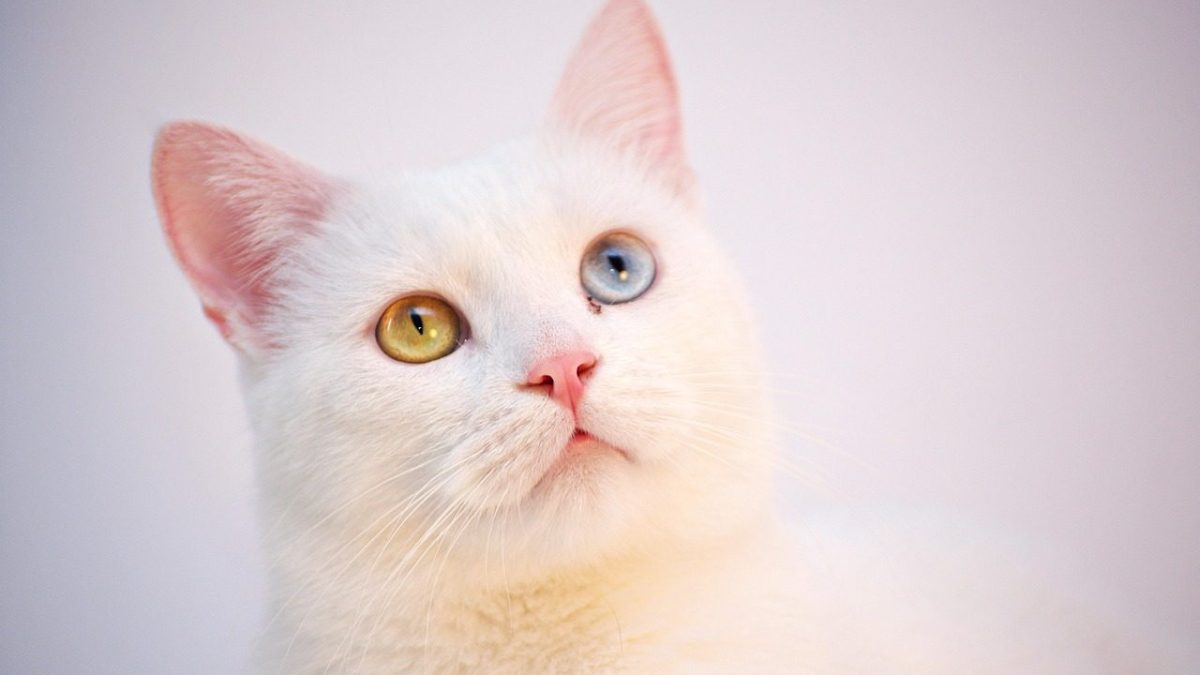
White is the classic and best-known color, often with blue or odd eyes, though the breed is bred in a wide range of colors and patterns.
Temperamentally, this is a confident and involved cat. Angoras are intelligent, active, affectionate and genuinely bossy — most take a proprietary interest in the household and will supervise, direct and participate in whatever is happening. They stay kittenish well into old age.
Here is the honest headline. For an owner who wants an engaged, athletic, long-coated cat without a demanding grooming routine, the Turkish Angora is an unusually good deal. The two things to understand before buying are the activity level, which is real, and the deafness associated with white coats and blue eyes, which is well documented and worth asking about.
Breed Origin & History
The Turkish Angora is a natural breed from the region around Ankara — historically Angora — in central Turkey, where the long-coated cats developed without deliberate human breeding programs. The breed is old, and long-haired cats from this region were among the first brought to Europe, where they contributed to the development of other longhaired breeds.
That contribution nearly cost the Angora its identity. As Persian breeding developed in Europe, Turkish Angoras were absorbed into Persian lines and the distinct type became rare outside Turkey.
The breed survived because of a deliberate preservation effort. The Ankara Zoo established a breeding program to protect the native Turkish cat, focusing particularly on white cats with blue or odd eyes, which were regarded as a national treasure. Cats from that program formed the basis of the modern breed when they were exported to North America in the 1960s, and the zoo’s role in preserving the breed is a genuine piece of conservation history rather than a marketing story.
The Cat Fanciers’ Association recognizes the breed and maintains its standard, which describes a fine-boned cat of medium size with a long, graceful body, a silky coat without a woolly undercoat, and the characteristic plumed tail.
The historical emphasis on white cats is relevant to health, because the gene responsible for the white coat is linked to congenital deafness — a connection discussed below.
Temperament & Personality
Turkish Angoras are intelligent, active, confident and socially assertive. They involve themselves in household life rather than observing it, and many take a distinctly managerial approach — following their people around, investigating anything new and expecting to be consulted.
They are affectionate on their own terms. Most bond strongly with the household and often with one person in particular, and they are generally happy to be handled by people they trust.
They are athletic and stay that way. Angoras climb, jump and run, and they retain a genuine appetite for play well into old age. They are clever enough to open doors and cupboards, and an under-stimulated Angora finds its own projects.
Many are notably interested in water — batting at taps, investigating sinks, occasionally joining a bath — which is a characteristic the breed shares with its relative the Turkish Van.
Vocalization is moderate. Angoras communicate readily with soft chirps and trills without keeping up a running commentary.
They are generally good with children, dogs and other cats, and they usually greet visitors with curiosity rather than suspicion.
The main trade-off is that this is not a passive cat. An Angora will decide where it sits, what it supervises and when it wants attention, and owners who want a decorative, undemanding pet will find the reality more assertive than the appearance suggests.
Is This Breed Right for You?
The Turkish Angora suits households wanting an active, involved, long-coated cat without heavy grooming. Specifically: families with children old enough to play appropriately. Multi-pet homes including those with dogs. Apartment dwellers, provided vertical space is available. Owners who enjoy interactive play and will provide it daily. People who want a cat that greets visitors and participates in the household. Anyone attracted to a semi-long coat who is unwilling to take on Persian-level maintenance.
It also suits owners who want a long-lived cat — Angoras frequently reach their late teens.
Here is who should think twice. Anyone wanting a calm, sedentary or purely decorative cat; the activity level and assertiveness are both genuine. Households that need counters, shelves and high surfaces respected. People out for long working days with no second pet, since Angoras are social and become bored destructively. Anyone unwilling to provide climbing structures.
And anyone specifically seeking a blue-eyed white Angora should understand the deafness association described below, and should ask the breeder whether kittens have been hearing-tested. A deaf cat can live a full and happy life as an indoor-only animal, but it is something to choose knowingly rather than discover.
If you want an elegant, athletic, opinionated cat that will genuinely participate in your day, the Turkish Angora is one of the most rewarding semi-longhaired breeds available.
Care & Exercise Needs
Grooming is straightforward for a semi-long coat. Brush weekly with a comb to keep the silky coat free of tangles, concentrating on the ruff and the trousers, and increase frequency during seasonal shedding. The absence of a woolly undercoat is what keeps this manageable — the coat does not felt the way a Persian’s does.
Activity is the larger requirement. Provide tall, stable climbing structures, wall shelves and window perches, because this cat will use height whether or not you sanction it. Daily interactive play with a wand toy suits the breed’s energy and intelligence, and puzzle feeders give a clever cat something to solve.
Many Angoras take well to harness training and to fetch, both of which are genuine outlets.
For a deaf cat, care differs in specific ways rather than in general ones: keep the cat indoors, use vibration and visual cues rather than voice, approach where the cat can see you to avoid startling it, and be aware that a deaf cat may be unusually vocal because it cannot hear itself. Deaf cats do well in stable indoor homes.
Weight deserves normal attention, though an active breed is less prone to gain than a sedentary one.
Otherwise routine care applies — nail trimming, dental attention, litter hygiene and regular checkups. Angoras are generally cooperative for handling by people they trust.
Health Considerations
The Turkish Angora is generally a healthy, long-lived breed, with lifespans commonly in the range of twelve to eighteen years. Three matters deserve attention.
Congenital deafness is associated with the dominant white gene, particularly in cats with blue eyes. In odd-eyed cats, deafness may affect only the ear on the blue-eyed side. This is well documented across white cats generally rather than unique to Angoras, but it is relevant here because white has historically been the breed’s signature color. Responsible breeders hearing-test kittens, and it is a reasonable and specific question to ask. Deafness is not a welfare disaster — deaf cats live full lives indoors — but it should be a known quantity rather than a surprise.
Hereditary ataxia is a recessive neurological condition documented in the breed. Affected kittens show severe incoordination and do not survive; carriers are unaffected. Because it is recessive, careful pedigree management by the breeder is the protection, and a breeder who can discuss it is demonstrating the right kind of knowledge.
Hypertrophic cardiomyopathy, a thickening of the heart muscle, occurs in the breed as it does across many pedigree cats. Breeders should be screening breeding cats by echocardiogram — ask for the date and result.
Beyond these, the usual feline concerns apply: dental disease, and in older cats kidney disease and hyperthyroidism. For any concern about your cat’s hearing, coordination, heart or weight, consult your veterinarian rather than relying on general breed information.
Recommended Gear Categories
Climbing infrastructure comes first for an athletic cat that stays active into old age. Tall stable cat trees, wall-mounted shelving and high window perches all get used properly. Stability matters more than height — an agile cat landing on a wobbly tower will abandon it for the bookcase.
Interactive toys are essential rather than decorative: wand toys for daily play, fetch-friendly small toys since many Angoras retrieve, and puzzle or treat-dispensing feeders to occupy a clever cat between sessions. Rotate the collection to keep novelty.
A harness and lead are realistic here, and many Angoras take to walking readily.
Given the breed’s interest in water, a circulating fountain is usually a hit and supports hydration. Expect some involvement with taps regardless.
Grooming needs a metal comb weekly and a slicker for finishing — no undercoat rake required, which is the practical advantage of the single coat.
Sturdy scratching posts in both vertical and horizontal forms suit an active cat, and nail clippers get regular use.
For a deaf cat, specific items help: a collar with a bell so you can locate the cat, vibration-based or visual cues for calling, and secure screens on windows given that an indoor-only life is the right call. Your editor will add specific product recommendations with current pricing and details.
Similar Breeds to Consider
The Turkish Van is the closest relative — a larger, more substantial Turkish natural breed with a distinctive coloring pattern restricted mainly to the head and tail, and an even stronger reputation for enjoying water. It is generally more robust and somewhat less refined in build.
The Persian is the historical contrast, and the comparison is instructive: a Persian’s dense undercoat is what makes daily grooming mandatory, while the Angora’s single coat is what makes weekly grooming sufficient. If you want a longhaired cat and the grooming is your constraint, the Angora is dramatically easier.
The Balinese is a good alternative for someone who wants a similarly elegant, athletic, semi-longhaired cat with a single coat. It is more vocal and more demanding of attention, carrying the Siamese temperament under a longer coat.
The Oriental Longhair occupies similar ground with even more volume.
For someone who wants the Angora’s athleticism and confidence in a short coat, the Abyssinian is the natural recommendation — comparable energy and intelligence with essentially no grooming requirement.
In short: choose the Turkish Angora for an elegant, athletic, long-coated cat with manageable grooming, the Turkish Van if you want something larger and more water-obsessed, the Balinese if you also want conversation, and the Abyssinian if the coat is the part you would rather skip.