
Overview
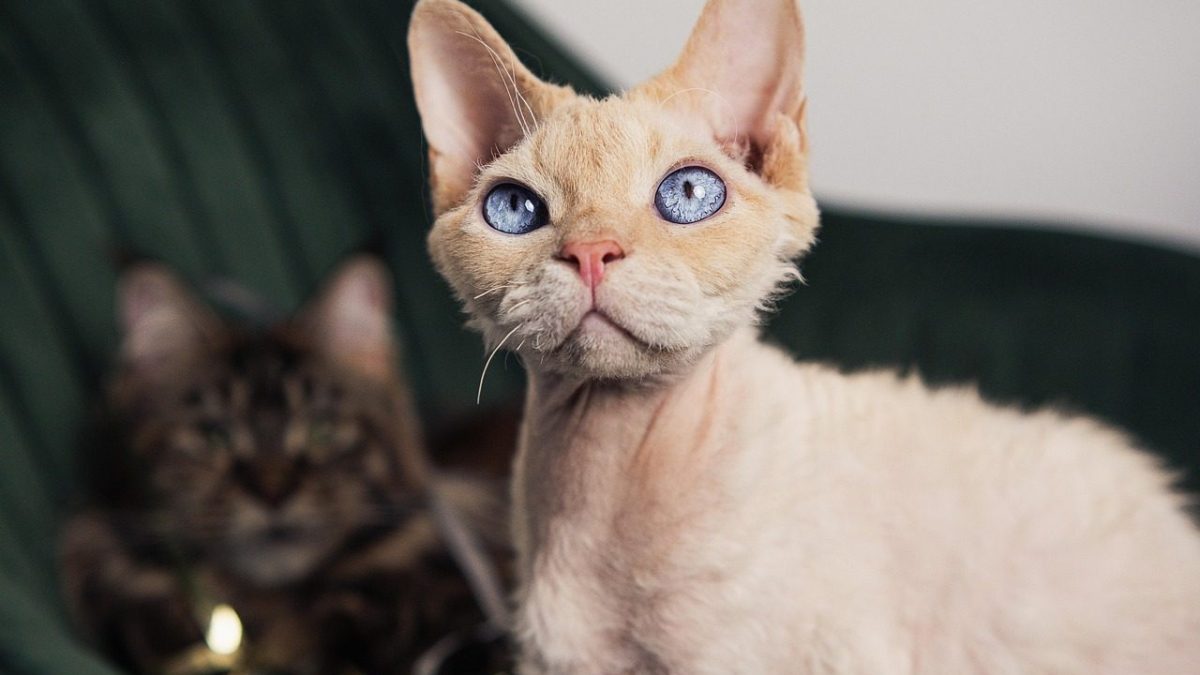
The Cornish Rex is one of the most distinctive cats in the fancy: a slender, whippet-like body with a deeply arched back, long fine legs, a small wedge head and very large ears set high. The overall look is often compared to a greyhound, and the comparison is fair — this is a lean, fast, athletic cat.
The coat is the defining feature and it is genuinely unusual. Most cats have three hair types; the Cornish Rex has essentially only the soft down undercoat, with no coarse guard hairs at all. That produces a short, dense, extremely soft coat laid in a tight, even marcel wave, often described as feeling like crushed velvet or astrakhan.
Adults are small to medium, roughly 6 to 10 pounds, and feel warm to the touch — not because their temperature is higher than other cats, but because there is so little coat between you and the skin.
Temperamentally, Cornish Rex are outgoing, acrobatic and permanently kittenish. They run, leap, fetch and involve themselves in everything, often well into old age.
Here is the honest headline. This is a delightful cat for an attentive household that is home a lot and keeps the house warm. It is a poor fit for anyone who wants a calm, independent cat, and the widespread claim that it is hypoallergenic does not hold up.
Breed Origin & History
The breed began in 1950 on a farm in Cornwall, England, when a curly-coated male kitten named Kallibunker appeared in an otherwise ordinary litter. The owner, advised that the coat was the result of a spontaneous mutation, bred him back to his mother, and the resulting curly kittens established the breed.
The gene pool was extremely narrow, and early breeders outcrossed to other breeds — including Siamese, British Shorthairs and domestic shorthairs — to broaden it while preserving the coat. The Siamese influence is visible in the modern breed’s slender build, large ears and active temperament.
A decade later a second curly-coated cat appeared in neighboring Devon, and it was initially assumed the two shared a mutation. Test breedings proved they did not: crossing a Cornish Rex with a Devon Rex produces straight-coated kittens, because the two curls arise from different recessive genes. That is why the two exist as separate breeds rather than one with two types.
The Cat Fanciers’ Association recognizes the Cornish Rex and maintains its standard, which describes the arched back, the fine bone, the large ears and the characteristic even marcel wave.
That narrow foundation is directly relevant to the inherited conditions described below, as it is with most breeds established from a single founding animal.
Temperament & Personality
Cornish Rex cats are outgoing, energetic, affectionate and mischievous. They are sometimes described as behaving like kittens for life, which is close to accurate — most retain a genuine appetite for play and trouble well past the age at which other breeds settle.
They are highly athletic. Expect jumping, climbing and speed, and expect them to reach shelves you assumed were safe. Their long fine legs and light build make them unusually good at it.
They are also intelligent and trainable. Fetch is common, harness walking is realistic, and many learn tricks and respond to clicker work.
Socially they are people-focused and want involvement rather than proximity. A Cornish Rex will be on your shoulder, in your lap, under the covers and in whatever you are doing. They are generally excellent with children, dogs and other cats, and they typically greet visitors with interest.
Heat-seeking is a genuine behavioral trait rather than a quirk. With so little coat, these cats feel cold and gravitate to any warm surface — laps, radiators, laptops, under duvets, on top of a sleeping dog.
The main trade-off is social dependence. Cornish Rex do badly alone. Long days by themselves produce distress and destructive behavior, and experienced owners frequently keep them in pairs. Vocalization is moderate — more than a British Shorthair, far less than an Oriental.
Is This Breed Right for You?
The Cornish Rex suits active, attentive households. Specifically: people home much of the day, or households prepared to keep two cats. Families with children, since the breed is playful, sturdy for its size and sociable. Multi-pet homes, including those with dogs. Apartment dwellers, given the small size, provided vertical space is available. Owners who enjoy interactive play and training. Anyone who wants a genuinely warm, affectionate lap cat.
It also suits people who want a cat that sheds very little, provided they understand what that does and does not mean for allergies.
Here is who should think twice. Anyone out for long working days with a single cat. People who want a calm or independent cat — the permanently kittenish energy is charming or exhausting depending on the household. Anyone who keeps a cold home, since a cat with no guard hairs genuinely feels it and needs warm places. Households that need high surfaces respected, because this is an exceptional jumper. Anyone unwilling to watch the skin and ears, which need more attention than a normal coat does.
And critically, anyone buying on the hypoallergenic claim. The Cornish Rex sheds little because it has less hair, not because it produces less of the protein that triggers allergies. Some people do react less, but the breed is not hypoallergenic and buying one on that basis is a gamble with an animal’s home at stake.
If you want a warm, funny, athletic companion and you are around to enjoy it, few cats are better company.
Care & Exercise Needs
Coat care is different rather than heavy. The wavy coat needs essentially no brushing, and vigorous brushing can damage the fine hairs — a gentle hand or a soft cloth is enough.
What needs attention instead is skin and ears. With little coat to absorb them, skin oils can build up, and the large ears in particular tend to accumulate wax and oil faster than in other breeds. Many Cornish Rex need periodic gentle ear cleaning, and some need an occasional bath with a mild cat-safe shampoo if the skin becomes greasy. Individual variation is wide.
Warmth is a genuine requirement. Provide heated or well-insulated beds, covered beds and warm sleeping spots, and expect the cat to claim your lap and your duvet. Conversely, the thin coat gives little sun protection, and a Cornish Rex sunbathing in a window can burn — particularly on the ears and nose of light-colored cats.
Enrichment matters for a lifelong-kitten breed. Daily interactive play, tall climbing structures, puzzle feeders and rotating toys all earn their place. These cats are exceptional jumpers, so vertical space is genuinely used.
Company is a care requirement. Plan for a second pet or substantial human presence. Otherwise routine care applies — nails, dental attention and regular veterinary checkups.
Health Considerations
Descending from a single founding cat, the Cornish Rex carries the inherited-condition profile typical of a narrowly founded breed.
Hypertrophic cardiomyopathy, a thickening of the heart muscle, occurs in the breed as in many pedigree cats. Responsible breeders screen breeding cats by echocardiogram — ask for the date and result rather than a general assurance.
Patellar luxation, where the kneecap slips out of position, is reported at elevated rates. It ranges from an intermittent skip in the gait to a condition requiring surgical correction.
Hereditary hypotrichosis — progressive hair loss leading to partial or complete baldness — is documented in some lines and is distinct from the normal sparseness of the coat.
Umbilical hernias are reported more frequently in the breed than in the general cat population, usually minor but worth a veterinary check in a kitten.
Skin conditions related to the coat structure are common: because the coat does not absorb skin oils normally, greasy skin and ear inflammation occur more often than in conventionally coated cats.
Some owners and breeders report that Cornish Rex can be more sensitive to anesthesia than average, which is worth raising with your veterinary practice before any procedure so they can plan accordingly.
A healthy Cornish Rex commonly lives 11 to 15 years. For any concern about your cat’s heart, gait, skin or ears, consult your veterinarian rather than relying on general breed information.
Recommended Gear Categories
Warmth gear is the first and most functional category. Heated cat beds, thick soft bedding, hooded or cave-style beds and a warm spot near a radiator all get constant use. A cat with no guard hairs genuinely feels a cold room, and providing warmth is welfare rather than indulgence.
Skin and ear supplies come next: a cat-safe ear cleaner, soft cotton pads and a mild cat shampoo for the occasional bath when the skin becomes greasy. Not every Cornish Rex needs bathing, but most need regular ear attention.
Grooming tools should be minimal and gentle — a soft cloth or your hands. Brushes designed for dense coats can damage the fine wavy hair.
Climbing and play equipment matter for an exceptional jumper that stays kittenish for life: tall stable cat trees, wall shelving, wand toys, fetch toys and puzzle feeders in rotation. These cats will use height, so give them somewhere sanctioned to use it.
A harness and lead are realistic — many take to harness walking readily.
For sun protection, position perches away from direct unfiltered sun for light-coloured cats, or use window film. For households out during the day, timed feeders and a camera help, though neither replaces a companion animal. Your editor will add specific product recommendations with current pricing and details.
Similar Breeds to Consider
The Devon Rex is the direct comparison — the other curly-coated breed, from a different mutation. The Devon’s coat is looser and more tousled and its head is wider with lower-set ears, where the Cornish has a tighter, more uniform marcel wave and a finer, more arched body. The Cornish is generally the more athletic of the two; temperaments are broadly similar, both being highly social and playful. Either suits the same household.
The Sphynx takes the same direction further, with no coat at all and correspondingly greater skin-care needs. It shares the warmth-seeking and social dependence.
The Oriental Shorthair is the alternative for someone drawn to the Cornish Rex’s athleticism and sociability who prefers a conventional coat. The trade-off is a great deal more noise.
The Abyssinian offers similar energy and intelligence with a normal short coat and a quiet voice — a good option if the coat care and warmth requirements are the sticking point rather than the personality.
For a genuine lap cat with similar devotion and a coat that needs nothing, the Burmese is the practical answer, accepting a less acrobatic animal.
In short: choose the Cornish Rex for an athletic, warm, permanently playful companion, the Devon Rex for a similar cat with a different curl and build, the Sphynx to go further, and the Abyssinian or Burmese if the special coat is the part you would rather avoid.