
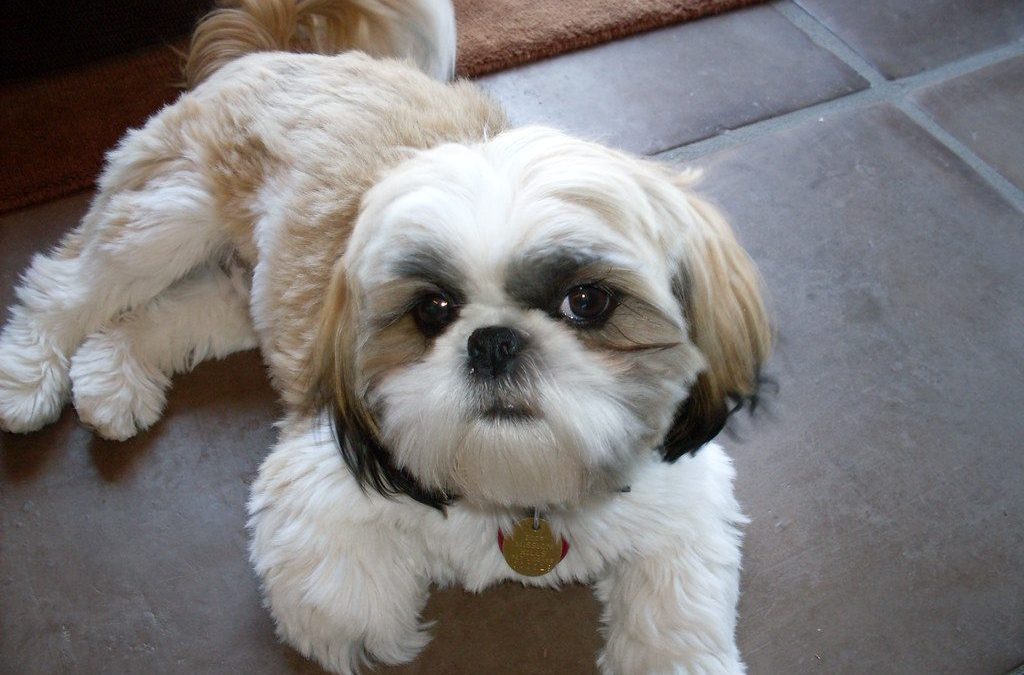
Overview
The Shih Tzu is a small companion dog that was bred for exactly one purpose: sitting with people. It has no working history — no herding, no hunting, no guarding. For centuries it lived in palaces as a lap dog, and that ancestry still shows in how the modern breed behaves. A Shih Tzu wants to be near you, on you, or following you from room to room.
Most adults weigh between 9 and 16 pounds and stand about 9 to 10.5 inches at the shoulder. The defining feature is the coat: a long, flowing double coat that reaches the floor if left uncut, paired with a short muzzle and large, dark, wide-set eyes. The breed’s name is often translated as “lion dog,” a reference to its appearance rather than its temperament, which is closer to a friendly houseguest than a predator.
Here is the honest headline. The Shih Tzu is one of the easiest small breeds to live with temperamentally — sociable, adaptable, content with modest exercise, and well suited to apartments. What people underestimate is the coat. In full length it needs daily brushing and regular professional grooming, and neglecting it leads quickly to painful matting. Most owners clip it short, which is a sensible choice and not a failure. The other consideration is the flat face, which carries the same heat sensitivity and breathing risks found across brachycephalic breeds. Go in prepared for the grooming bill and the summer precautions, and this is a delightful dog.
Breed Origin & History
The Shih Tzu originates in Tibet and China, with a documented history in Chinese imperial courts stretching back centuries. Small lion-like dogs appear in Chinese art and palace records long before any formal breed standard existed, and the modern breed is generally understood to descend from Tibetan dogs presented to Chinese royalty and then developed further within the court.
For most of that history the dogs were not sold or exported. They lived inside palace walls as companions to the household, which is part of why the breed carries no working instincts. Their entire selection history was for temperament, size, and appearance in a domestic setting.
The breed’s arrival in the West came in the 1930s, when a small number of dogs reached England and, later, the United States. The gene pool of the modern breed traces to a very small foundation group, which is relevant to health discussions today. American servicemen returning from Europe after the Second World War helped popularize the breed in the United States.
The American Kennel Club recognized the Shih Tzu in 1969, placing it in the Toy group. The American Shih Tzu Club serves as the AKC parent club and maintains the breed standard used in the United States. The standard describes a sturdy, compact dog carrying a long, dense double coat, with a distinctly arrogant carriage and the head held high — a look the standard deliberately preserves.
Temperament & Personality
Shih Tzu are sociable, affectionate, and notably even-tempered. Unlike many toy breeds, they tend not to be nervy or sharp. Most are genuinely friendly with strangers, comfortable in busy households, and happy to be handled. They were bred to be companions and they behave like it.
Energy is moderate in short bursts and low overall. A typical Shih Tzu will play enthusiastically for fifteen minutes and then settle on a cushion for the afternoon. They adapt well to the rhythm of the household, which is why they suit retirees, people who work from home, and apartment living so well.
Now the trade-offs. Shih Tzu can be stubborn. They are not a breed that works hard to please you — they are a breed that expects you to be reasonable about it. Housetraining is commonly slower than average, and many owners find it the single most frustrating part of the first year. Patience and a consistent schedule matter more than cleverness here.
Because they were bred for constant company, many Shih Tzu do not cope well with long stretches alone. Separation-related stress is a real risk in homes where the dog is by itself ten hours a day. Some individuals are quite vocal, particularly when under-stimulated or when alerting to noise at the door, though the breed is not typically a persistent barker. Individual variation is genuine: you will meet placid, biddable Shih Tzu and opinionated, comedic ones.
Is This Breed Right for You?
The Shih Tzu suits people who want a small, affectionate, low-demand companion and can absorb the grooming commitment. Specifically: apartment and condo dwellers, since exercise needs are modest and the dog is small and quiet enough for shared walls. Retirees and people who work from home, because the breed wants company and rewards it. Families with older, gentle children who understand that a nine-pound dog is not a toy. Anyone who wants a dog that is content with two short walks and some indoor play rather than a hiking partner.
It also suits people in temperate or air-conditioned homes. The short muzzle means this dog cannot cool itself efficiently.
Here is who should think twice. Anyone unwilling to brush daily or pay for grooming every six to eight weeks — the coat is not optional maintenance, and a matted coat is genuinely painful for the dog. People who want a running or hiking companion, because heat and sustained exertion are both problems for a flat-faced breed. Households empty for long workdays with no dog walker or company, given the breed’s attachment to people. Anyone wanting a watchdog or a protection dog. People who need a fast, easy housetraining experience. And anyone drawn to the breed because it is marketed as hypoallergenic — the Shih Tzu is low-shedding, which is not the same thing as allergy-free, and dander and saliva still carry allergens.
If you want a small, warm, adaptable dog for a home where someone is usually around, and the grooming reality does not put you off, the Shih Tzu is one of the most pleasant companions in the toy group.
Care & Exercise Needs
Exercise needs are low to moderate. Two short walks a day totaling roughly 30 to 45 minutes, plus indoor play, is typically enough for an adult. Avoid exertion in heat and humidity. Labored breathing on a warm walk is a warning sign, not a normal state for the breed, and a Shih Tzu should never be left in a warm car or a sunny yard.
Grooming is where this breed asks the most. A full-length coat needs daily brushing and combing to the skin, not just over the surface, or mats form close to the body where they are hardest to remove. Professional grooming every six to eight weeks is standard. Most owners choose a shorter “puppy clip,” which cuts daily brushing down to a few minutes and is a perfectly legitimate choice. Either way, the coat needs attention on a schedule.
Beyond the coat: the hair around the eyes grows into them and needs trimming or tying up. Facial folds should be wiped and dried to prevent irritation. Ears need regular checking and cleaning. Nails need trimming. And dental care is a genuine priority — small, short-muzzled breeds carry crowded teeth, and dental disease is one of the most common problems owners face. Daily or near-daily tooth brushing pays off.
Training works best with short, positive, reward-based sessions. Shih Tzu are sensitive and shut down under harsh correction. Be patient with housetraining, keep a strict schedule, and use confinement and frequent opportunities rather than punishment. Early socialization helps, and building tolerance for short periods alone from puppyhood prevents separation problems later.
Health Considerations
The Shih Tzu is a brachycephalic breed, and that shapes much of its health picture. The breed is known to have a higher incidence of Brachycephalic Obstructive Airway Syndrome, which can cause noisy breathing, reduced exercise tolerance, and poor heat regulation. Heat stroke risk is meaningfully higher than in longer-muzzled dogs.
The large, prominent, wide-set eyes are a second area of concern. The breed is known to have a higher incidence of corneal ulcers, dry eye (keratoconjunctivitis sicca), and proptosis, where the eye can be displaced by trauma. Owners are generally advised to watch for squinting, pawing at the face, cloudiness, or excessive tearing and to treat eye symptoms as urgent rather than minor.
Other conditions reported at elevated rates in the breed include patellar luxation, intervertebral disc disease, hip dysplasia, and two kidney-related conditions — renal dysplasia and portosystemic shunt — that are of particular interest to breeders. Dental crowding and periodontal disease are common, and skin and ear problems occur frequently, often linked to allergies or to moisture trapped in facial folds.
Health screening recommendations for breeding dogs typically include hip, patella, and ophthalmologic evaluations; the OFA maintains a breed-specific screening program for the Shih Tzu. A healthy Shih Tzu commonly lives 10 to 18 years, which is a long lifespan by dog standards and worth factoring into the commitment.
None of this means an individual dog will have problems. Many Shih Tzu live long, comfortable lives. But the breed’s structure makes some issues more likely, and planning for veterinary costs is sensible. For any specific concern about your dog’s breathing, eyes, joints, or weight, consult your veterinarian rather than relying on general breed information.
Recommended Gear Categories
A few gear categories matter more than usual for this breed. Skip the neck collar for walking and use a well-fitted harness — pressure on the throat is a poor idea for a flat-faced dog with a compromised airway. Look for something that spreads pressure across the chest.
Grooming tools are not optional here. A quality pin brush and a metal greyhound-style comb are the working pair; the comb is what tells you whether you have actually reached the skin or only smoothed the top of the coat. A detangling spray reduces breakage during brushing. If you maintain a full coat, small hair ties or clips for the topknot keep hair out of the eyes.
Because Shih Tzu are heat-sensitive, a cooling mat is genuinely useful in summer, and fresh water should be available on every outing. In cold weather the coat offers some insulation but the dog is small and close to the ground, so a coat or sweater earns its place in winter.
Soft, pet-safe wipes for the facial folds and around the eyes belong in the daily kit. Dental supplies — a dog toothbrush and veterinary toothpaste — matter given the crowding in a short muzzle. For enrichment, puzzle feeders and small, soft chew toys suit a dog of this size and jaw strength. Your editor will add specific product recommendations with current pricing and details.
Similar Breeds to Consider
If the Shih Tzu’s size and affection appeal but the coat does not, the most direct comparison is the Pug. Both are flat-faced toy companions with similar temperaments and similar heat sensitivity, but the Pug’s short coat needs almost no grooming — while shedding considerably more and carrying an equal or greater brachycephalic health burden.
The Lhasa Apso is the closest relative in look and coat. It shares the long double coat and Tibetan origin but tends to be more independent, more reserved with strangers, and more inclined toward watchdog behavior. Choose the Lhasa if you want a similar appearance with a more self-contained personality; choose the Shih Tzu if you want the friendlier, more openly affectionate of the two.
The Havanese is worth serious consideration for anyone attracted to the Shih Tzu but concerned about the flat face. It is a similarly sized, similarly affectionate companion with a long coat and comparable grooming demands, but a normal muzzle — which means far fewer breathing and heat problems, and a dog you can be more active with.
For those who want low grooming and a longer muzzle in the same size bracket, the Miniature Schnauzer is a sturdier alternative with a low-shedding coat and more energy to burn. In short: choose the Shih Tzu or Lhasa if the long coat is part of the appeal, the Havanese if you want that look without the flat face, and the Pug or Mini Schnauzer if grooming time is the limiting factor.