
Overview
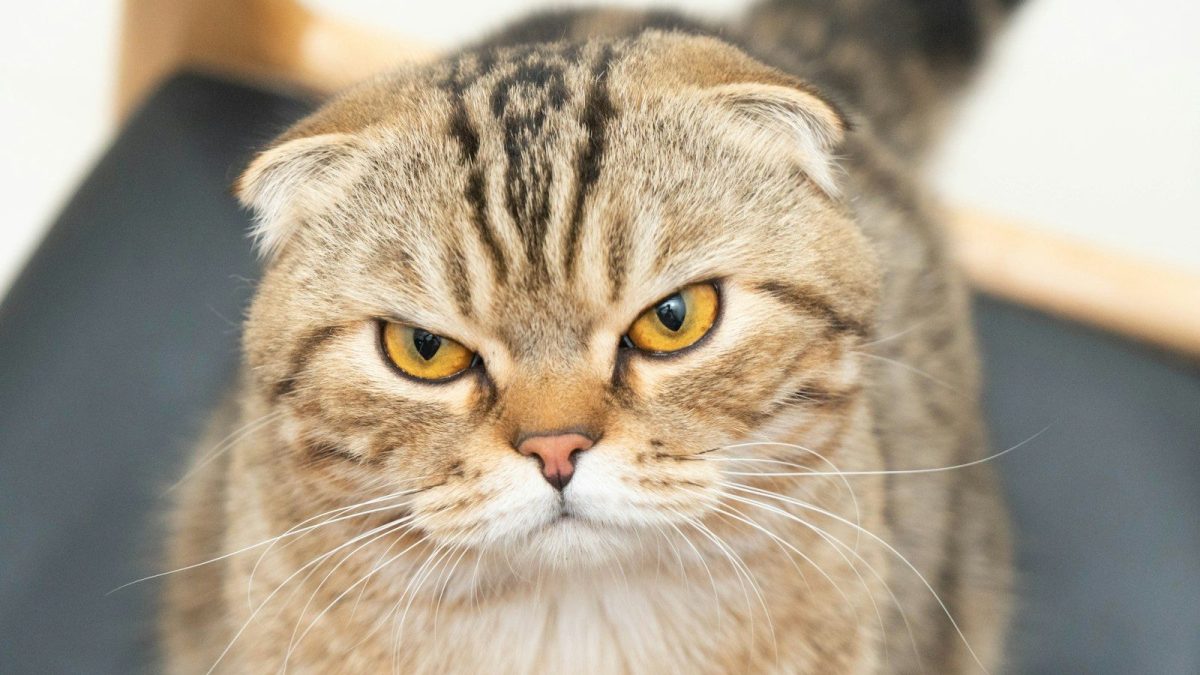
The Scottish Fold is easy to spot: the ears fold forward and down, giving the head a round, owl-like look that has made this cat a social-media favorite. Behind that face is a calm, affectionate cat that tends to follow its person from room to room and settle wherever the household is.
Folds come in two ear types. Some cats carry the fold gene and have the folded ears; others are ‘Straights’ — same breeding, same personalities, but with normal upright ears. Both short-haired and long-haired coats exist (the long-haired version is sometimes called the Highland Fold). Kittens are all born with straight ears; the fold, if it develops, appears around three to four weeks.
Here is the part no honest profile should bury: the gene that folds the ears is the same gene that affects cartilage throughout the body. It causes a condition called osteochondrodysplasia, and research indicates it affects folded-ear cats to some degree in every case. That single fact shapes everything else on this page. The Scottish Fold is genuinely lovely to live with. It also comes with an ethical and medical weight that many other breeds don’t carry, and you deserve to weigh that before you fall for the ears.
Breed Origin & History
The breed traces to a single white barn cat named Susie, found on a farm in the Tayside region of Scotland in 1961. Susie had unusual folded ears, and a local farmer, William Ross, took interest in her. He and his wife began a breeding program with the help of geneticists, and the breed was originally called ‘lop-eared’ before being renamed Scottish Fold.
Early breeding revealed problems quickly. When two folded-ear cats were bred together, offspring developed severe, crippling bone and joint disease. Because of this, and concerns about ear-related conditions, Britain’s Governing Council of the Cat Fancy declined to register the breed and stopped registering it in the 1970s. The Fédération Internationale Féline (FCI) has also declined to recognize it. The breed found a different reception in the United States, where the Cat Fanciers’ Association (CFA) and The International Cat Association (TICA) accepted it, and where breeders adopted the practice of pairing a folded-ear cat only with a straight-eared cat to reduce the worst outcomes.
That split matters. In the US the Scottish Fold is an established show and pet breed. In much of Europe it is not recognized and, in some countries, breeding it is discouraged or restricted on welfare grounds. If you’re researching this breed, you’re stepping into an active, ongoing disagreement among serious cat authorities — not a settled question.
Temperament & Personality
Scottish Folds are typically gentle, quiet, and deeply attached to their people. They’re not aloof cats. Most want to be near you — on the couch, on your desk, following you into the kitchen — and they tend to adapt to a household’s rhythm rather than demanding the household adapt to them.
They’re playful without being frantic. Many keep a kittenish interest in toys and games well into adulthood, but their energy runs moderate, not manic. They’re known for quiet voices; you’re more likely to get a soft chirp than a loud yowl. Some develop quirky habits, like sitting upright with their legs out (the so-called ‘Buddha pose’) or lying flat on their backs.
The trade-off side: their sweetness and their attachment mean they don’t love being left alone for long stretches. A Fold that’s home by itself ten hours a day, every day, tends to get lonely and under-stimulated. And because affection is central to who they are, they can be a poor match for someone who wants a cat that keeps to itself.
One more honest note tied to health, not personality. A cat in joint discomfort may become withdrawn, reluctant to jump, or irritable, and those signs can be mistaken for ‘just his temperament.’ With this breed especially, a change in how active or friendly your cat is deserves a vet visit rather than a shrug.
Is This Breed Right for You?
A Scottish Fold suits someone who is home often, wants a genuinely affectionate lap cat, and — this is the non-negotiable part — has read about osteochondrodysplasia and decided, with open eyes, that they’re prepared for the possible health and cost implications. This is a good match for a calm household: a work-from-home adult, a retiree, a family with gentle older children who understand a cat isn’t a toy. Folds generally do well with other cats and with dogs raised alongside them, so they fit multi-pet homes.
They’re reasonable for a first-time cat owner in terms of daily care — they’re not demanding to groom or exercise. But the health picture makes them a heavier lift than a random-bred shorthair, so a true beginner should go in knowing they may face joint problems and the monitoring that comes with them.
Who should look elsewhere: anyone gone long hours daily; anyone on a tight budget who couldn’t absorb ongoing veterinary costs for a chronic joint condition; and anyone who feels uncomfortable supporting a breed that several major welfare organizations and registries actively oppose. That discomfort is legitimate, and no cute photo should override it.
If your heart is set on the look but the ethics give you pause, consider a straight-eared cat from Fold breeding (a ‘Straight’). It has the temperament and the round face without the folded-ear gene — and without the skeletal condition that gene causes. Many people who love the Fold personality are genuinely happier with a Straight once they understand the difference.
Care & Exercise Needs
Daily care for a Scottish Fold is straightforward. Plan on two or three short play sessions a day — 10 to 15 minutes each — using wand toys, chase toys, or puzzle feeders. This is a moderate-energy cat, so you’re maintaining fitness and preventing boredom, not burning off athletic drive. Rotating a few toys keeps interest up.
Grooming depends on coat. Short-haired Folds need brushing about once a week. Long-haired (Highland) Folds need it two to three times a week to prevent mats, especially around the ruff and tail. Because the ears fold tightly, wax and debris can build up more easily, so gently check them weekly and clean only the visible outer area with a vet-recommended method — never probe inside the ear canal. Keep nails trimmed every couple of weeks and offer scratching options.
One care point ties directly to health: watch how your cat moves. Because joint stiffness is a real risk in this breed, set up the home to reduce hard jumping. Provide steps or ramps to favorite perches, choose a litter box with a low entry, and keep resources on the ground floor accessible. If your cat starts avoiding jumps it used to make easily, that’s information worth acting on.
Training is easy in the sense that Folds are food-motivated and social. Short clicker sessions, leash-and-harness introductions done young, and reward-based redirection all work well. They respond to gentle consistency far better than to any correction.
Health Considerations
This section is the reason to read this whole profile. The fold gene is a dominant mutation affecting cartilage, and it causes osteochondrodysplasia — a developmental abnormality of bone and cartilage. Every cat with folded ears carries this to some degree; the severity varies from mild to disabling. Affected cats can develop stiff, painful joints, fused tail vertebrae, thickened limbs, lameness, and reduced quality of life. Cats bred from two folded-ear parents are affected most severely, which is why responsible breeding pairs a Fold only with a straight-eared cat — though this reduces, rather than eliminates, the risk.
Beyond the skeletal condition, the breed is known to have a higher reported incidence of polycystic kidney disease and hypertrophic cardiomyopathy (a heart-muscle disease seen across many cat breeds). The folded ear anatomy can also make some cats more prone to wax buildup and ear issues.
Because of all this, several authorities — including the UK’s Governing Council of the Cat Fancy and welfare-focused veterinary bodies — do not recognize the breed and discourage its breeding.
None of this is meant to diagnose your cat or predict its future. It’s meant to make sure you know what you may be signing up for. Before acquiring a Scottish Fold, and throughout its life, consult a veterinarian about screening, pain assessment, and long-term joint monitoring — and ask them, plainly, what they’ve seen in this breed.
Recommended Gear Categories
Because joint comfort is central to this breed, the gear that matters most is anything that reduces hard impact. Look for a litter box with a low or cut-down entry so a stiff cat doesn’t have to climb in. Pet stairs or a sturdy ramp to a favorite window or bed can spare joints from repeated jumping. A soft, well-padded orthopedic-style cat bed placed in a warm, draft-free spot supports achy joints better than a thin mat.
For play and enrichment, wand toys and puzzle feeders keep a moderate-energy cat engaged without demanding athletic leaping. A cat tree with wide, closely spaced platforms is friendlier to this breed than a tall tower with big gaps between perches.
For grooming, a slicker brush suits the long-haired variety and a rubber curry or fine comb works for shorthairs. Keep vet-recommended ear-cleaning supplies on hand given the folded-ear anatomy. Your editor will add specific product picks; treat the above as the categories to prioritize.
Similar Breeds to Consider
If you love the Fold’s round face and sweet temperament but want to sidestep the fold-gene health issues, the most direct alternative is a Scottish Straight — a straight-eared cat from the same breeding, with the same personality and no folded-ear skeletal condition. It’s the same cat, essentially, minus the trait that causes the harm.
The British Shorthair is another strong option. It’s a calm, sturdy, affectionate cat with a round face and plush coat, and it’s closely tied to the Fold’s own breeding history. If you want a mellow, dog-tolerant lap cat without the ethical and medical weight, this is often the better pick. For the fluffier look, the British Longhair offers similar temperament with more coat.
If it’s the gentle, people-attached personality you’re really after, consider the Ragdoll. Ragdolls are large, docile, and famously relaxed — they often go limp when held and want to be near their people constantly. They come with their own health considerations (notably hypertrophic cardiomyopathy, which is screenable), so they’re not risk-free, but they don’t carry a defining structural mutation the way the Fold does. Any of these gives you affection and calm without the folded-ear trade-off.