
Overview
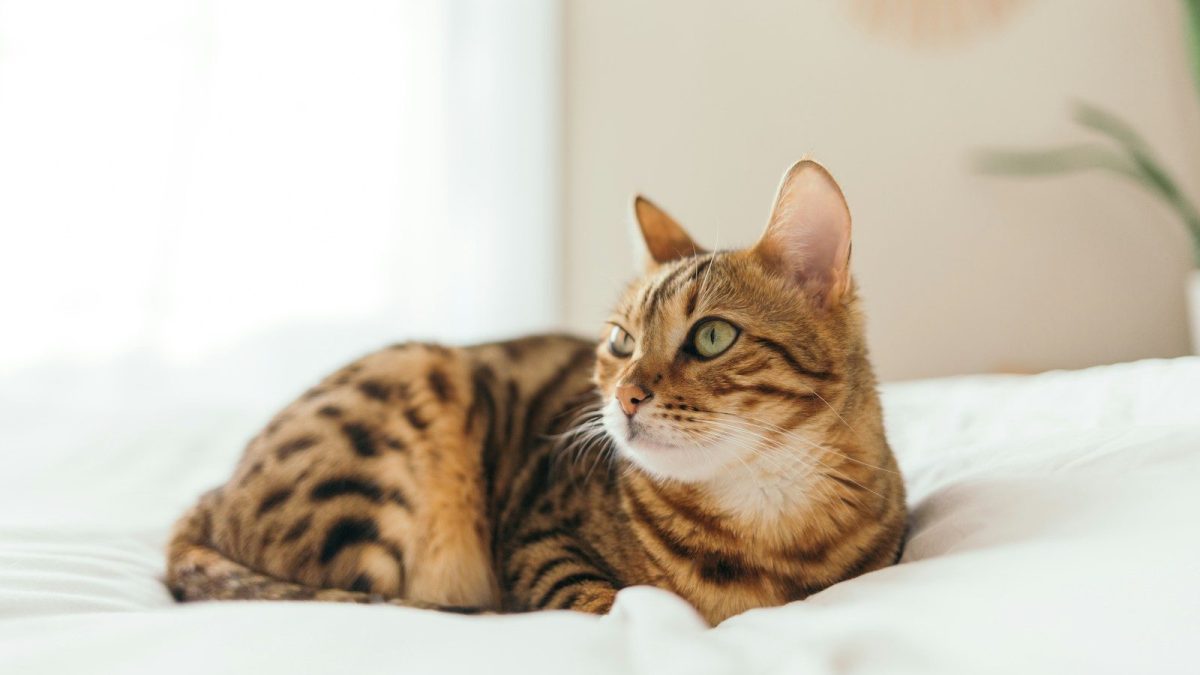
The Bengal looks like a miniature leopard and behaves like a four-legged toddler who never runs out of batteries. Developed by crossing domestic cats with the Asian leopard cat, the modern Bengal is a fully domestic breed known for its glittering, spotted or marbled coat and its relentless energy. This is one of the most visually striking cats you can own — and one of the most demanding.
Bengals are muscular, medium-to-large cats with a long, lean body built for running, climbing, and jumping. Many have a genetic ‘glitter’ that makes their coat look dusted with gold in sunlight. But the coat is only half the story. Bengals are intensely curious, highly intelligent, and want to be involved in everything you do — turning on faucets, opening cabinets, riding on your shoulder while you cook.
If you’re picturing a decorative cat who lounges elegantly on a windowsill, adjust that picture now. Bengals are active participants in the household. They’re recognized by TICA (which was central to the breed’s development) and by the CFA. For the right owner, a Bengal is a genuine delight. For the wrong one, it’s a source of shredded blinds and 3 a.m. zoomies.
Breed Origin & History
The Bengal traces to breeding experiments in the 1960s and 1970s crossing the Asian leopard cat (a small wild feline) with domestic cats. Breeder Jean Mill is widely credited with developing the modern breed in California, working to fix the wild appearance into a stable, affectionate domestic temperament. Early crosses were also connected to feline research at Loma Linda University.
The International Cat Association (TICA) accepted the Bengal for registration in 1983 and granted full championship status in 1991, making TICA the breed’s primary registry. The Cat Fanciers’ Association (CFA) accepted the Bengal for championship more recently, in 2016.
A key point for anyone shopping: registries and many jurisdictions distinguish between early-generation Bengals (F1 through F3, closer to the wild ancestor) and later-generation Bengals (F4 and beyond, considered fully domestic). Only later-generation cats are recommended as pets, and some U.S. states and cities restrict or ban early-generation hybrids entirely. Always check your local laws. The wild coat pattern is the whole point of the breed, but the temperament you want comes from generations of domestic breeding, not from the leopard cat itself.
Temperament & Personality
Bengals are brilliant, and that’s both the selling point and the problem. They learn fast — including things you’d rather they didn’t, like how to open doors, flush toilets, and fish objects out of drawers. A bored Bengal is a destructive Bengal.
Most Bengals are affectionate and deeply bonded to their people, but on their own terms. Many prefer to be near you and involved rather than curled in your lap. They’re often vocal, with a range of chirps, trills, and loud demands. Some Bengals genuinely love water and will join you in the shower or splash in the sink.
They’re playful well into adulthood, athletic to an almost absurd degree, and they need constant mental engagement. The same intelligence that lets you leash-train a Bengal or teach it to fetch is the intelligence that gets it into trouble when you leave for a nine-hour workday with nothing to do.
The honest trade-off: a Bengal’s energy and cleverness make it one of the most engaging cats you can live with — and one of the most exhausting. This breed typically does not ‘settle down’ into a quiet housecat. Most stay busy, curious, and demanding for years. If you love the idea of a cat that interacts with you constantly, a Bengal is magic. If you wanted a low-key companion, this breed will wear you out.
Is This Breed Right for You?
A Bengal suits someone who wants an interactive, high-engagement pet and has the time and space to provide it. Specifically: people who are home a fair amount, or who have a second pet for company; people willing to spend 30–60 minutes a day in active play (wand toys, fetch, puzzle feeders); and people who can cat-proof a home against a determined climber and problem-solver. If you’re the kind of person who would enjoy clicker-training a cat or teaching it to walk on a harness, this breed will reward you.
Bengals can do well in apartments, but only if you commit to vertical space (tall cat trees, wall shelves) and daily structured play. Square footage matters less than enrichment. A studio with three cat trees and an engaged owner beats a big house with a bored, ignored Bengal.
Who should skip this breed: first-time cat owners who want an easy pet; people who work long hours and travel often with no one home; anyone who values pristine furniture, quiet, or an undisturbed sleep schedule. Bengals are often vocal and active at night. Households wanting a calm, cuddly lap cat will be frustrated.
With kids, Bengals typically do well with older children who play respectfully and match their energy — a Bengal will happily play fetch for an hour. Toddlers may find the intensity overwhelming, and a fast, athletic cat can knock over a small child. With other pets, many Bengals coexist happily with dogs and confident cats, but their prey drive is high — small pets like birds, hamsters, and fish are not a safe match. Be honest with yourself about your daily life before choosing this breed.
Care & Exercise Needs
Exercise and enrichment are the non-negotiables. Plan for at least 30–60 minutes of active daily play, split into a few sessions. Wand toys, fetch, food puzzles, and treat-dispensing toys all help. Rotate toys so they stay novel. Many Bengals take well to harness-and-leash walks and to clicker training, which burns mental energy as much as physical.
Give them vertical territory: floor-to-ceiling cat trees, window perches, and wall-mounted shelves. A Bengal without climbing outlets will climb your curtains and countertops instead. A large, sturdy scratching post is essential.
Grooming is easy. The short, dense coat needs only weekly brushing to remove loose hair, and Bengals shed relatively little compared to many breeds. Standard care applies: keep nails trimmed, check ears, and maintain dental hygiene.
Mental stimulation is where most owners underestimate the commitment. This breed needs jobs and problems to solve. Puzzle feeders, hidden treats, and training sessions keep the mind occupied. A second active pet can help fill the gap when you’re busy, but it doesn’t replace your involvement.
Training approach: reward-based, short, frequent sessions. Bengals respond well to food rewards and clicker work and poorly to punishment. Redirect unwanted behavior toward acceptable outlets rather than scolding. Because they’re so clever, consistency matters — a Bengal that gets what it wants by yowling will yowl more. Litter box hygiene should be excellent; many Bengals are fussy about cleanliness. Provide fresh water in a way they enjoy, since many are drawn to running water.
Health Considerations
Bengals are generally healthy, but the breed is known to have a higher incidence of a few specific conditions. Hypertrophic cardiomyopathy (HCM), a heart muscle disease, is seen in Bengals as in many cat breeds. Progressive retinal atrophy (PRA-b), an inherited eye condition that can lead to vision loss, has a known genetic variant in Bengals, and a DNA test exists for it. The breed is also known to have a higher incidence of pyruvate kinase deficiency (PK-Def), an inherited form of anemia, which also has an available genetic test.
Some Bengals are affected by patellar luxation (loose kneecaps). As with many cats, dental disease and obesity are practical everyday health concerns that owners can influence through routine care and appropriate feeding.
Because several of these conditions have genetic tests or are detectable through screening, responsible health monitoring matters throughout a Bengal’s life. This is general information, not veterinary advice — for questions about screening, diet, weight management, or any symptoms, consult your veterinarian, who can advise based on your individual cat.
Recommended Gear Categories
Prioritize enrichment over decoration. Look for a tall, stable cat tree or a set of wall-mounted shelves that let a Bengal climb and perch well above the floor — this breed needs vertical territory. Interactive wand toys and puzzle or treat-dispensing feeders are essential for burning mental energy; buy several and rotate them.
Because many Bengals leash-train well, a properly fitted cat harness (one that’s escape-resistant and adjustable) is worth considering if you want to offer safe outdoor time. A sturdy, tall scratching post or scratching furniture protects your home and gives them an outlet. Since many Bengals are drawn to moving water, a circulating water fountain often encourages better hydration. Choose durable, chew-resistant toys — clever, powerful cats destroy flimsy ones fast.
Similar Breeds to Consider
If you love the Bengal look but want a lower-intensity cat, consider the Ocicat. It has a similar spotted, wild appearance but is a fully domestic-bred cat (no wild ancestry) that’s often more consistently social and slightly less demanding, while still being active and trainable.
If it’s the athleticism and interactivity you want more than the leopard coat, the Abyssinian is a strong match. Abys are lean, agile, endlessly curious ‘busy’ cats that stay playful for life, but they tend to be a bit easier for a broader range of owners and come without the legal and generational complications of a hybrid breed.
For someone drawn to a big, active, dog-like cat that enjoys water and games, the Maine Coon is worth a look. It’s larger, generally more mellow and tolerant, and often better suited to families with young children — though it needs regular grooming the Bengal doesn’t. And if you want maximum interactivity and vocalness in a lower-shedding package, the Siamese and its cousins offer intense human bonding and playfulness with a very different, sleeker look.